Sociology notes
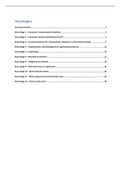
Contents
Lecture 1 and Chapter 1 intro to sociology............................................................................2
Chapter 2 Theoretical perspectives........................................................................................4
Chapter 3 sociological methods.............................................................................................7
Chapter 4..............................................................................................................................11
Lecture 2 Marx....................................................................................................................12
Chapter 16 power.................................................................................................................15
Chapter 4 / lecture 3: Emile Durkheim................................................................................17
Chapter 17 deviance and crime............................................................................................19
Chapter 19 religion and beliefs............................................................................................24
Chapter 4 / lecture 4 Max Weber.........................................................................................26
Chapter 5 / Lecture 11 Culture.............................................................................................29
Chapter 7 Micro-sociology...................................................................................................33
Lecture 5 Dewey..................................................................................................................35
Lecture 6 Dewey..................................................................................................................38
Chapter 8 inequality.............................................................................................................40
Chapter 9 global inequality / poverty...................................................................................45
Chapter 10 class, poverty and welfare in the UK.................................................................47
Chapter 6..............................................................................................................................49
Chapter 18 families, personal life and living together.........................................................54
Chapter 15............................................................................................................................57
Lecture 7...............................................................................................................................63
Chapter 26 Living in the 21st century..................................................................................64
Chapter 11............................................................................................................................66
Chapter 25 environment.......................................................................................................69
Chapter 22 media..................................................................................................................71
Lecture 10 globalization and migration................................................................................75
Chapter 23 cyberspace and the risk society..........................................................................78
,Lecture 1 and Chapter 1 intro to sociology
Sociology: science about problems at the group/societal level, considers the context (not the
individual as in psychology) > the study of human society, human thinking, feeling, social
action
Example: Durkheim on suicide (see also lec. 3): even though suicide is regarded as the most
individualistic thing you can do, he found that certain groups are more likely to commit
suicide than others, making it also a social problem. He found that protestants, wealthy
people and the unmarried had higher suicide rates > he argued that these differences are
related to the degree of social integration that these people did (not) experience (how
connected and tied into society they are, how they are bonded to other people etc > the more
individualistic one is, the higher the suicide rates for that group)
- 4 types of suicide
o Anomic suicide = too little integration (e.g. social change / social breakdown)
o Altruistic suicide = too much integration (e.g. suicide bombers)
o Egoistic suicide = too little regulation
o Fatalistic suicide = too much regulation (e.g. a suicide sect that forces you to
commit suicide)
Public sociology = sociology is also of great matter to the wider public (social issues etc, just
look at the news and what social problems are covered there)
Benefits of the sociological perspective
1. It becomes a way of thinking that challenges familiar understandings of ourselves and
others > become more critical about commonly held assumptions
2. You can assess both the opportunities and the constraints that characterise our lives
(discover certain patterns in our society, the more we understand these patterns then
the more efficiently you can pursue your own goals)
3. Helps us to be active participants in our society (not just accept the status quo, but be
an active part in shaping social life)
4. Enables you to recognize human differences and human suffering and to confront the
challenges of living in a diverse world
Some problems with the sociological perspective
1. Sociology is part of a changing world > society changes very quickly
2. Sociologists are part of what they study > hard to distance the researcher from the
social world (ethnocentrism)
3. Sociological knowledge becomes part of society > e.g. sociologists find that crime
rates are high > this is reported in the media > people become conscious of crime >
more crime is reported > sociologists study crime even more
Social problems = issue of value (e.g. it is bad that people …) and issue of action (something
needs to be done about it)
- Delinquency
- Terrorism
- Migration
, - Poverty
- Divorce
- Extreme-right voting
Vs.
Sociological problems = objective and logical problems
3 levels of sociology (that all interact; e.g. what is the effect of an intense work culture
(availability 24/7) on your familial relations at home?)
1. Micro = family, friends (immediate)
2. Meso = office, university
3. Macro = government, country
Key questions in sociology
1. Social inequality (to what extent are scare resources unequally distributed?)
2. Social cohesion (to what extent do members live peacefully together)
3. Rationalization (to what extent is a society rationalized?)
Sociology was founded around the time when traditional societies transitioned into industrial
societies: product of the enlightenment
- Societal changes
o Economic: growth of capitalism and industrial revolution (workers are part of
an industrial workforce, massive migration to cities) > poverty, weakened
traditions, break of social order as they previously knew it (Ch. 4)
o Political: French revolution (freedom, equality and solidarity rather than
following a divine force)
o Religion: less influence of the Church >
loss of gemeinschaft = loss of human community (shift from
community, small-town ideaology to individualism and emphasis on
efficiency etc.)
Introduction of gesellschaft = living among strangers, ignoring those
who pass by on the street (the ‘you can’t be too careful’ mentality
about other people)
o Societal: growth of cities and the creation of social problems (e.g. bad hygiene
in cities; low live expectancy, crime, homelessness, pollution) (Ch. 24)
- 18th/19th century: start of ‘sociology’ to understand the large societal changes of this
era
o Comte (one of the founders): law of the 3 stages
1. Theological stage = explanation via gods and spirits
2. Metaphysical stage = explanation by philosophers, speculation of
the natural order, abstract explanations
3. Scientific stage = explanations by objective observations
Positivism = a means to understand the world based on science
, o Herbert Spencer: Social-Darwinistic thinking = ‘survival of the fittest’ in the
sense that ‘fittest’ refers to what is best in society (e.g. in a capitalist society:
the most ambitious, productive, intelligent people) > more political idea; there
is some kind of goal to work towards > you can mould society in the direction
you aim for
Disciplining people (e.g. to work a certain amount of hours every day)
Education of the masses
Trust in science (although science has become more debated in recent
times: e.g. belief in vaccinations or not)
o The ‘sociale quaestie’: misery of urbanisation / industrialisation (e.g. terrible
hygiene in the new cities; disease)
Rise of the labour movement
- 20th/21st century: Cyber Revolution
o Sociology is also changing in nature
New topics (e.g. digital dating, digital democracies)
New methods (e.g. Facebook studies)
Chapter 2 Theoretical perspectives
Theory = a statement of how and why specific facts are related (e.g. the theory that suicides
are related to social connectedness)
Vs.
Theoretical perspective / a paradigm = a basic image that guides thinking and research
(e.g. focusing on what joins people together? Two different researchers can have vastly
different theories but are working from the same theoretical perspective)
Paradigmata: there are different ways to look at the same reality
- The Kuhn cycle: how paradigms change (e.g. your paradigm answers
questions about the reality at that time period. However, the paradigm
can change and then reality is viewed from a different perspective)
- 4 paradigms in sociology:
o Structural-functionalist paradigm
o Conflict paradigm
o Symbolic interactionist paradigm
o Rational choice paradigm
- Note: a theory is a part of a paradigm! There can be multiple theories in the same
paradigm
- Problem: sociology can never be fully detached from the position of the researcher
Popper (ch. 23): The task of science is not to prove something exists but to falsify = show
what is not or what cannot be
Merton: focus on the rise of science in the 17th century
- 4 key norms organised scientific work (more prescriptive than descriptive; utopia)
o Universalism: science should be guided by the search for wide and universal
truths (not guided by class or gender)
Contents
Lecture 1 and Chapter 1 intro to sociology............................................................................2
Chapter 2 Theoretical perspectives........................................................................................4
Chapter 3 sociological methods.............................................................................................7
Chapter 4..............................................................................................................................11
Lecture 2 Marx....................................................................................................................12
Chapter 16 power.................................................................................................................15
Chapter 4 / lecture 3: Emile Durkheim................................................................................17
Chapter 17 deviance and crime............................................................................................19
Chapter 19 religion and beliefs............................................................................................24
Chapter 4 / lecture 4 Max Weber.........................................................................................26
Chapter 5 / Lecture 11 Culture.............................................................................................29
Chapter 7 Micro-sociology...................................................................................................33
Lecture 5 Dewey..................................................................................................................35
Lecture 6 Dewey..................................................................................................................38
Chapter 8 inequality.............................................................................................................40
Chapter 9 global inequality / poverty...................................................................................45
Chapter 10 class, poverty and welfare in the UK.................................................................47
Chapter 6..............................................................................................................................49
Chapter 18 families, personal life and living together.........................................................54
Chapter 15............................................................................................................................57
Lecture 7...............................................................................................................................63
Chapter 26 Living in the 21st century..................................................................................64
Chapter 11............................................................................................................................66
Chapter 25 environment.......................................................................................................69
Chapter 22 media..................................................................................................................71
Lecture 10 globalization and migration................................................................................75
Chapter 23 cyberspace and the risk society..........................................................................78
,Lecture 1 and Chapter 1 intro to sociology
Sociology: science about problems at the group/societal level, considers the context (not the
individual as in psychology) > the study of human society, human thinking, feeling, social
action
Example: Durkheim on suicide (see also lec. 3): even though suicide is regarded as the most
individualistic thing you can do, he found that certain groups are more likely to commit
suicide than others, making it also a social problem. He found that protestants, wealthy
people and the unmarried had higher suicide rates > he argued that these differences are
related to the degree of social integration that these people did (not) experience (how
connected and tied into society they are, how they are bonded to other people etc > the more
individualistic one is, the higher the suicide rates for that group)
- 4 types of suicide
o Anomic suicide = too little integration (e.g. social change / social breakdown)
o Altruistic suicide = too much integration (e.g. suicide bombers)
o Egoistic suicide = too little regulation
o Fatalistic suicide = too much regulation (e.g. a suicide sect that forces you to
commit suicide)
Public sociology = sociology is also of great matter to the wider public (social issues etc, just
look at the news and what social problems are covered there)
Benefits of the sociological perspective
1. It becomes a way of thinking that challenges familiar understandings of ourselves and
others > become more critical about commonly held assumptions
2. You can assess both the opportunities and the constraints that characterise our lives
(discover certain patterns in our society, the more we understand these patterns then
the more efficiently you can pursue your own goals)
3. Helps us to be active participants in our society (not just accept the status quo, but be
an active part in shaping social life)
4. Enables you to recognize human differences and human suffering and to confront the
challenges of living in a diverse world
Some problems with the sociological perspective
1. Sociology is part of a changing world > society changes very quickly
2. Sociologists are part of what they study > hard to distance the researcher from the
social world (ethnocentrism)
3. Sociological knowledge becomes part of society > e.g. sociologists find that crime
rates are high > this is reported in the media > people become conscious of crime >
more crime is reported > sociologists study crime even more
Social problems = issue of value (e.g. it is bad that people …) and issue of action (something
needs to be done about it)
- Delinquency
- Terrorism
- Migration
, - Poverty
- Divorce
- Extreme-right voting
Vs.
Sociological problems = objective and logical problems
3 levels of sociology (that all interact; e.g. what is the effect of an intense work culture
(availability 24/7) on your familial relations at home?)
1. Micro = family, friends (immediate)
2. Meso = office, university
3. Macro = government, country
Key questions in sociology
1. Social inequality (to what extent are scare resources unequally distributed?)
2. Social cohesion (to what extent do members live peacefully together)
3. Rationalization (to what extent is a society rationalized?)
Sociology was founded around the time when traditional societies transitioned into industrial
societies: product of the enlightenment
- Societal changes
o Economic: growth of capitalism and industrial revolution (workers are part of
an industrial workforce, massive migration to cities) > poverty, weakened
traditions, break of social order as they previously knew it (Ch. 4)
o Political: French revolution (freedom, equality and solidarity rather than
following a divine force)
o Religion: less influence of the Church >
loss of gemeinschaft = loss of human community (shift from
community, small-town ideaology to individualism and emphasis on
efficiency etc.)
Introduction of gesellschaft = living among strangers, ignoring those
who pass by on the street (the ‘you can’t be too careful’ mentality
about other people)
o Societal: growth of cities and the creation of social problems (e.g. bad hygiene
in cities; low live expectancy, crime, homelessness, pollution) (Ch. 24)
- 18th/19th century: start of ‘sociology’ to understand the large societal changes of this
era
o Comte (one of the founders): law of the 3 stages
1. Theological stage = explanation via gods and spirits
2. Metaphysical stage = explanation by philosophers, speculation of
the natural order, abstract explanations
3. Scientific stage = explanations by objective observations
Positivism = a means to understand the world based on science
, o Herbert Spencer: Social-Darwinistic thinking = ‘survival of the fittest’ in the
sense that ‘fittest’ refers to what is best in society (e.g. in a capitalist society:
the most ambitious, productive, intelligent people) > more political idea; there
is some kind of goal to work towards > you can mould society in the direction
you aim for
Disciplining people (e.g. to work a certain amount of hours every day)
Education of the masses
Trust in science (although science has become more debated in recent
times: e.g. belief in vaccinations or not)
o The ‘sociale quaestie’: misery of urbanisation / industrialisation (e.g. terrible
hygiene in the new cities; disease)
Rise of the labour movement
- 20th/21st century: Cyber Revolution
o Sociology is also changing in nature
New topics (e.g. digital dating, digital democracies)
New methods (e.g. Facebook studies)
Chapter 2 Theoretical perspectives
Theory = a statement of how and why specific facts are related (e.g. the theory that suicides
are related to social connectedness)
Vs.
Theoretical perspective / a paradigm = a basic image that guides thinking and research
(e.g. focusing on what joins people together? Two different researchers can have vastly
different theories but are working from the same theoretical perspective)
Paradigmata: there are different ways to look at the same reality
- The Kuhn cycle: how paradigms change (e.g. your paradigm answers
questions about the reality at that time period. However, the paradigm
can change and then reality is viewed from a different perspective)
- 4 paradigms in sociology:
o Structural-functionalist paradigm
o Conflict paradigm
o Symbolic interactionist paradigm
o Rational choice paradigm
- Note: a theory is a part of a paradigm! There can be multiple theories in the same
paradigm
- Problem: sociology can never be fully detached from the position of the researcher
Popper (ch. 23): The task of science is not to prove something exists but to falsify = show
what is not or what cannot be
Merton: focus on the rise of science in the 17th century
- 4 key norms organised scientific work (more prescriptive than descriptive; utopia)
o Universalism: science should be guided by the search for wide and universal
truths (not guided by class or gender)