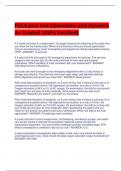
Fundamentals of Nursing Questions and Answers Rated A
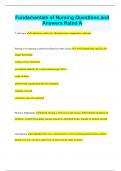
Fundamentals of Nursing Questions and Answers Rated A 5 vital signs respirations, pulse rate, blood pressure, temperature, and pain Nursing is recognized as profession based on what criteria -well defined body specific and unique knowledge -strong service orientation -recognized authority by a professional group (ANA) -code of ethics -professional organization that sets standards -ongoing research -autonomy and self-regulation Florence Nightingale defined nursing as both an art and science, differentiated nursing from medicine, created freestanding nursing education, published books; founder of modern nursing Clara Barton established red cross; volunteered to care for wounds and feed union soldiers during civil war; served as supervisor of nurses for the army of James goals of nursing research -improve care in clinical setting -study ppl and nurse process: education, policy development, ethics, nursing history -develop greater autonomy and strength as a profession -provide evidence-based nursing practice evidence-based practice (EBP) a problem-solving approach to making clinical decisions, using the best evidence available; blends both science and art of nursing so best outcomes are achieved; may consist of specific nursing interventions or use guidelines established for the care of patients steps in implementing EBP Step 1: ask a question about a clinical area of interest or an intervention Step 2: collect the most relevant and best evidence Step 3: Critically appraise the evidence Step 4: integrate the evidence w/ clinical expertise, patient preferences, and values in making a decision to change Step 5: evaluate the practice decision or change human dimensions that compose the whole person: physical, intellectual, environmental, spiritual, sociocultural, and emotional acute illness rapid onset of symptoms and lasts only a short time; examples: cold, diarrhea, pneumonia, appendicitis chronic illness slow onset, characteristics: permanent change, caused by change in anatomy, requires special patient education, long period of care or support; examples: heart disease, diabetes, lung diseases, and arthritis stages-of-illness behaviors Stage 1: experiencing symptoms Stage 2: assuming the sick role Stage 3: assuming a dependent role Stage 4: achieving recovery and rehabilitation
Written for
- Institution
- Fundamentals of Nursing
- Course
- Fundamentals of Nursing
Document information
- Uploaded on
- September 1, 2023
- Number of pages
- 20
- Written in
- 2023/2024
- Type
- Exam (elaborations)
- Contains
- Questions & answers
Subjects
-
fundamentals of nursing questions and answers rate

Document also available in package deal