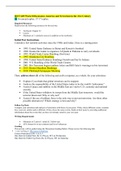
Coffee Houses
Location – Where?
Function – What were they used for?
Structure – How is inside/outside structured?
Design – How does the design reflect culture, values, morals,
fashions, religion of people? What does it look like?
People – Who? Designer, originator, occupants
Wider Events – How are important events/developments connected
to sight?
, Location – Where?
First Oxford 1650s
First London 1652 St Michael’s Alley, Cornhill
1663 - 82 in London
1720s - over 500 in London
Busy areas, lots of businesses/people (banking, insurance, law) and
therefore customers, 19 coffee houses in small area
Conveniently located near the Royal Exchange: centre of commerce,
where London’s merchants congregated each day - budding commercial
and financial centre
Function – What used for?
Discussed news: place of financial, literary, scientific and political change
Development of new ideas in science, politics, literature, business
Relaxed, social atmosphere encouraged thoughtfulness, sophistication,
witty talk, open discussion once restricted/prohibited under strict
Puritan rule Oliver Cromwell
o 1663 - Samuel Pepys commented in diary on ‘witty, pleasant
conversations/debates had at Will's Coffee House’
Meeting places: scientists (experiments, theories, lectures)
Science discussed recent developments in investigations/theories,
sharing information between well-educated: subsequently nicknamed
‘penny universities’ reflecting intellectual stimulation visitors could
expect
o Nov 1679: Hooke publicly dissected dolphin in Garraway's Coffee
House
o Hooke and Newton exchanged letters about Planetary movement
+ nature of gravity
o Jan 1680: Hooke carried out successful experiment to prove
movement of the Earth, Garraway's Coffee House due to its high
hall
Meeting places: businessmen (merchants, auctions, business
transactions)
o Edward Lloyd coffee house on Tower Street, City of London:
popular for sailors, merchants, shipowners - over centuries
developed into insurance market 'Lloyd's of London'
Location – Where?
Function – What were they used for?
Structure – How is inside/outside structured?
Design – How does the design reflect culture, values, morals,
fashions, religion of people? What does it look like?
People – Who? Designer, originator, occupants
Wider Events – How are important events/developments connected
to sight?
, Location – Where?
First Oxford 1650s
First London 1652 St Michael’s Alley, Cornhill
1663 - 82 in London
1720s - over 500 in London
Busy areas, lots of businesses/people (banking, insurance, law) and
therefore customers, 19 coffee houses in small area
Conveniently located near the Royal Exchange: centre of commerce,
where London’s merchants congregated each day - budding commercial
and financial centre
Function – What used for?
Discussed news: place of financial, literary, scientific and political change
Development of new ideas in science, politics, literature, business
Relaxed, social atmosphere encouraged thoughtfulness, sophistication,
witty talk, open discussion once restricted/prohibited under strict
Puritan rule Oliver Cromwell
o 1663 - Samuel Pepys commented in diary on ‘witty, pleasant
conversations/debates had at Will's Coffee House’
Meeting places: scientists (experiments, theories, lectures)
Science discussed recent developments in investigations/theories,
sharing information between well-educated: subsequently nicknamed
‘penny universities’ reflecting intellectual stimulation visitors could
expect
o Nov 1679: Hooke publicly dissected dolphin in Garraway's Coffee
House
o Hooke and Newton exchanged letters about Planetary movement
+ nature of gravity
o Jan 1680: Hooke carried out successful experiment to prove
movement of the Earth, Garraway's Coffee House due to its high
hall
Meeting places: businessmen (merchants, auctions, business
transactions)
o Edward Lloyd coffee house on Tower Street, City of London:
popular for sailors, merchants, shipowners - over centuries
developed into insurance market 'Lloyd's of London'