Practical 7
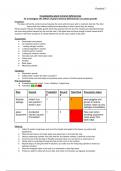
Investigating plant mineral deficiencies
To investigate the effect of plant mineral deficiencies on plant growth.
Hypothesis:
The bean with all the nutrients should develop the most while the bean with no nutrients shall die.The other
beans shall have different deficiencies depending on what nutrient they are lacking.
Plants require minerals for healthy growth which they acquire from the soil.The minerals are absorbed through
the roots using active transport by the root hair cells. If the plant does not have enough of each mineral that is
required, it will show symptoms of mineral deficiencies on the outer surface of the plant.
Equipment:
● Germinated mung beans
● ‘All nutrients present’ solution
● ‘Lacking nitrogen’ solution
● ‘Lacking magnesium’ solution
● ‘Lacking calcium’ solution
● ‘Lacking all nutrients’ solution
● Test tube rack with 5 test tubes inside
● Cotton wool
● Parafilm
● Black paper
● Measuring cylinder
Variables:
● Dependent- growth
● Independent- solution the bean is placed in
● Control-similar size and shape mung beans,same volume of solution,same temperature
Risk Assessment;
➔ Probability/severity of risk: 1-Low, 2-Medium, 3-High/Likely
➔ Total Risk: 1, 2,3, 4, 6, 9
Risk Hazard Probabilit Severit Total Risk Precaution taken
y y
Solution irritant if on 1 2 3 wear goggles and
spillage skin,painful if gloves to reduce
lands in eye contact; clean up any
spillages immediately
glass Accidental 1 3 4 Take care when
equipment injuries caused handling equipment
if smashed ;keep away from
table edge
Method:
1. Collect 5 similar mung beans and record the length and weight of the beans, as well as their
appearance.
2. Wrap the test tubes in the black paper and place them in the test tube rack.
3. Using a measuring cylinder, fill a tube with the 'all nutrients' solution. Label this on the tube.
4. Cover the top of the test tube in Parafilm and push down on it so there is a small hole in it.
5. Gently push a mung bean through the hole so the root is in the solution.
6. Repeat steps 2-4 using the other 4 solutions, but make sure the measuring cylinder is rinsed out
between solutions.
7. Place the wrapped tubes in the rack on a windowsill or other light bank.
8. Produce a table to collect all of your data, and check on the beans as regularly as possible.
Investigating plant mineral deficiencies
To investigate the effect of plant mineral deficiencies on plant growth.
Hypothesis:
The bean with all the nutrients should develop the most while the bean with no nutrients shall die.The other
beans shall have different deficiencies depending on what nutrient they are lacking.
Plants require minerals for healthy growth which they acquire from the soil.The minerals are absorbed through
the roots using active transport by the root hair cells. If the plant does not have enough of each mineral that is
required, it will show symptoms of mineral deficiencies on the outer surface of the plant.
Equipment:
● Germinated mung beans
● ‘All nutrients present’ solution
● ‘Lacking nitrogen’ solution
● ‘Lacking magnesium’ solution
● ‘Lacking calcium’ solution
● ‘Lacking all nutrients’ solution
● Test tube rack with 5 test tubes inside
● Cotton wool
● Parafilm
● Black paper
● Measuring cylinder
Variables:
● Dependent- growth
● Independent- solution the bean is placed in
● Control-similar size and shape mung beans,same volume of solution,same temperature
Risk Assessment;
➔ Probability/severity of risk: 1-Low, 2-Medium, 3-High/Likely
➔ Total Risk: 1, 2,3, 4, 6, 9
Risk Hazard Probabilit Severit Total Risk Precaution taken
y y
Solution irritant if on 1 2 3 wear goggles and
spillage skin,painful if gloves to reduce
lands in eye contact; clean up any
spillages immediately
glass Accidental 1 3 4 Take care when
equipment injuries caused handling equipment
if smashed ;keep away from
table edge
Method:
1. Collect 5 similar mung beans and record the length and weight of the beans, as well as their
appearance.
2. Wrap the test tubes in the black paper and place them in the test tube rack.
3. Using a measuring cylinder, fill a tube with the 'all nutrients' solution. Label this on the tube.
4. Cover the top of the test tube in Parafilm and push down on it so there is a small hole in it.
5. Gently push a mung bean through the hole so the root is in the solution.
6. Repeat steps 2-4 using the other 4 solutions, but make sure the measuring cylinder is rinsed out
between solutions.
7. Place the wrapped tubes in the rack on a windowsill or other light bank.
8. Produce a table to collect all of your data, and check on the beans as regularly as possible.