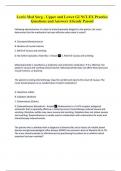
Lewis Med Surg - Upper and Lower GI NCLEX Practice Questions and Answers Already Passed
Lewis Med Surg - Upper and Lower GI NCLEX Practice Questions and Answers Already Passed Following administration of a dose of metoclopramide (Reglan) to the patient, the nurse determines that the medication has been effective when what is noted? A. Decreased blood pressure B. Absence of muscle tremors C. Relief of nausea and vomiting D. No further episodes of diarrhea - Answer C. Relief of nausea and vomiting Metoclopramide is classified as a prokinetic and antiemetic medication. If it is effective, the patient's nausea and vomiting should resolve. Metoclopramide does not affect blood pressure, muscle tremors, or diarrhea. The patient receiving chemotherapy rings the call bell and reports the onset of nausea. The nurse should prepare an as-needed dose of which medication? A. Morphine sulfate B. Zolpidem (Ambien) C. Ondansetron (Zofran) D. Dexamethasone (Decadron) - Answer Ondansetron is a 5-HT3 receptor antagonist antiemetic that is especially effective in reducing cancer chemotherapy-induced nausea and vomiting. Morphine sulfate may cause nausea and vomiting. Zolpidem does not relieve nausea and vomiting. Dexamethasone is usually used in combination with ondansetron for acute and chemotherapy-induced emesis. The patient who is admitted with a diagnosis of diverticulitis and a history of irritable bowel disease and gastroesophageal reflux disease (GERD) has received a dose of Mylanta 30 mL PO. The nurse should evaluate its effectiveness by questioning the patient as to whether which symptom has been resolved? A. Diarrhea B. Heartburn C. Constipation D. Lower abdominal pain - Answer B. Heartburn Mylanta is an antacid that contains both aluminum and magnesium. It is indicated for the relief of GI discomfort, such as heartburn associated with GERD. Mylanta can cause both diarrhea and constipation as a side effect. Mylanta does not affect lower abdominal pain. A patient complains of nausea. When administering a dose of metoclopramide (Reglan), the nurse should teach the patient to report which potential adverse effect? A. Tremors B. Constipation C. Double vision D. Numbness in fingers and toes - Answer A. Tremors Extrapyramidal side effects, including tremors and tardive dyskinesias, may occur as a result of metoclopramide (Reglan) administration. Constipation, double vision, and numbness in fingers and toes are not adverse effects of metoclopramide. After administering a dose of promethazine (Phenergan) to a patient with nausea and vomiting, what common temporary adverse effect of the medication does the nurse explain may be experienced? A. Tinnitus B. Drowsiness C. Reduced hearing D. Sensation of falling - Answer B. Drowsiness
École, étude et sujet
- Établissement
- Lewis Med Surg - Upper and Lower GI NCLEX
- Cours
- Lewis Med Surg - Upper and Lower GI NCLEX
Infos sur le Document
- Publié le
- 25 août 2023
- Nombre de pages
- 12
- Écrit en
- 2023/2024
- Type
- Examen
- Contient
- Questions et réponses
Sujets
-
lewis med surg upper and lower gi nclex practice

Document également disponible en groupe