1. The three economic epochs
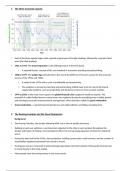
• Each of the three epochs begins with a period of good years (the light shading), followed by a period of bad
years (the dark shading):
• 1921 to 1941: The Great Depression is the defining feature of the first epoch.
• It inspired Keynes’ concept of AD, now standard in economics teaching and policymaking.
• 1948 to 1979: The Golden Age stretched from the end of the WWII to 1979 and is named for the economic
success of the 1950s and 1960s.
• It ended in the 1970s with a crisis of profitability and productivity.
• The emphasis in economics teaching and policymaking shifted away from the role of AD toward
supply-side problems, such as productivity and decisions by firms to enter and exit markets.
• 1979 to 2016: In the most recent epoch, the global financial crisis caught the world by surprise. The
potential of a debt-fuelled boom to cause havoc was neglected during the preceding years of stable growth
and seemingly successful macroeconomic management, which had been called the great moderation.
• Great moderation = a period characterized by low and stable inflation and falling unemployment.
2. The Roaring twenties and the Great Depression
Background
• The Roaring Twenties, the decade following WWI, was a time of wealth and excess.
• Building on post-war optimism, rural Americans migrated to the cities in vast numbers throughout the
decade with hopes of finding a more prosperous life in the ever-growing expansion of America's industrial
sector.
• During the latter half of the 1920s, steel production, building construction, retail turnover, and the number of
automobiles registered advanced from record to record.
• Such figures set up a crescendo of stock-exchange speculation that led hundreds of thousands of Americans
to invest heavily in the stock market.
• Many people were borrowing money to buy more stocks.
,• By August 1929, brokers were routinely lending small investors more than two thirds of the face value of the
stocks that they were buying. Over $8.5 billion was out on loan, more than the entire amount of currency
circulating in the United States at the time.
• Rising share prices encouraged more people to invest in the hope that share prices would rise further.
• Despite the inherent risk of speculation, it was widely believed that the stock market would continue to rise
forever.
• In 1929, the stock market crashed.
• The 1929 crash served as a critical catalyst that triggered the start of the devastating economic downturn
known as the Great Depression (1929-1941).
• Key features of the Great Depression:
- High unemployment
- Falling prices
- Unusually low growth rate of business capital stock
- Falling inequality
Causes of the Great Depression
• Capitalism is a dynamic economic system, and booms and recessions are a recurrent feature.
• But not all recessions are equal.
• In 1929 a downturn in the US business cycle similar to others in the preceding decade transformed into a
large-scale economic disaster—the Great Depression.
• Great Depression = The period of a sharp fall in output and employment in many countries in the 1930s.
• It was caused by 3 simultaneous positive feedback mechanisms in the US.
• Positive feedback mechanism = A process whereby some initial change sets in motion a process that
magnifies the initial change.
• Three simultaneous positive feedback mechanisms brought the American economy down in the 1930s:
• Pessimism about the future: The impact of a decline in investment on unemployment and of the stock
market crash of 1929 on prospects spread fear among households. They prepared for the worst by saving
more, bringing about a further decline in consumption demand.
• Failure of the banking system: The resulting decline in income meant that loans could not be repaid. By
1933, almost half of the banks in the US had failed, and access to credit shrank. The banks that did not fail
raised interest rates as a hedge against risk, further discouraging firms from investing and curbing household
spending on automobiles, refrigerators, and other durable goods.
• Deflation: Prices fell due to falling demand.
The problem of deflation
• Deflation affects aggregate demand through several routes. During the Great Depression, the most important
channel operated through the effect of deflation on those with high debts.
• Since debts were denominated in nominal terms, deflation pushed up their real value. This means that debt
repayments started to cost people more and more in terms of goods they could buy. In other words, in real
terms, the debt levels increased.
, • One-fifth of those in owner-occupied and rented accommodation were in default.
• Farmers were also among those with high levels of debt. Prices of their produce were falling, pulling down
their incomes directly and pushing up the burden of their debt.
• They responded to this by increasing production, which made the situation worse by reducing prices further.
• When prices are falling, and the real level of debt is rising, people also postpone the purchase of durables
(cars and houses), which further reduces aggregate demand.
The effect of the Great Depression on the US economy (1928–1941)
• Industrial production started to fall in 1929 (red line).
• In 1932 it was less than 60% of the 1929 level. This was followed by a recovery, until it fell again by 20% in
1937.
• Unemployment (green bar) remained above 10% until 1941, the year the US entered the Second World War.
• Consumer prices fell with GDP from 1929 to 1933 and remained stable until the early 1940s.
• The Figure shows the business
cycle upswings and downswings
from 1924 to 1941.
• The long downswing from the
third quarter of 1929 until the first
quarter of 1933 was driven by big
falls in household and business
investment (the red bar), and in
consumption of non-durables (the
green bar).
• Each of the three epochs begins with a period of good years (the light shading), followed by a period of bad
years (the dark shading):
• 1921 to 1941: The Great Depression is the defining feature of the first epoch.
• It inspired Keynes’ concept of AD, now standard in economics teaching and policymaking.
• 1948 to 1979: The Golden Age stretched from the end of the WWII to 1979 and is named for the economic
success of the 1950s and 1960s.
• It ended in the 1970s with a crisis of profitability and productivity.
• The emphasis in economics teaching and policymaking shifted away from the role of AD toward
supply-side problems, such as productivity and decisions by firms to enter and exit markets.
• 1979 to 2016: In the most recent epoch, the global financial crisis caught the world by surprise. The
potential of a debt-fuelled boom to cause havoc was neglected during the preceding years of stable growth
and seemingly successful macroeconomic management, which had been called the great moderation.
• Great moderation = a period characterized by low and stable inflation and falling unemployment.
2. The Roaring twenties and the Great Depression
Background
• The Roaring Twenties, the decade following WWI, was a time of wealth and excess.
• Building on post-war optimism, rural Americans migrated to the cities in vast numbers throughout the
decade with hopes of finding a more prosperous life in the ever-growing expansion of America's industrial
sector.
• During the latter half of the 1920s, steel production, building construction, retail turnover, and the number of
automobiles registered advanced from record to record.
• Such figures set up a crescendo of stock-exchange speculation that led hundreds of thousands of Americans
to invest heavily in the stock market.
• Many people were borrowing money to buy more stocks.
,• By August 1929, brokers were routinely lending small investors more than two thirds of the face value of the
stocks that they were buying. Over $8.5 billion was out on loan, more than the entire amount of currency
circulating in the United States at the time.
• Rising share prices encouraged more people to invest in the hope that share prices would rise further.
• Despite the inherent risk of speculation, it was widely believed that the stock market would continue to rise
forever.
• In 1929, the stock market crashed.
• The 1929 crash served as a critical catalyst that triggered the start of the devastating economic downturn
known as the Great Depression (1929-1941).
• Key features of the Great Depression:
- High unemployment
- Falling prices
- Unusually low growth rate of business capital stock
- Falling inequality
Causes of the Great Depression
• Capitalism is a dynamic economic system, and booms and recessions are a recurrent feature.
• But not all recessions are equal.
• In 1929 a downturn in the US business cycle similar to others in the preceding decade transformed into a
large-scale economic disaster—the Great Depression.
• Great Depression = The period of a sharp fall in output and employment in many countries in the 1930s.
• It was caused by 3 simultaneous positive feedback mechanisms in the US.
• Positive feedback mechanism = A process whereby some initial change sets in motion a process that
magnifies the initial change.
• Three simultaneous positive feedback mechanisms brought the American economy down in the 1930s:
• Pessimism about the future: The impact of a decline in investment on unemployment and of the stock
market crash of 1929 on prospects spread fear among households. They prepared for the worst by saving
more, bringing about a further decline in consumption demand.
• Failure of the banking system: The resulting decline in income meant that loans could not be repaid. By
1933, almost half of the banks in the US had failed, and access to credit shrank. The banks that did not fail
raised interest rates as a hedge against risk, further discouraging firms from investing and curbing household
spending on automobiles, refrigerators, and other durable goods.
• Deflation: Prices fell due to falling demand.
The problem of deflation
• Deflation affects aggregate demand through several routes. During the Great Depression, the most important
channel operated through the effect of deflation on those with high debts.
• Since debts were denominated in nominal terms, deflation pushed up their real value. This means that debt
repayments started to cost people more and more in terms of goods they could buy. In other words, in real
terms, the debt levels increased.
, • One-fifth of those in owner-occupied and rented accommodation were in default.
• Farmers were also among those with high levels of debt. Prices of their produce were falling, pulling down
their incomes directly and pushing up the burden of their debt.
• They responded to this by increasing production, which made the situation worse by reducing prices further.
• When prices are falling, and the real level of debt is rising, people also postpone the purchase of durables
(cars and houses), which further reduces aggregate demand.
The effect of the Great Depression on the US economy (1928–1941)
• Industrial production started to fall in 1929 (red line).
• In 1932 it was less than 60% of the 1929 level. This was followed by a recovery, until it fell again by 20% in
1937.
• Unemployment (green bar) remained above 10% until 1941, the year the US entered the Second World War.
• Consumer prices fell with GDP from 1929 to 1933 and remained stable until the early 1940s.
• The Figure shows the business
cycle upswings and downswings
from 1924 to 1941.
• The long downswing from the
third quarter of 1929 until the first
quarter of 1933 was driven by big
falls in household and business
investment (the red bar), and in
consumption of non-durables (the
green bar).