Unit
1:
1.1
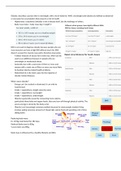
Structur e
of
Water
and
Hydr ogen
Bonding
-
The
properties
of
water
result
from
its
polarity
and
hydrogen
bonding
affect
its
biological
function
-
Living
systems
depend
on
properties
of
water
that
result
from
its
polarity
and
hydrogen
bonding
-
Hydrogen
bond
-
a
weak
interaction
between
the
negative
and
positive
regions
of
two
separate
molecules
-
Covalent
bonds
between
atoms,
hydrogen
bonds
between
molecules
-
Less
dense
as
solid
than
a
liquid
→
ice
floats
-
Sticks
to
itself
→
cohesion
(surface
tension)
-
Sticks
to
other
polar
or
charged
molecules
→
adhesion
(capillary
action)
-
Solvent
for
other
polar
or
charged
molecules
-
Absorb
lots
of
energy
without
increasing
temperature
→
high
specific
heat
-
neutral
pH
→
7
-
Hydrophilic
-
substance
that
has
an
affinity
for
water
(polar);
water-loving
-
Hydrophobic
-
substance
that
does
not
have
an
affinity
for
water
(nonpolar);
water
hating
*Like
dissolves
Like* Standard
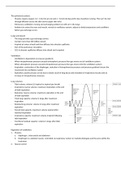
deviation
(SD)
-
shows
how
much
variation
there
is
from
the
average
-
Typical
data
will
show
a
normal
distribution
(bell-shaped
curve)
-
1
SD:
68%...
2
SD:
95%...3
SD:
98%
-
Standard
error
of
the
mean
(SEM)
-
used
to
represent
uncertainty
in
estimation
-
As
SEM
grows
smaller,
the
likelihood
that
the
sample
mean
is
an
accurate
estimation
increases
Standard
error
bar
-
give
an
impression
of
the
precision
of
estimation
of
the
mean
in
each
sample
-
Typically
2
SEM
above
and
below
the
mean
-
Length
shows
spread
around
the
mean
-
If
range
bars
overlap,
indicates
there's
NOT
a
significant
difference
in
averages
and
data
set
1:
1.1
Structur e
of
Water
and
Hydr ogen
Bonding
-
The
properties
of
water
result
from
its
polarity
and
hydrogen
bonding
affect
its
biological
function
-
Living
systems
depend
on
properties
of
water
that
result
from
its
polarity
and
hydrogen
bonding
-
Hydrogen
bond
-
a
weak
interaction
between
the
negative
and
positive
regions
of
two
separate
molecules
-
Covalent
bonds
between
atoms,
hydrogen
bonds
between
molecules
-
Less
dense
as
solid
than
a
liquid
→
ice
floats
-
Sticks
to
itself
→
cohesion
(surface
tension)
-
Sticks
to
other
polar
or
charged
molecules
→
adhesion
(capillary
action)
-
Solvent
for
other
polar
or
charged
molecules
-
Absorb
lots
of
energy
without
increasing
temperature
→
high
specific
heat
-
neutral
pH
→
7
-
Hydrophilic
-
substance
that
has
an
affinity
for
water
(polar);
water-loving
-
Hydrophobic
-
substance
that
does
not
have
an
affinity
for
water
(nonpolar);
water
hating
*Like
dissolves
Like* Standard
deviation
(SD)
-
shows
how
much
variation
there
is
from
the
average
-
Typical
data
will
show
a
normal
distribution
(bell-shaped
curve)
-
1
SD:
68%...
2
SD:
95%...3
SD:
98%
-
Standard
error
of
the
mean
(SEM)
-
used
to
represent
uncertainty
in
estimation
-
As
SEM
grows
smaller,
the
likelihood
that
the
sample
mean
is
an
accurate
estimation
increases
Standard
error
bar
-
give
an
impression
of
the
precision
of
estimation
of
the
mean
in
each
sample
-
Typically
2
SEM
above
and
below
the
mean
-
Length
shows
spread
around
the
mean
-
If
range
bars
overlap,
indicates
there's
NOT
a
significant
difference
in
averages
and
data
set