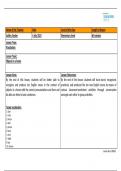
Name of the Teacher Date Level of the class Length of lesson
Ashley Gerber 4 July 2023 Elementary level 60 minutes
Lesson Type:
Vocabulary
Lesson Topic:
Objects in a home
Lesson Aims: Lesson Outcomes:
By the end of this lesson, students will be better able to By the end of the lesson, students will have learnt, recognised,
recognise and produce ten English nouns in the context of practiced, and produced the ten new English nouns by means of
objects in a home with the correct pronunciations and form and various classroom/worksheet activities through conversation
be able use them in basic sentences. amongst each other in group activities.
Target vocabulary:
1. door
2. clock
3. Mirror
4. desk
5. picture
6. lamp
7. chair
8. table
9. bed
10. drawer
Lesson plan 130623
, Anticipated difficulties: Suggested solutions:
Include one relating to L1/age/level of the students and one for
the 10 words (meaning, form, or pronunciation). 1. Through modelling and chorusing, as well as encouraging
group work, learners will learn to pronounce the words
1. Students may have difficulty in pronouncing some of the correctly. The teachers will demonstrate the movement of
more challenging target words because in their L1 the tongue, teeth and lips with an exaggerated movement
language there is no /r/ sound, so this is often replaced when making the /r/ sound in these words. The words would
with /l/ or /w/. Students may therefore struggle to be split up into syllables and said slowly and clearly with
pronounce words such as drawer, mirror, picture, and exaggerated mouth movements. I would ask students to
chair. repeat after me so they can become familiar and
2. Students range from ages 18-38 years of age, with comfortable with pronunciation. Time will be spent on the
different motivations for studying the target language, words with sounds /r/ first before moving on to pronouncing
which could cause divisions within the class. It may also the other words in the target language if necessary.
result in difficulty selecting activities that all the students 2. Remind students that they are all at similar levels of English
can relate to and learn from equally. language and encourage the idea of teamwork through
3. Explaining definitions of the words inn a simple manner highlighting their motivation to improve their English
may be slightly challenging when teaching learners at an language. (Examples include studying in an English-speaking
elementary level of learning the target language. country, travelling or even working in English speaking
4. The odd number of students making up the class (15) countries.) By developing material worksheets that are the
means that pair work will not be possible as there will be same for all students will allow the teacher to identify
one extra person with no partner. student’s abilities and categorise the students if necessary,
5. Students might get confused between the differences of a based on their learning ability.
table and a desk as they have similar meanings, and their 3. The use of images and flashcards paired with the target
appearance is similar. words will help to better illustrate the definition of house
items. By using images and symbols of these items in a home
Lesson plan 130623
Ashley Gerber 4 July 2023 Elementary level 60 minutes
Lesson Type:
Vocabulary
Lesson Topic:
Objects in a home
Lesson Aims: Lesson Outcomes:
By the end of this lesson, students will be better able to By the end of the lesson, students will have learnt, recognised,
recognise and produce ten English nouns in the context of practiced, and produced the ten new English nouns by means of
objects in a home with the correct pronunciations and form and various classroom/worksheet activities through conversation
be able use them in basic sentences. amongst each other in group activities.
Target vocabulary:
1. door
2. clock
3. Mirror
4. desk
5. picture
6. lamp
7. chair
8. table
9. bed
10. drawer
Lesson plan 130623
, Anticipated difficulties: Suggested solutions:
Include one relating to L1/age/level of the students and one for
the 10 words (meaning, form, or pronunciation). 1. Through modelling and chorusing, as well as encouraging
group work, learners will learn to pronounce the words
1. Students may have difficulty in pronouncing some of the correctly. The teachers will demonstrate the movement of
more challenging target words because in their L1 the tongue, teeth and lips with an exaggerated movement
language there is no /r/ sound, so this is often replaced when making the /r/ sound in these words. The words would
with /l/ or /w/. Students may therefore struggle to be split up into syllables and said slowly and clearly with
pronounce words such as drawer, mirror, picture, and exaggerated mouth movements. I would ask students to
chair. repeat after me so they can become familiar and
2. Students range from ages 18-38 years of age, with comfortable with pronunciation. Time will be spent on the
different motivations for studying the target language, words with sounds /r/ first before moving on to pronouncing
which could cause divisions within the class. It may also the other words in the target language if necessary.
result in difficulty selecting activities that all the students 2. Remind students that they are all at similar levels of English
can relate to and learn from equally. language and encourage the idea of teamwork through
3. Explaining definitions of the words inn a simple manner highlighting their motivation to improve their English
may be slightly challenging when teaching learners at an language. (Examples include studying in an English-speaking
elementary level of learning the target language. country, travelling or even working in English speaking
4. The odd number of students making up the class (15) countries.) By developing material worksheets that are the
means that pair work will not be possible as there will be same for all students will allow the teacher to identify
one extra person with no partner. student’s abilities and categorise the students if necessary,
5. Students might get confused between the differences of a based on their learning ability.
table and a desk as they have similar meanings, and their 3. The use of images and flashcards paired with the target
appearance is similar. words will help to better illustrate the definition of house
items. By using images and symbols of these items in a home
Lesson plan 130623