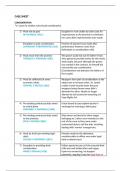
CASE SHEET
CONSIDERATION
╰▷ Cases for Golden rules/Good consideration.
1) Must not be past Daughter-in -law unable to claim costs for
RE MCARDLE [1951] improvement as the promise to reimburse
her came after improvements were made.
Exception to past consideration Promise of payment was made after
LAMPLEIGH V BRATHWAITE [1615] performance however came from
Defendant so consideration valid.
2) Must move from the promise The groom could not sue his father-in-law
TWEDDLE V ATKINSON [1861] who agreed to provide money for the newly
wed couple, because although the groom
was named in the contract, he himself did
not provide any consideration.
(Consideration was between the fathers of
the couple).
3) Must be sufficient (of some Wrappers form part of consideration as the
economic value) object was to increase value. So, nestle
CHAPPEL V NESTLE [1960] couldn’t retail records lower because
wrappers being thrown away didn’t
diminish the value. Nestle no longer
allowed to sell records for breaching s.8
Copy Rights Act.
4) Pre-existing contractual duty owed Uncle bound to pay nephew yearly in
to a third party exchange for marrying a third party
SHADWELL V SHADWELL [1860]
5) Pre-existing contractual duty owed Ship owner not bound to share wages
to the promisor belonging to 2 other crew members to the
STILK V MYRICK [1809] rest of the crew as they were under
contractual duty to sail the ship, including
dealing with ‘normal’ emergencies.
6) Must be fresh (pre-existing legal Promise made by the defendant
duty) unenforceable as officer was under legal
COLLINS V GODEFROY [1831] duty to attend court.
7) Exception to providing fresh Father agreed to pay ex if she ensured their
consideration child was well looked after and happy.
WARD V BYHAM [1956] Upon her remarrying, he stopped
payments, arguing it was her legal duty to
, look after child. But she gone beyond pre-
existing legal duty by ensuring child
happy/well looked after.
PROMISSORY ESTOPEL
╰▷ A lesser sum for the full amount of the debt cannot be valid consideration
1) Originated The creditor can sue for balance due debtor
PINNELS CASE [1602] doesn’t provide any fresh consideration
2) Modern case Beer agreed Foakes could pay in
FOAKES V BEER [1894] instalments, later wanting interest on
judgment debt. Beer entitled to add
interest due to Pinnels Case.
3) Starting point of Promissory Estopel Dennis J established P.E prevented CLP
CLP (Central London Property) V going back on their promise (which was
HTH [1947] lower rent during the years of war)
Requirements of Promissory Estopel:
1) Clear and unequivocal promise: [no case]
Must be clear promisor is giving up
his strict legal rights
2) ‘Shield not a sword’ (not a cause of Wife unable to sue Husband (who promised
action) but failed to make payments) because she
P.E only used as a defence to a claim sought to use P.E as a sword to try enforce
COMBE V COMBE [1951] Husband’s promise of maintenance
3) Inequitable (unfair) for promisor to Builders settled for lesser amount of what
go back on promise (e.g., not given actually due, accepting out of pressure.
under duress) Lord Denning: “Mrs Rees’s threat ‘take it or
D&C BUILDERS V REES [1965] leave it’ inequitable (unfair)
4) Reliance altered his position https://ipsaloquitur.com/contract-law/
Promise was only to show reliance, cases/ajayi-colony-carrier-v-rt-briscoe-
not detriment (i.e., altered his nigeria/
position)
AJAYI V BRISCOE [1972]
5) Suspension (notice) https://www.e-lawresources.co.uk/Tool-
Promissor can reassert his right to Metal-Manufacturing-v-Tungsten.php
CONSIDERATION
╰▷ Cases for Golden rules/Good consideration.
1) Must not be past Daughter-in -law unable to claim costs for
RE MCARDLE [1951] improvement as the promise to reimburse
her came after improvements were made.
Exception to past consideration Promise of payment was made after
LAMPLEIGH V BRATHWAITE [1615] performance however came from
Defendant so consideration valid.
2) Must move from the promise The groom could not sue his father-in-law
TWEDDLE V ATKINSON [1861] who agreed to provide money for the newly
wed couple, because although the groom
was named in the contract, he himself did
not provide any consideration.
(Consideration was between the fathers of
the couple).
3) Must be sufficient (of some Wrappers form part of consideration as the
economic value) object was to increase value. So, nestle
CHAPPEL V NESTLE [1960] couldn’t retail records lower because
wrappers being thrown away didn’t
diminish the value. Nestle no longer
allowed to sell records for breaching s.8
Copy Rights Act.
4) Pre-existing contractual duty owed Uncle bound to pay nephew yearly in
to a third party exchange for marrying a third party
SHADWELL V SHADWELL [1860]
5) Pre-existing contractual duty owed Ship owner not bound to share wages
to the promisor belonging to 2 other crew members to the
STILK V MYRICK [1809] rest of the crew as they were under
contractual duty to sail the ship, including
dealing with ‘normal’ emergencies.
6) Must be fresh (pre-existing legal Promise made by the defendant
duty) unenforceable as officer was under legal
COLLINS V GODEFROY [1831] duty to attend court.
7) Exception to providing fresh Father agreed to pay ex if she ensured their
consideration child was well looked after and happy.
WARD V BYHAM [1956] Upon her remarrying, he stopped
payments, arguing it was her legal duty to
, look after child. But she gone beyond pre-
existing legal duty by ensuring child
happy/well looked after.
PROMISSORY ESTOPEL
╰▷ A lesser sum for the full amount of the debt cannot be valid consideration
1) Originated The creditor can sue for balance due debtor
PINNELS CASE [1602] doesn’t provide any fresh consideration
2) Modern case Beer agreed Foakes could pay in
FOAKES V BEER [1894] instalments, later wanting interest on
judgment debt. Beer entitled to add
interest due to Pinnels Case.
3) Starting point of Promissory Estopel Dennis J established P.E prevented CLP
CLP (Central London Property) V going back on their promise (which was
HTH [1947] lower rent during the years of war)
Requirements of Promissory Estopel:
1) Clear and unequivocal promise: [no case]
Must be clear promisor is giving up
his strict legal rights
2) ‘Shield not a sword’ (not a cause of Wife unable to sue Husband (who promised
action) but failed to make payments) because she
P.E only used as a defence to a claim sought to use P.E as a sword to try enforce
COMBE V COMBE [1951] Husband’s promise of maintenance
3) Inequitable (unfair) for promisor to Builders settled for lesser amount of what
go back on promise (e.g., not given actually due, accepting out of pressure.
under duress) Lord Denning: “Mrs Rees’s threat ‘take it or
D&C BUILDERS V REES [1965] leave it’ inequitable (unfair)
4) Reliance altered his position https://ipsaloquitur.com/contract-law/
Promise was only to show reliance, cases/ajayi-colony-carrier-v-rt-briscoe-
not detriment (i.e., altered his nigeria/
position)
AJAYI V BRISCOE [1972]
5) Suspension (notice) https://www.e-lawresources.co.uk/Tool-
Promissor can reassert his right to Metal-Manufacturing-v-Tungsten.php