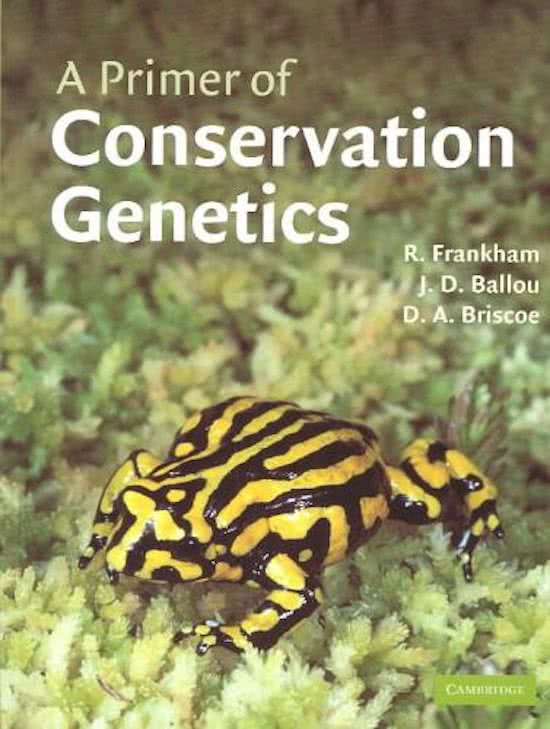
Samenvatting ABG51806 – Book: A Primer of Conservation Genetics
Chapter 1 Introduction
Endangered species decline due to: habitat loss, overexploitation, introduced species and
pollution. At small population sizes additional random factors (demographic, environmental,
genetic and catastrophic) increase their risk of extinction.
Biodiversity: variety of ecosystems, species, populations within species, and genetic diversity
among and within these populations. The biological diversity of the planet is rapidly depleting
as direct/indirect effect of human activities.
When extinctions are balanced by the origin of new species (speciation), biodiversity is
maintained.
Four justifications for maintaining biodiversity are:
Economic value of bio resources: all our food, drugs, natural fiber, rubber, timber etc.
Ecosystem services: essential biological functions benefiting humankind, provided
free of charge by living organisms. For example: oxygen production by plants, climate
control by forests, nutrient cycling, and water purification.
Aesthetic value: pleasure from living organisms. For example: keeping pets, growing
ornamental plants, visiting zoos etc.
The rights of living organisms to exist (ethical): our species does not have the right to
drive others to extinction.
The majority of recorded extinctions and a substantial proportion of currently threatened
species are on islands.
Threatened: high risk of extinction within a short time frame.
- Critically endangered
- Endangered
- Vulnerable
- Lower risk
Criteria:
A. Actual or projected reduction in population size
B. Extent of occurrence or area of occupancy of
C. Population numbering and an estimated continuing decline, or population severely
fragmented
D. Population estimated to number
E. Quantitative analysis showing the probability of extinction in the wild.
Projections indicate greatly elevated extinction rates in the near future.
Listing of a species or sub-species as endangered provides a scientific foundation for
national and international legal protection and may lead to remedial actions for recovery.
Causes of extinctions
Human-associated factors
The primary factors contributing to current extinctions are habitat loss, introduced species,
over-exploitation and pollution. These are all generated by humans, and related to human
population growth.
Stochastic factors
Additional accidental environmental catastrophic, demographic and genetic factors increase
the risk of extinction in small populations.
Chapter 1 Introduction
Endangered species decline due to: habitat loss, overexploitation, introduced species and
pollution. At small population sizes additional random factors (demographic, environmental,
genetic and catastrophic) increase their risk of extinction.
Biodiversity: variety of ecosystems, species, populations within species, and genetic diversity
among and within these populations. The biological diversity of the planet is rapidly depleting
as direct/indirect effect of human activities.
When extinctions are balanced by the origin of new species (speciation), biodiversity is
maintained.
Four justifications for maintaining biodiversity are:
Economic value of bio resources: all our food, drugs, natural fiber, rubber, timber etc.
Ecosystem services: essential biological functions benefiting humankind, provided
free of charge by living organisms. For example: oxygen production by plants, climate
control by forests, nutrient cycling, and water purification.
Aesthetic value: pleasure from living organisms. For example: keeping pets, growing
ornamental plants, visiting zoos etc.
The rights of living organisms to exist (ethical): our species does not have the right to
drive others to extinction.
The majority of recorded extinctions and a substantial proportion of currently threatened
species are on islands.
Threatened: high risk of extinction within a short time frame.
- Critically endangered
- Endangered
- Vulnerable
- Lower risk
Criteria:
A. Actual or projected reduction in population size
B. Extent of occurrence or area of occupancy of
C. Population numbering and an estimated continuing decline, or population severely
fragmented
D. Population estimated to number
E. Quantitative analysis showing the probability of extinction in the wild.
Projections indicate greatly elevated extinction rates in the near future.
Listing of a species or sub-species as endangered provides a scientific foundation for
national and international legal protection and may lead to remedial actions for recovery.
Causes of extinctions
Human-associated factors
The primary factors contributing to current extinctions are habitat loss, introduced species,
over-exploitation and pollution. These are all generated by humans, and related to human
population growth.
Stochastic factors
Additional accidental environmental catastrophic, demographic and genetic factors increase
the risk of extinction in small populations.