100% satisfaction guarantee Immediately available after payment Both online and in PDF No strings attached 4.2 TrustPilot
logo-home
Exam (elaborations)

IND2601 Assignment 2 (ANSWERS) Semester 1 2024 - DISTINCTION GUARANTEED

Rating
3.0
(1)
Sold
19
Pages
95
Grade
A+
Uploaded on
15-08-2023
Written in
2023/2024

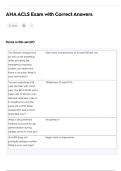
Well-structured IND2601 Assignment 2 (ANSWERS) Semester 1 2024 - DISTINCTION GUARANTEED. (DETAILED ANSWERS - DISTINCTION GUARANTEED!). ... Question 1 Complete Marked out of 1.00 Question 2 Complete Marked out of 1.00 Question 3 Complete Marked out of 1.00 QUIZ Which of the following statements DOES NOT signify mangangaahla (to move the jaw) in sentencing under customary law? a. The amount of talking that the court offi cials need to do in order to convince a litigant of his guilt b. The amount of money paid to a court messenger to summon a litigant to appear before a traditional court. c. The amount regarded as compensation to the court for the time spent by its members on a case. d. The Amount of goods that are given in order to close the court proceedings in a traditional court. Which of the following is NOT an example of general principles of customary law of succession in terms of originalcustomary law? a. Succession takes place only on the death of a predecessor. b. It was common for African people to dispose of their assets by means of a will. c. Succession is a duty that cannot be relinquished or ceded. d. A distinction is made between general succession and special succession. Implications for reforms to the concept of ‘descendant’ in terms of the Reform of Customary Law of Succession andRegulation of Related matters does NOT include that a a. person who is an ascendant in terms of the Act; namely those of the blood relations in the ascending line as well asadoptive parents. b. person who, during the lifetime of the deceased was accepted as their child in terms of customary law. c. woman from a substitute marriage such as for seed-raising. d. woman married by another in terms of customary law for purposes of bearing children for the deceased’s household. 3/20/24, 11:00 PM Assessment 2: Attempt review Question 4 Complete Marked out of 1.00 Question 5 Complete Marked out of 1.00 Question 6 Complete Marked out of 1.00 Question 7 Complete Marked out of 1.00 The role of magico-religious conceptions in African customary law implies that a. there are supernatural powers at work in the universe that may be used as a person for his or her own ends. b. after death a person continues to live in a spiritual world more or less on the same way as he or she did on earth. c. The Holy Spirit that is equivalent to ancestral powers that all human beings are endowed with at death. d. disregard of or deviation from rules of living may lead to punishment by supernatural powers derived from sorceries. The Setswana maxim molato ga o bôle, go bola nama (a crime does not perish; only meat does), denotes the following: a. This means that divorce is effected by the abandonment by the wife and her family of all the rights in the marriage. b. Subjects who leave the area will later be welcomed back by the tribe, although they will not be given the bestposition. c. Nobody is judge in his or her own case in terms of customary law. d. The prescription of a crime is unknown under customary law Which of the following statement is NOT applicable where either of the prospective spouses to a customary marriage is aminor? a. Both his or her parents or if he or she has no parents, his or her legal guardian must consent to the marriage. b. The commissioner of child welfare may grant consent to the marriage if the consent of the parent or guardiancannot be obtained. c. The commissioner of child welfare may give consent even if either of the parents or guardian refuses to grantconsent. d. The Minister of Home Affairs may grant written permission to conclude the marriage. As D sleeps in his house, he is accosted by A and B who intend to rob him. D keeps an axe behind the door and uses theweapon to scare away the intruders, slashes A’s arm in the process. Which of the following can he use as a ground forjustifi cation for hurting A? a. Neccessity b. Self defence c. Discipline d. Self-help 3/20/24, 11:00 PM Assessment 2: Attempt review Question 8 Complete Marked out of 1.00 Question 9 Complete Marked out of 1.00 Question 10 Complete Marked out of 1.00 Question 11 Complete Marked out of 1.00 The right to culture that is protected under section 30 and 31 of the Constitution implies that the state must a. force all courts to apply and therefore recognise customary law. b. preserve the existence and identity of cultural groups. c. ensure that the recognition of customary law is subject to the Bill of Rights. d. determine and pass legislation that is specifi cally applicable to customary law. In terms of the original customary law general property would include a. earnings of family members, including the earnings of a midwife and medicine woman. b. property of the family head’s mother’s house to which he has succeeded. c. clothing, walking sticks, snuff boxes, necklaces and weapons. d. property given to a woman on her marriage, such as household utensils and a certain beast that is given to herduring her marriage, such as the ubulungu beast. Which of the following are some of the known presumptions in indigenous law? a. The children of a married woman are the children of her husband. b. An adult is insane until there is evidence to the contrary. c. A person may voluntarily entrust pieces of personal clothing to a stranger. d. A person may voluntarily lie prostrate to be hit at the back. Which of the following statements accurately applies to functions of traditional councils? Traditional councils are a. enjoined to perform functions conferred only by customary law, customs and statutory law. b. to administer the affairs of the traditional community in accordance with custom and western laws. c. allocated all their roles and functions by their provincial spheres of government. d. enjoined to contribute towards, participate in and promote development in one form or another. 3/20/24, 11:00 PM Assessment 2: Attempt review Question 12 Complete Marked out of 1.00 Question 13 Complete Marked out of 1.00 Question 14 Complete Marked out of 1.00 Question 15 Complete Marked out of 1.00 Which of the following does NOT depict one of the ways for terminating an engagement in terms of customary law? a. Exclusive agreement by families of the spouses b. The death of one of the spouses c. Unilateral decision by one of the parties d. Mutual agreement by the parties Which sentence below most accurately describes the effect of section 39 of the Constitution? a. When interpreting the Bill of Rights a court, tribunal or forum must consider foreign law. b. When interpreting the Bill of Rights, a court, tribunal or forum may consider international law. c. When interpreting the Bill of Rights, a court, tribunal or forum must promote the spirit, purport and objects thereof. d. When interpreting the Bill of Rights, a court, tribunal or forum may promote the values that underlie an open anddemocratic society based on human dignity, equality and freedom. In respect of the dissolution of marriages contracted after 15 November 2000, which statement is true? a. A customary marriage can be dissolved only on the ground of irretrievable breakdown. b. A marriage can only be dissolved by a traditional court. c. The position is that a marriage can be terminated by death as per customary law d. Section 8 of the Act 120 of 1998 provides for dissolution by decree of divorce or death. A, B and C are three brothers, A being the eldest and C the youngest. The brothers are married, and they each have two sons.B’s twin sons, F and G are born fi rst. A’s sons, D and E, are born a year apart and are younger than B’s sons. C’s sons are bornH, and I are born last. Which sons will hold the higher rank? a. F and G because they were born fi rst. b. D and E because their father is the fi rst born. c. H and I because they are the last born. d. F and G because they are twins 3/20/24, 11:00 PM Assessment 2: Attempt review Question 16 Complete Marked out of 1.00 Question 17 Complete Marked out of 1.00 Question 18 Complete Marked out of 1.00 Question 19 Complete Marked out of 1.00 The feature of customary law that depicts group orientation can be illustrated by the fact that a. the parties to a marriage are the family groups. b. most contracts are concluded between individual members of a family. c. a wrongdoer is always liable as an individual for their acts. d. justice administration is entrusted to an appointed member of council. Which of the following does not refer to private African customary law a. customary law of things b. customary law of the family c. customary criminal law d. customary law of obligations X and Y entered into a marriage on the 26 of August 1998 in Kwa-Zulu Natal. X, the husband, manages the family assets andcontrols the acquisition and disposal of such assets as the family head. According to the judgement in the case of Gumede vThe President of the RSA (3) SA 152 (CC) which of the following statements is correct regarding the legality of X’s actions? a. The proprietary consequences of customary marriages entered into before the commencement of the Act shouldcontinue to be governed by customary law and thus, the husband has the right of control over the marriage property. b. Both spouses in a customary marriage, irrespective of when it was concluded, have the right to control the marriageproperty thus the husband’s actions are incorrect. c. Section 20 of the Natal Code of Zulu law states that the husband is the head of the family and therefore X hasexclusive rights to control the marriage property. d. Customary marriages entered into before the commencement of the act are not regulated by Act 120 of 1998 andtherefore X’s actions valid. The Traditional Leadership and Governance Framework Act 41 of 2003 (as amended by Act 23 of 2009) introduces a conceptof...to the recognition of Traditional leadership communities. a. senior traditional communities b. regent traditional communities c. principal traditional communities d. Kingship traditional communities 3/20/24, 11:00 PM Assessment 2: Attempt review Question 20 Complete Marked out of 1.00 Question 21 Complete Marked out of 1.00 Question 22 Complete Marked out of 1.00 Which statement is correct? People voluntarily observe legal rules and the rules for living in African customary law becauseof the following factors a. The religious or sacral (holy) element of the law, the knowledge that if a person is harmed, that person will endeavourto get compensation or will take measures to protect him or herself, public opinion, and fear of punishment. b. The religious or sacral (holy) element of the law, private opinion and the knowledge that if a person is harmed, thatperson will endeavour to get compensation or will take measures to protect him or herself. c. The religious or sacral (holy) element of the law, the knowledge that if a person is harmed, that person will endeavourto get compensation or will take measures to protect him or herself, fear of punishment and the fact that only theindigenous leaders in the community have a broad general knowledge of the law. d. The religious or sacral (holy) element of the law, the knowledge that if a person is harmed, that person will endeavourto get compensation or will take measures to protect him or herself, and the infl uence of the police, courts andjudges in the community. Choose the correct statement NOT applicable to the lodgement procedure of cases before a customary law court. a. A party may refer a case to the chief's court if dissatisfi ed with the outcome of a headman's court. b. Where a case is complicated for the headman's court, it may be referred to the chief's court. c. The chief personally receives and sets a trial date for the trial when a case is lodged. d. The procedure in the chief's court does not differ from that in the headman's court. Which of the following statements is NOT applicable to defi ning a ‘seed raiser’ in African customary law? a. A woman married by the mother of the deceased husband for the purpose of raising an heir for her late son’s estate. b. A woman with whom the man entered into the union for the purpose of providing children for his spouse’s house. c. The brother of the deceased husband who enters into union with the deceased’s wife for the purpose of raising hischildren. d. The elder male relative of the deceased who is taking fi nancial care of the deceased’s family. 3/20/24, 11:00 PM Assessment 2: Attempt review Question 23 Complete Marked out of 1.00 Question 24 Complete Marked out of 1.00 Question 25 Complete Marked out of 1.00 Which sentence below most accurately describes the effect of section 39 of the Constitution? a. When interpreting the Bill of Rights, a court, tribunal or forum must consider foreign law the values that underlie anopen and democratic society based on human dignity, equality and freedom. b. When interpreting the Bill of Rights, a court, tribunal or forum may consider international law the values that underliean open and democratic society based on human dignity, equality and freedom. c. When interpreting the Bill of Rights, a court, tribunal or forum may promote the values that underlie an open anddemocratic society based on human dignity, equality and freedom. d. When interpreting the Bill of Rights, a court, tribunal or forum must promote the spirit, purport and objects thereof. According to the customary law of evidence, which of the following statements is true? a. Evidence is given under oath in a traditional court. b. Evidence is the oral statement made in court by a party or a witness either voluntarily or in to a question. c. The court is responsible for seeing that witnesses are present on the day of trial. d. The court may not call anybody who is not a specifi ed witness to testify. Which of the following is NOT a requirement for a customary Union marriage according to the Code of Zulu Law. a. A public declaration by the bride consenting to the customary marriage. b. Consent of the bridegroom’s father to the customary marriage. c. A public declaration of the groom consenting to the marriage. d. Consent of the bride’s father to the customary marriage. Question 1 Complete Mark 0.00 out of1.00 Question 2 Complete Mark 1.00 out of1.00 Question 3 Complete Mark 1.00 out of1.00 Question 4 Complete Mark 1.00 out of1.00 Question 5 Complete Mark 1.00 out of1.00 Started on Wednesday, 5 April 2023, 10:21 PM State Finished Completed on Wednesday, 5 April 2023, 11:44 PM Time taken 1 hour 23 mins Marks Grade out of 100.00 The distinction between customary public law and customary private law is that customary public law includes customary …as one of the subdivisions of the law. a. constitutional law. b. law of persons. c. law of succession. d. family law. Which of the following statements is NOT true? When a tribal wife is appointed as a regent, typical problems that may arise in defining Traditional leadership will arise from situationswhere… a. The tribal wife associates with unacceptable males. b. The wife refuses to be married through civil rites and regarded as a tribal wife even though she is not. c. The tribal wife refuses to co-operate with the ruling family. d. A wife who is not the tribal wife tries to usurp the traditional leadership with her son. The concrete versus the abstract approach that is characteristic of customary law means that… a. While specialised legal systems adopt the abstract approach, unspecialised legal systems are more concrete, real and visible in approach. b. Specialized legal systems are marked by visible acts such as signing of a marriage register to signify the conclusion of a marriage contract. c. In specialised legal systems, performance or part performance is required in the formulation of contracts. d. proof for adultery in specialised legal systems was obtained by catching the culprit in the act and taking some of his personal belongings. The concept of mendacity refers to … a. a person telling lies in court. b. the expiration of a debt. c. a person escaping punishment from the court. d. the court’s duty to cross-examine and cross-examination. The feature of customary law that depicts group orientation can be illustrated by the fact that… a. most contracts are concluded between individual members of a family. b. the parties to a marriage contract are the family groups. c. a wrongdoer is always liable as an individual for their acts. d. justice administration is entrusted to an appointed member of council.  Dashboard / Courses / UNISA / 2023 / Semester 1 / IND2601-23-S1 / Welcome Message / Assessment 2  Dashboard Calendar 25.00/25.00 100.00 Question 6 Complete Mark 0.00 out of1.00 Question 7 Complete Mark 1.00 out of1.00 Question 8 Complete Mark 1.00 out of1.00 Question 9 Complete Mark 1.00 out of1.00 Question 10 Complete Mark 1.00 out of1.00 Question 11 Complete Mark 0.00 out of1.00 One of the indications that fundamental rights have priority over customary law is that the… a. rights in the Bill of Rights may be limited by any law. b. courts must promote the values that underlie an undemocratic society. c. Bill of Rights is only applicable to customary law. d. Constitution is the supreme law. Woman to woman marriages can be categorized as which of the following: a. A homosexual union concluded under customary law. b. Where a widow marries another woman to raise an heir for her late husband. c. A common occurrence in various communities in South Africa. d. A woman married by a woman to raise children for her brother’s house. Which of the following is NOT an example of house property? a. Marriage goods (lobolo) received for the daughters of the house. b. Property that the family head has earned through his occupation. c. Compensation for the wife’s adultery or the seduction of any of the daughters. d. Crops from the fields belonging to the house. The main aim of the Reform of Customary Law of Succession and Regulation of Related Matters Act 11 of 2009 is to … a. provide for the devolution of certain property in terms of the common law of intestate succession. b. regulate the devolution of the deceased’s estate married in terms of common law. c. provide for the devolution of certain property in terms of the common law of testate succession. d. ensure that matters of succession are handled in western courts of law. The group has identified a leader amongst them and wishes to appoint him as a senior traditional leader in their new community. Who can they approach to make the appointment? a. The President of South Africa b. The Provincial House of Traditional Leaders c. The Premier of their Province. d. The National House of Traditional Leader X and Y entered into a marriage on the 26 of August 1998 in Kwa-Zulu Natal. X, the husband, manages the family assets and controls the acquisition and disposal of such assets as thefamily head. According to the judgement in the case of Gumede v The President of the RSA (3) SA 152 (CC) which of the following statements is correct regarding the legality of X’sactions? a. The proprietary consequences of customary marriages entered into before the commencement of the Act should continue to be governed by customary law and thus, thehusband has the right of control over the marriage property. b. Both spouses in a customary marriage, irrespective of when it was concluded, have the right to control the marriage property thus the husband’s actions are incorrect. c. Section 20 of the Natal Code of Zulu law states that the husband is the head of the family and therefore X has exclusive rights to control the marriage property. d. Customary marriages entered into before the commencement of the act are not regulated by Act 120 of 1998 and therefore X’s actions are valid.  Dashboard / Courses / UNISA / 2023 / Semester 1 / IND2601-23-S1 / Welcome Message / Assessment 2 Dashboard Calendar Question 12 Complete Mark 1.00 out of1.00 Question 13 Complete Mark 0.00 out of1.00 Question 14 Complete Mark 0.00 out of1.00 Question 15 Complete Mark 1.00 out of1.00 Question 16 Complete Mark 1.00 out of1.00 Question 17 Complete Mark 1.00 out of1.00 Before 6 December 2002, the estate of African persons who died intestate was administered by the … a. master of the High Court. b. local magistrate in the area where the deceased lived. c. local chief in the area where the deceased resided. d. male elders of the family of the deceased. Which of the following statements is NOT applicable to defining a ‘seed raiser’ in African customary law? a. A woman married by the mother of the deceased husband for the purpose of raising an heir for her late son’s estate. b. A woman with whom the man entered into the union for the purpose of providing children for his spouse’s house. c. The brother of the deceased husband who enters into union with the deceased’s wife for the purpose of raising his children. d. The elder male relative of the deceased who is taking financial care of the deceased’s family. Which statement is NOT correct. The significance of the meal shared in addition to the punishment imposed on a guilty party who has committed the crime of incest is to indicate… a. lustration and conciliation. b. reconciliation for all parties involved. c. a remedy to heal the wounds. d. purification between the parties. Which of the following acts constitutes a crime in African Customary law? a. A does not like B. he is threatening with possible ways of killing B. b. D sleepwalks one night and causes a burning candle to fall leading to burning a house. c. S enters T’s house intending to steal some goods, but before he does, the alarm is triggered, and he runs away. d. X is charged by the traditional leader to vacate land identified by the elders for community projects but refuses. Which of the following statements is NOT correct? A consequence of polygynous marriages is that… a. there are two or more families, and this family unit is known as the agnatic group. b. the legal relations within the family also apply to each family within the household. c. the various families are bound to one another in particular relationships of rank by means of the first wife. d. the multiple families involved require a complicated system of property relations. Which of the following statements is correct regarding the case of Bhe v Magistrate Khayelitsha and Others 2005 (1) BCLR 1 (CC)?. a. The case dealt with the allotment of property made by the family head before his death. b. A decision was made regarding the inheritance of children borne from the ukungena unions. c. The case questioned the status quo regarding the dissolution of property of a male who died testate. d. It was a landmark case on the unfair discrimination of female descendants because of the system  Dashboard / Courses / UNISA / 2023 / Semester 1 / IND2601-23-S1 / Welcome Message / Assessment 2 Dashboard Calendar Question 18 Complete Mark 1.00 out of1.00 Question 19 Complete Mark 1.00 out of1.00 Question 20 Complete Mark 1.00 out of1.00 Question 21 Complete Mark 1.00 out of1.00 Question 22 Complete Mark 0.00 out of1.00 Question 23 Complete Mark 0.00 out of1.00 In 1960, A (a 17-year-old boy)) and B (a 16-year-old girl) and their respective fathers concluded an agreement in terms of which A had to deliver six head of cattle and R5 000 aslobolo to B’s family. A delivered the lobolo agreed upon and, shortly afterwards, B was allowed to reside with A and his family. In 1962, twin daughters were born to them, namely Cand D. However, B experienced some complications during childbirth and died shortly afterwards. A few years after her death, A discovered that B was actually a member of the clanof his mother’s people. Which of the following statements is false? a. A and B entered into their marriage in 1960, which was before the Recognition of Customary Marriages Act 120 of 1998 came into operation. Therefore, in KwaZulu- Natal,section 38(1) of the Codes of Zulu Law would apply. b. The prohibition against marrying within the prohibited degrees of kinship extends to KwaZulu-Natal, their marriage is not valid. c. Their marriage is invalid because at the time of their union, they were considered to be minors in Kwa-Zulu Natal. d. The facts do not indicate that B made a public declaration to the official witness to the effect that her union with A was taking place with her consent. As a result, there is nolegally valid customary union between B and A Which of the following statements is true? According to the customary law of succession in Kwa-Zulu Natal… a. a successor succeeds to the assets and all the debts of his predecessor in KwaZulu-Natal. b. “succession” is a duty that can be relinquished or ceded. c. a successor may never be removed from the line of succession. d. succession can take place while the family head is still alive. Which one of the following is not a requirement for a traditional customary marriage? a. The man and the woman concerned must not be related to one another within the prohibited degree of kinship. b. There must be consensus between the two-family groups concerned regarding the negotiations to the marriage. c. The bride must be transferred by her family to the man’s family group. d. The man must not already be involved in a marital union. Select the correct statement. In Southern Africa’s customary law, the offences that are harmful to the community… a. can only be decided in certain selected customary courts. b. allow parties the freedom to settle the matter between themselves. c. have certain consequences not approved of and are punishable. d. are disapproved of only by the leadership of the community. X, a notorious drunkard, whilst walking to a wedding ceremony witnesses Y fiddling with his neighbor’s kraal. To his amazement, he realizes that Y is leading the cattle out of the kraaland away from the property. Two weeks later, X arrives drunk at the traditional court to give evidence of the theft he witnessed. According to the principles of the traditional court,should X be allowed to give evidence? a. X cannot give evidence because he is intoxicated and thus his evidence will be questionable. b. X can give evidence if the court allows him to sober up first. c. X can only give evidence if there is another person available to corroborate his story. d. X cannot give evidence because he is known as a village drunk. In terms of court procedure in customary courts, an in situ investigation refers to … a. Cross-examination and questioning in court. b. the use of extra-judicial methods of proof. c. investigations where the offence took place. d. the court requiring physical evidence.  Dashboard / Courses / UNISA / 2023 / Semester 1 / IND2601-23-S1 / Welcome Message / Assessment 2 Dashboard Calendar Question 24 Complete Mark 1.00 out of1.00 Question 25 Complete Mark 1.00 out of1.00 Which of the following is NOT an example of customary law determinations? a. The allocation or refusal of residential and agricultural land. b. The permission or refusal of immigration or emigration. c. The permission or refusal to gather natural products from communal land. d. The allocation of a date to families to conduct burials of their family members. Which one of the following sections in the Constitution of South Africa has implications to the recognition of customary law? a. Section 112 b. Section 13 c. Section 31 d. Section 1 ◄ Assessment 1 Jump to...  Dashboard / Courses / UNISA / 2023 / Semester 1 / IND2601-23-S1 / Welcome Message / Assessment 2 Dashboard Calendar 3. COMMENTARY ON THE MULTIPLE-CHOICE ASSIGNMENT 02/2021 Question 1 African customary law of evidence is based on A) Custom that consists of formal rules B) the merits based on formal rules C) technical grounds for judgement D) reasonableness and effectiveness : D Question 2 Implications for reforms to the concept of ‘descendant’ in terms of the Reform of Customary Law of Succession and Regulation of Related matters does NOT include that A) a person who is an ascendant in terms of the Act; namely those of the blood relations in the ascending line as well as adoptive parents. B) a person who, during the lifetime of the deceased was accepted as their child in terms of customary law. C) a woman from a substitute marriage such as for seed-raising. : A Question 3 In most African communities the theft of property constitutes a delict only except for theft of A) Cattle B) Clothing C) Pots D) Land : A Question 4 In terms of the courts decision in the case of Shilubana v Nnamitwa A) traditional authorities may update and change customary law to fit in with the living customary law. B) traditional communities may develop customary law in accordance with norms and values of the Constitution 8 IND2601/201/2/2021 C) traditional authorities should always align and develop customary law in accordance with norms and values of the Constitution. D) traditional authorities should make sure that customary law is aligned with gender considerations. : B Question 5 Indicate the statement that is NOT correct. The significance of the meal ... A) lustration and conciliation B) reconciliation for all parties involved C) a remedy to heal the wounds D) purification between the parties : C Question 6 Judicial control of a traditional leader’s actions in terms of common law entitles an aggrieved party to inter alia apply for ... A) review of the decision in the tribal court. B) mandamus in the High court. C) mediation by the traditional council. D) issue of summons in a tribal court. : C Question 7 Select the correct statement. In Southern Africa’s customary law , the offences that are harmful to the community… A) Can only be decided in certain selected customary courts B) Allow parties freedom to settle the matter between themselves C) Have certain consequences not approved of and are punishable D) Are disapproved of only by the leadership of the community : C 9 Question 8 The feature of customary law that depicts group orientation can be illustrated by the fact that A) the parties to a marriage are the family groups. B) most contracts are concluded between individual members of a family. C) a wrongdoer is always liable as an individual for their acts. D) justice administration is entrusted to an appointed member of council. : A Question 9 The period within which a sentence of a customary court may be enforced in terms of formal law is A) 30 days after registration of the court judgement with the local Magistrate B) Directly after the customary court session C) If no notice of appeal has been received within 30 days after court registration D) After the parties have shared a reconciliatory meal : C Question 10 The possible defiling effect that assault may have on the community emphasizes... A) The value attached to harmonious relationships between the community B) The sacred position held by a Traditional leader within the community C) The value of Traditional Authority in the conception of customary law : A Question 11 The primary aim of a customary hearing is A) prove who is right and wrong between parties B) Determine the truth and to reconcile the parties C) Listen to the version of certain witnesses D) Question the validity of some witnesses. : B Question 12 10 IND2601/201/2/2021 The role of magico-religious conceptions in African customary law implies that A) there are supernatural powers at work in the universe that may be used as a person for his or her own ends. B) after death a person continues to live in a spiritual world more or less on the same way as he or she did on earth. C) The Holy Spirit that is equivalent to ancestral powers that all human beings are endowed with at death. D) disregard of or deviation from rules of living may lead to punishment by supernatural powers derived from sorceries. : D Question 13 The Traditional Leadership and Governance Framework Act 41 of 2003 ( as amended by Act 23 of 2009) introduces which new concept to the recognition of Traditional leadership communities? A) senior traditional communities B) regent traditional communities C) principal traditional communities D) Kingship traditional communities : C Question 14 Which of the following Acts described in the following statements would constitute contempt of the ruler? A) A is visiting a friend in a traditional tribal area. He would like to start a business there. Without the help of anybody else he arranges a public meeting. B) Z, a headman, determines, without consulting the members of his council or the ruler that people may use of the first fruits of the lands before the ruler announces that this may be done. When it is pointed out to him that the ruler has not performed the customary ceremony in this regard Z says in public that he does not believe in the ceremonies and that he cannot wait for the ruler. : B Question 15 Which of the following are some of the known presumptions in indigenous law? 11 A) The children of a married woman are the children of her husband. B) An adult is insane until there is evidence to the contrary. C) A person may voluntarily entrust pieces of personal clothing to a stranger. D) A person may voluntarily lie prostrate to be hit at the back. : A Question 16 Which of the following DOES NOT constitute an act of assault in customary? A) A plays a prank on B whilst sitting on a couch and the latter blacks out B) A stabs B on the leg and immediately blood comes out of the stab wound C) A sets his Dog on B and the latter bleeds D) A throws a cat on B and the cat bites B : A Question 17 Which of the following does not depict one of the ways for terminating an engagement in terms of customary law? A) An agreement by families of the spouses B) The death of one of the spouses C) Unilateral decision by one of the parties D) Mutual agreement by the parties : A Question 18 Which of the following does not refer to private African customary law A) customary law of things B) customary law of the family C) customary criminal law D) customary law of obligations : C Question 19 Which of the following factors CANNOT be said to influence the establishment and structure of a jural community in terms of customary law? 12 IND2601/201/2/2021 A) Genealogical B) Financial C) Religious D) Territorial : B Question 20 Which of the following is NOT a requirement for a customary Union marriage according to the Code of Zulu Law. A) A public declaration by the bride consenting to the customary marriage. B) A public declaration of the groom consenting to the marriage. : B Question 21 Which of the following is NOT an example of general principles of customary law of succession in terms of original customary law? A) Succession takes place only on the death of a predecessor. B) It was common for African people to dispose of their assets by means of a will. C) Succession is a duty that cannot be relinquished or ceded. D) A distinction is made between general succession and special succession. : B Question 22 Which of the following statement is NOT applicable where either of the prospective spouses to a customary marriage is a minor? A) Both his or her parents or if he or she has no parents, his or her legal guardian must consent to the marriage. B) The commissioner of child welfare may grant consent to the marriage if the consent of the parent or guardian cannot be obtained. C) The commissioner of child welfare may give consent even if either of the parents or guardian refuses to grant consent. D) The Minister of Home Affairs may grant written permission to conclude the marriage. : C Question 23 13 Which of the following statements accurately applies to functions of traditional councils? Traditional councils are... A) enjoined to perform functions conferred only by customary law, customs and statutory law. B) to administer the affairs of the traditional community in accordance with custom and western laws. C) allocated all their roles and functions by their provincial spheres of government. D) enjoined to contribute towards, participate in and promote development in one form or another. : D Question 24 Which of the following statements DOES NOT signify mangangaahla (to move the jaw) in sentencing under customary law? A) The amount of talking that the court officials need to do in order to convince a litigant of his guilt B) The amount of money paid to a court messenger to summon a litigant to appear before a traditional court. C) The amount regarded as compensation to the court for the time spent by its members on a case. D) The amount of goods that are given in order to close the court proceedings in a traditional court. : B Question 25 Which sentence below most accurately describes the effect of section 39 of the Constitution? A) When interpreting the Bill of Rights a court, tribunal or forum must consider foreign law. B) When interpreting the Bill of Rights, a court, tribunal or forum may consider international law. C) When interpreting the Bill of Rights, a court, tribunal or forum must promote the spirit, purport and objects thereof. D) When interpreting the Bill of Rights, a court, tribunal or forum may promote the values that underlie an open and democratic society based on human dignity, equality and freedom. : D 14 ASSIGNMENT 02: MULTIPLECHOICE QUESTIONS CLOSING DATE: 09 APRIL 2020 UNIQUE NUMBER: 747479 Question 1 <Customary law means the customs and usages traditionally observed among indigenous African peoples of South Africa and which form part of the culture of those people=. This definition is found in 1) Section 1 of the Recognition of Customary Marriages Act 120 of 1998. 2) Section 1 of the Traditional Leadership and Governance Framework Act 41 of 2003. 3) Section 1 of the Reform of Customary Law of Succession and Regulation of Related Matters Act 11 of 2009. 4) Section 1 of the Black Administration Act 38 of 1927. Question 2 The characteristic of customary law that is expressed as group versus individual orientation means that… 1) emphasis of the law is placed on the parties concerned in a dispute 2) although the family head was nominally the owner of the family property, he was not liable for debts of the other members of the family home 3) individuals function within the context of the group to which they belong 4) the rights emanating from the seduction of a girl could only be claimed from the perpetrator by herself to the exclusion of family members Question 3 Which of the following are some of the known presumptions in indigenous law? 1) The children of a married woman are the children of her husband. 2) An adult is insane until there is evidence to the contrary. 3) A person may voluntarily entrust pieces of personal clothing to a stranger. 4) A person may voluntarily lie prostrate to be hit at the back. Question 4 The group has identified a leader amongst them and wish to appoint him as a senior traditional leader in their new community. Whom can they approach to make the appointment? 1) The President of South Africa. 2 2) The Premier of their Province. 3) The Provincial House of Traditional Leaders 4) The National House of Traditional Leaders. Question 5 Which statement illustrates some of the steps that need to be taken by the appointing authority in effecting the appointment? 1) Notify the previous traditional leader of the intention to recognise and appoint the new leader. 2) Publish the appointment in the Government Gazette. 3) Notify the National House of Traditional leaders. 4) Send a copy of the letter of appointment to the office of the President of the Republic of South Africa. Question 6 The conflict between customary law norms and provisions of fundamental rights outlawing discrimination…. 1) is not specifically resolved by the Constitution 2) is directly regulated by section 2 and 36(i) of the Constitution 3) is directly regulated by section 5(8)(i) of the Constitution 4) is specifically resolved by the provisions of section 8 and 39(i) of the Constitution Question 7 The effect of the decision taken in the Moseneke case was that between 2002 and 2004, an intestate estate of a black person reported to the Master was administered in terms of … 1) customary law. 2) native law. 3) zulu code. 4) common law. Question 8 Ukuvusa custom may be applied if … 1) a married man dies childless. 2) an unmarried male dies. 3) a female dies childless. 4) the wife cannot bear children. Question 9 The Recognition of Customary Marriages Act 120 of 1998 recognizes polygynous marriages, defined as ………………….. IND2601/101/3/2020 3 1) a woman marrying more than one man. 2) a man marrying more than one woman. 3) a woman marrying another woman. 4) a man marrying not more than one woman. Question 10 House property includes 1) Property of the family head9s mother 8s house to which he has succeeded 2) Earnings of the family head through his occupation 3) Property acquired by an individual personally 4) Marriage goods (lobolo) received for the daughters Question 11 The effect of the ruling in the case of Gumede v President of the RSA 2009 (3) SA 152 (CC) is that 1) The proprietary consequences of marriages only entered before the commencement of the Act are now in community of profit 2) Both spouses in all customary marriage have split control over marriage property 3) Proprietary consequences of marriages entered before and after the commencement of the Act are in community of property. 4) None of the above is applicable Question 12 Which of the following traditional leadership positions in is NOT recognized in law? 1) Kingship –or Queenship. 2) Deputy Principal Leadership. 3) Deputy traditional leaders. 4) Senior traditional leadership. Question 13 A customary marriage can only be dissolved … 1) on the ground of the irretrievable breakdown of the marriage 2) by a family court, or a competent division of the High Court or a divorce court 3) by the death or malicious desertion of one spouse 4) where one party commits adultery resulting in the birth of a child. Question 14 Functions of the National House of traditional leaders include 4 1) Consider parliamentary Bills referred to it in terms of the Traditional Governance framework act 41 of 2003 2) Advise the district municipality or metropolitan municipality on matters pertaing to customary law 3) Participate in local programs that have the development of rural communities as an object 4) Participate in local initiatives that are aimed at monitoring Question 15 Which of the following is NOT an example of indigenous law determinations? 1) The allocation or refusal of residential and agricultural land 2) The permission or refusal of immigration or emigration 3) The permission or refusal to gather natural products from the communal land 4) The allocation of dates to families for burial purposes. [15] ASSIGNMENT 02: MULTIPLECHOICE QUESTIONS CLOSING DATE: 04 SEPTEMBER 2020 UNIQUE NUMBER: 778313 Question 1 One of the indications that fundamental rights have priority over customary law is that the… (1) rights in the Bill of Rights may be limited by any law. (2) courts must promote the values that underlie an undemocratic society. (3) Bill of Rights is only applicable to customary law. (4) Constitution is the supreme law. Question 2 Specialised and unspecialised systems are different because in the unspecialised systems …. (1) emphasis falls strongly on the group. (2) a transgression of the law and legal rules will have certain, specific consequences for the transgressors. (3) relations are governed by law. (4) decisions are only taken by the family head. Question 3 IND2601/101/3/2020 5 Which of the following statements is NOT applicable where either of the prospective spouses to a customary marriage is a minor? (1) Both his or her parents or if he or she has no parents, his or her legal guardian must consent to the marriage. (2) The commissioner of child welfare may grant consent to the marriage if the consent of the parent or guardian cannot be obtained. (3) The commissioner of child welfare may give consent even if either of the parents or guardian refuses to grant consent. (4) The Minister of Home Affairs may grant written permission to conclude the marriage. Question 4 Which of the following persons are competent to testify in indigenous law? (1) Only parties to the trial. (2) Only children above the age of puberty. (3) A co-accused for or against one another. (4) An intoxicated person. Question 5 Indicate which statement is NOT correct. The following can be regarded as good cause for a woman to terminate a betrothal agreement unilaterally: (1) The man enters into an indigenous marriage with another woman during the betrothal period. (2) The man9s morality, where a polygamous marriage was contemplated provided the woman condones this. (3) Continuous neglect, so that the woman9s guardian has to instruct the lover to proceed with the marriage. (4) The man pays too much attention to other women and neglects his betrothed and her family. Question 6 General property would include … (1) earnings of family members, including the earnings of a midwife and medicine woman. (2) clothing, walking sticks, snuff boxes, necklaces and weapons. (3) property given to a woman on her marriage, such as household utensils and a certain beast that is given to her during her marriage, such as the ubulungu beast. (4) property of the family head9s mother9s house to which he has succeeded. Question 7 6 In terms of the Recognition of Customary Marriages Act … (1) marriages not registered in terms of the Act are void. (2) parties to an unregistered marriage are liable to a fine. (3) unregistered marriages are awarded the status of a union. (4) the customary marriage is not void for failure to register. Question 8 The main principles of the African customary court are … (1) the onus is on the accused to prove his innocence in court; the sessions of the customary court are held in public; all court sessions are open to members of the public and may be attended by any adult person, even strangers; all parties must be present during the trial; legal representation was unknown; all proceedings were conducted orally and no written record of cases was kept. (2) the onus is on the accused to prove his innocence in court; the sessions of the customary court are held in camera; all court sessions are open to members of the public and may be attended by any adult person, even strangers; all parties must be present during the trial; legal representation was unknown; all proceedings were conducted orally and no written record of cases was kept. (3) the onus is on the accused to prove his innocence in court; the sessions of the customary court are held in public; all court sessions are open to members of the public and may be attended by any adult person, even strangers; all parties may not be present during the trial, thus judgment by default was known; legal representation was unknown; all proceedings were conducted orally and no written record of cases was kept. (4) the onus is on the accused to prove his innocence in court; the sessions of the customary court are held in camera; all court sessions are open to members of the public and may be attended by any person, even children; all parties must be present during the trial; legal representation was unknown; all proceedings were conducted orally and no written record of cases was kept. Question 9 A traditional leader … (1) may decide on any matter concerning nullity, divorce or separation in respect of a civil marriage between black people. (2) may impose a punishment which entails death, mutilation, grievous bodily harm or imprisonment. (3) is competent to hear any crime in accordance with common law, African customary law or any statutory crime referred to by the Minister. (4) is prevented from punishing any person, including a non-black, for contempt of his court in facie curiae (in the face of the court). Question 10 IND2601/101/3/2020 7 Which of the following will the Premier of a province engage in to recognise a senior traditional leader, headman or headwoman? (1) Issue a notice in the provincial gazette recognising the person so identified. (2) Call a tribal council meeting to announce the appointment. (3) Appoint the particular traditional leader to the relevant House of Traditional Leaders. (4) Organise a celebration of the appointment in the community. Question 11 Which of the following is a constitutionally acceptable form of punishment in original customary law? (1) The death penalty (2) A fine (3) Banishment (4) Imprisonment Question 12 Which of the following is NOT a requirement for a customary Union marriage according to the Code of Zulu Law…. (1) A public declaration by the bride consenting to the customary marriage. (2) Consent of the bridegroom9s father to the customary marriage. (3) A public declaration of the groom consenting to the marriage. (4) Consent of the bride9s father to the customary marriage. Question 13 Implications for reforms to the concept of 8descendant9 in terms of the Reform of Customary Law of Succession and Regulation of Related matters DOES NOT include (1) A person who is an Ascendant in terms of the Act; namely those of the blood relations in the Ascending line as well as adoptive parents. (2) A person who, during the lifetime of the deceased was accepted as their child in terms of customary law. (3) A woman from a substitute marriage such as for seed-raising.. (4) A woman married by another in terms of customary law for purposes of bearing children for the deceased9s household. 8 Question 14 Which of the following DOES NOT apply to requirements for constituting the Local Houses of traditional Leaders ? (1) Kings Queens and Principal traditional leaders are elected into the house (2) Not more than 20 members in areas of more than 35 traditional councils (3) Elected members by a college of all kings, queens, principal traditional leaders or their representatives in the designated area. (4) Not less than 5 members to be elected into the house. Question 15 The requirements for reasonableness of an administrative order of a traditional leader include the following. Which of these does not define the reasonableness of the order? (1) The consequences and effect of the order must be possible (2) The rights and freedom of subjects must not be exceedingly burdened by the exercise of discretion (3) The consequences and effect of the order must distinguish between age regiments. (4) There must be no discrimination between individuals or groups, except where the law permits. May/June 2020 1. Which statement is correct? People voluntarily observe legal rules and the rules for living in African customary law because of the following factors: (1) the religious or sacral (holy) element of the law, private opinion and the knowledge that if a person is harmed, that person will endeavour to get compensation or will take measures to protect him or herself. (2) the religious or sacral (holy) element of the law, the knowledge that if a person is harmed, that person will endeavour to get compensation or will take measures to protect him or herself, fear of punishment and the fact that only the indigenous leaders in the community have a broad general knowledge of the law. (3) the religious or sacral (holy) element of the law, the knowledge that if a person is harmed, that person will endeavour to get compensation or will take measures to protect him or herself, public opinion, and fear of punishment. (4) the religious or sacral (holy) element of the law, the knowledge that if a person is harmed, that person will endeavour to get compensation or will take measures to protect him or herself, and the influence of the police, courts and judges in the community. 2. Specialised and unspecialised systems are different because in the unspecialised systems …. (1) emphasis falls strongly on the group. (2) a transgression of the law and legal rules will have certain, specific consequences for the transgressors. (3) relations are governed by law. (4) decisions are only taken by the family head. 3. The characteristic of customary law that is expressed as group versus individual orientation means that… (1) emphasis of the law is placed on the parties concerned in a dispute. (2) although the family head was nominally the owner of the family property, he was not liable for debts of the other members of the family home. (3) individuals function within the context of the group to which they belong. (4) the rights emanating from the seduction of a girl could only be claimed from the perpetrator by herself to the exclusion of family members. 4. The concrete versus the abstract approach that is characteristic of customary law means that… (1) specialised legal systems adopt the abstract approach and unspecialised legal systems are more concrete, real and visible in approach. (2) specialised legal systems are marked by visible acts such as signing of a marriage register to signify the conclusion of a marriage contract. (3) in specialised legal systems, performance or part performance is required in the formulation of contracts. (4) proof for adultery in specialised legal systems was obtained by catching the culprit in the act and taking some of his personal belongings. 5. One of the implications of section 211(3) of the Constitution of the Republic of South Africa is that … (1) the recognition and application of customary law is subject to legislation that specifically deals with customary law. (2) only customary courts may apply and therefore also recognise customary law. (3) the recognition and application of customary law is subject to the Black Administration Act 38 of 1927. (4) the Congress of Traditional Leaders of South Africa (CONTRALESA) will determine when customary law is applicable. 6. The right to culture that is protected under section 30 and 31 of the Constitution implies that the state must… (1) force all courts to apply and therefore recognise customary law. (2) ensure that the recognition of customary law is subject to the Bill of Rights. (3) preserve the existence and identity of cultural groups. (4) determine and pass legislation that is specifically applicable to customary law. 7. One of the indications that fundamental rights have priority over customary law is that the… (1) rights in the Bill of Rights may be limited by any law. (2) courts must promote the values that underlie an undemocratic society. (3) Bill of Rights is only applicable to customary law. (4) Constitution is the supreme law. 8. The conflict between customary law norms and provisions of fundamental rights outlawing discrimination is…. (1) not specifically resolved by the Constitution. (2) directly regulated by section 2 and 36(i) of the Constitution. (3) directly regulated by section 5(8)(i) of the Constitution. (4) specifically resolved by the provisions of section 8 and 39(i) of the Constitution. 9. Which sentence below most accurately describes the effect of section 39 of the Constitution? (1) When interpreting the Bill of Rights, a court, tribunal or forum must consider foreign law. (2) When interpreting the Bill of Rights, a court, tribunal or forum may consider international law. (3) When interpreting the Bill of Rights, a court, tribunal or forum must promote the spirit, purport and objects thereof. (4) When interpreting the Bill of Rights, a court, tribunal or forum may promote the values that underlie an open and democratic society based on human dignity, equality and freedom. 10. Which of the following factors influenced a person9s status in customary law? (1) wealth (2) class (3) popularity (4) rank 11. Indicate which statement is NOT correct. The following can be regarded as good cause for a woman to terminate a betrothal agreement unilaterally: (1) The man enters into an indigenous marriage with another woman during the betrothal period. (2) The man’s morality, where a polygamous marriage was contemplated provided the woman condones this. (3) Continuous neglect, so that the woman’s guardian has to instruct the lover to proceed with the marriage. (4) The man pays too much attention to other women and neglects his betrothed and her family. 12. Which of the following is NOT a requirement for a customary Union marriage according to the Code of Zulu Law. (1) A public declaration by the bride consenting to the customary marriage. (2) Consent of the bridegroom’s father to the customary marriage. (3) A public declaration of the groom consenting to the marriage. (4) Consent of the bride’s father to the customary marriage 13. Which of the following statement is NOT applicable where either of the prospective spouses to a customary marriage is a minor? (1) both his or her parents or if he or she has no parents, his or her legal guardian must consent to the marriage (2) the commissioner of child welfare may grant consent to the marriage if the consent of the parent or guardian cannot be obtained (3) the commissioner of child welfare may give consent even if either of the parents or guardian refuses to grant consent (4) the Minister of Home Affairs may grant written permission to conclude the marriage 14. In terms of the Recognition of Customary Marriages Act … (1) marriages not registered in terms of the Act are void. (2) parties to an unregistered marriage are liable to a fine. (3) unregistered marriages are awarded the status of a union. (4) the customary marriage is not void for failure to register. 15. In terms of the Recognition of Customary Marriages Act 120 of 1998, a woman in customary law… (1) may never inherit property from her deceased father. (2) has equal status and capacity with her husband in a customary marriage. (3) cannot acquire and dispose of assets if she is a wife in a customary marriage. (4) can succeed to the position of family head at her husband’s discretion. 16. The effect of the ruling in the case of Gumede v President of the RSA 2009 (3) SA 152 (CC) is that (1) The proprietary consequences of marriages only entered before the commencement of the Act are now in community of profit (2) Both spouses in all customary marriage have split control over marriage property (3) Proprietary consequences of marriages entered before and after the commencement of the Act are in community of property. (4) None of the above is applicable. 17. A customary marriage can only be dissolved … (1) on the ground of the irretrievable breakdown of the marriage. (2) by a family court, or a competent division of the High Court or a divorce court. (3) by the death or malicious desertion of one spouse (4) where one party commits adultery resulting in the birth of a child. 18. Which of the following is NOT an example of general principles of customary law of succession in terms of original customary law? (1) Succession takes place only on the death of a predecessor. (2) It was common for African people to dispose of their assets by means of a will. (3) Succession is a duty that cannot be relinquished or ceded. (4) A distinction is made between general succession and special succession 19. In terms of the original customary law general property would include … (1) earnings of family members, including the earnings of a midwife and medicine woman. (2) clothing, walking sticks, snuff boxes, necklaces and weapons. (3) property given to a woman on her marriage, such as household utensils and a certain beast that is given to her during her marriage, such as the ubulungu beast. (4) property of the family head’s mother’s house to which he has succeeded. (2) 20. The effect of the decision taken in the Moseneke case was that between 2002 and 2004, an intestate estate of a black person reported to the Master was administered in terms of … (1) customary law. (2) native law. (3) Zulu code. (4) common law. 21. In the case of Bhe and Others v Magistrate, Khayelitsha, and Others (Commission for Gender Equality as Amicus Curiae) 2005 (1) BCLR 1 (CC), the court declared the whole of section 23 of the Black Administration Act 38 of 1927 and the regulations promulgated thereunder to be unconstitutional and invalid because… (1) the Act was manifestly racist in its purpose and effect because it discriminated on the grounds of race and colour (2) the combined effect of section 23 and the regulations was to put in place a succession scheme which discriminated on the basis of race and colour applying only to white people (3) the discrimination it perpetrated was an affront to the dignity of both black and Indian persons. (4) it was inconsistent with the right to life guaranteed in section 11 of the Constitution. 22. Which statement is NOT applicable to The Reform of Customary Law of Succession and Regulation of Related Matters Act 11 of 2009? The Act (1) Affords children adopted in accordance with customary law equal treatment as children adopted under common law for inheritance purposes. (2) Affords a woman whom a deceased man entered into union with, for purposes of providing children on behalf of his spouse to be considered a spouse for inheritance purposes (3) Defines a woman-to-woman marriage as a practice that affords a widow to marry another woman to raise an heir for her late husband. (4) Amends rules of customary law that regulates the disposal of the property, which a traditional leader held at death on behalf of a traditional community. 23. Implications for reforms to the concept of 8descendant9 in terms of the Reform of Customary Law of Succession and Regulation of Related matters does NOT include that (1) a person who is an ascendant in terms of the Act; namely those of the blood relations in the ascending line as well as adoptive parents. (2) a person who, during the lifetime of the deceased was accepted as their child in terms of customary law. (3) a woman from a substitute marriage such as for seed-raising.. (4) a woman married by another in terms of customary law for purposes of bearing children for the deceased’s household. 24. Which of the following courts are NOT recognised in terms of the Constitution to apply indigenous law in South Africa? (1) Traditional leader’s Courts (2) Magistrate Courts (3) Labour Courts (4) The Supreme Court 25. The main principles of the African customary court are … (1) the onus is on the accused to prove his innocence in court; the sessions of the customary court are held in public; all court sessions are open to members of the public and may be attended by any adult person, even strangers; all parties must be present during the trial; legal representation was unknown; all proceedings were conducted orally and no written record of cases was kept. (2) the onus is on the accused to prove his innocence in court; the sessions of the customary court are held in camera; all court sessions are open to members of the public and may be attended by any adult person, even strangers; all parties must be present during the trial; legal representation was unknown; all proceedings were conducted orally and no written record of cases was kept. (3) the onus is on the accused to prove his innocence in court; the sessions of the customary court are held in public; all court sessions are open to members of the public and may be attended by any adult person, even strangers; all parties may not be present during the trial, thus judgment by default was known; legal representation was unknown; all proceedings were conducted orally and no written record of cases was kept. (4) the onus is on the accused to prove his innocence in court; the sessions of the customary court are held in camera; all court sessions are open to members of the public and may be attended by any person, even children; all parties must be present during the trial; legal representation was unknown; all proceedings were conducted orally and no written record of cases was kept. 26. A traditional leader … (1) may decide on any matter concerning nullity, divorce or separation in respect of a civil marriage between black people. (2) may impose a punishment which entails death, mutilation, grievous bodily harm or imprisonment. (3) is competent to hear any crime in accordance with common law, African customary law or any statutory crime referred to by the Minister. (4) is prevented from punishing any person, including a non-black, for contempt of his court in facie curiae (in the face of the court). 27. The

Show more Read less
Institution
Course


Whoops! We can’t load your doc right now. Try again or contact support.

Connected book

Written for

Institution
Course

Document information

Uploaded on
August 15, 2023
File latest updated on
March 21, 2024
Number of pages
95
Written in
2023/2024
Type
Exam (elaborations)
Contains
Questions & answers

Subjects

Content preview

IND2601
Assignment 2 (QUIZ) Semester 1 2024
Unique Number:
Due Date: April 2024


DISCLAIMER & TERMS OF USE
1. Educational Aid: These study notes are designed to serve as educational aids and should not be considered as a
substitute for individual research, critical thinking, or professional guidance. Students are encouraged to
conduct their own extensive research and consult with their instructors or academic advisors for specific
assignment requirements.
2. Personal Responsibility: While every effort has been made to ensure the accuracy and reliability of the
information provided in these study notes, the seller cannot guarantee the completeness or correctness of all
the content. It is the responsibility of the buyer to verify the accuracy of the information and use their own
judgment when applying it to their assignments.
3. Academic Integrity: It is crucial for students to uphold academic integrity and adhere to their institution's
policies and guidelines regarding plagiarism, citation, and referencing. These study notes should be used as a
tool for learning and inspiration, but any direct reproduction of the content without proper acknowledgment and
citation may constitute academic misconduct.
4. Limited Liability: The seller of these study notes shall not be held liable for any direct or indirect damages,
losses, or consequences arising from the use of the notes. This includes, but is not limited to, poor grades,
academic penalties, or any other negative outcomes resulting from the application or misuse of the information
provide

]

Reviews from verified buyers

Showing all reviews
1 year ago

3.0

1 reviews

5
0
4
0
3
1
2
0
1
0
Trustworthy reviews on Stuvia

All reviews are made by real Stuvia users after verified purchases.

Get to know the seller

Seller avatar
Reputation scores are based on the amount of documents a seller has sold for a fee and the reviews they have received for those documents. There are three levels: Bronze, Silver and Gold. The better the reputation, the more your can rely on the quality of the sellers work.
Edge
Follow You need to be logged in order to follow users or courses
Sold
9672
Member since
2 year
Number of followers
4252
Documents
2643
Last sold
1 day ago

4.2

1172 reviews

5
659
4
236
3
177
2
27
1
73

Recently viewed by you

Why students choose Stuvia

Created by fellow students, verified by reviews

Quality you can trust: written by students who passed their exams and reviewed by others who've used these notes.

Didn't get what you expected? Choose another document

No worries! You can immediately select a different document that better matches what you need.

Pay how you prefer, start learning right away

No subscription, no commitments. Pay the way you're used to via credit card or EFT and download your PDF document instantly.

Student with book image

“Bought, downloaded, and aced it. It really can be that simple.”

Alisha Student

Frequently asked questions