Seminar 3 resulting trusts.
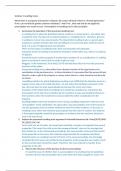
When there is a property transaction in dispute, the courts will look if there is a formal agreement?
If not ,can we find the parties common intentions? And if not , then and only do we apply the
presumption of a result in trust. Presumption of resulting trust is the last option.
1. Summarise the operation of the presumed resulting trust.
A resulting trust is when the beneficial interest results to, or jumps back to , the settlor who
created the trust. The basis of an action founded on a resulting trust is , therefore, that one
is seeking to recover ones own property. The idea behind resulting trusts is a person gives
property to another and then they end up holding it on trust for the giver until they want it
back, it is a way of regaining ones own property.
There are two types of resulting trusts, these are presumed and automatic.
Automatic trusts has nothing to do with the intentions of the settlor (e.g. where no certainty
of objects).
Presumed trusts is where property is transferred to another for no consideration (i.e nothing
given or promised in return) but no words of gift are used.
Meggary J in Re Vandervess Trust (No2) (1974) felt that these did arise from the presumed
intention of the settlor.
Presumed resulting trusts arise either from voluntary transfer of the legal estate or by
contribution to the purchase price. In these situations it is presumed that the person did not
intend to make a gift of the property or money unless there is a clear intention that they did
so intend.
Swaddling stated in his article (Explaining resulting trusts 2008) that the intention arises in a
negative sense only as the initial intention. He also states that nothing is automatic in the
law, the trust does not arise automatically but because the courts say it does.
Chambers (1997) stated that all resulting trusts should be considered as arising from the
presumption of the lack of any intention by the transferor to pass any beneficial interest to
the transferee when the transferee has not provided the entire consideration for the
property.
Swadling (2008): states that chambers view is wrong. Swadlings argument is that the word
“presumption” needs clarification. He argues that a true presumption arises where proof of
one fact generates proof of another without the need for further evidence. In the case of
resulting trusts, where the transferor puts property into the name of another, the evidence
is that equity originally rested the presumption on evidence that the transferor declared a
trust in his own favour.
2. Explore the presumed resulting trust argument in Petrodel Resources Ltd v Prest[2013] UKSC
34; [2013] 2 AC 415.
Facts: Prest was an oil trader. He owned and controlled a number of companies that owned
properties. This meant Prest did not on the companys himself. Later on, his marriage had
been broken up. In the matrimonial proceedings, the main question concerned the transfer
of the properties to Mrs prest. She made the argument that the companies held these
freehold estates on resulting trusts for Mr Prest. In the court proceedings, the trial judge
concluded that Mrs prest was entitled to the properties as the properties were held on trust
for him and therefore formed his assets. Therefore, the court ordered to transfer these
properties to his wife.
a. What is the relevance of this decision to divorce proceedings.
It raised the issue of whether there is a presumption of a resulting trust for gratuitious
transfers of land ( the presumption does arise where the land is bought for value). The
When there is a property transaction in dispute, the courts will look if there is a formal agreement?
If not ,can we find the parties common intentions? And if not , then and only do we apply the
presumption of a result in trust. Presumption of resulting trust is the last option.
1. Summarise the operation of the presumed resulting trust.
A resulting trust is when the beneficial interest results to, or jumps back to , the settlor who
created the trust. The basis of an action founded on a resulting trust is , therefore, that one
is seeking to recover ones own property. The idea behind resulting trusts is a person gives
property to another and then they end up holding it on trust for the giver until they want it
back, it is a way of regaining ones own property.
There are two types of resulting trusts, these are presumed and automatic.
Automatic trusts has nothing to do with the intentions of the settlor (e.g. where no certainty
of objects).
Presumed trusts is where property is transferred to another for no consideration (i.e nothing
given or promised in return) but no words of gift are used.
Meggary J in Re Vandervess Trust (No2) (1974) felt that these did arise from the presumed
intention of the settlor.
Presumed resulting trusts arise either from voluntary transfer of the legal estate or by
contribution to the purchase price. In these situations it is presumed that the person did not
intend to make a gift of the property or money unless there is a clear intention that they did
so intend.
Swaddling stated in his article (Explaining resulting trusts 2008) that the intention arises in a
negative sense only as the initial intention. He also states that nothing is automatic in the
law, the trust does not arise automatically but because the courts say it does.
Chambers (1997) stated that all resulting trusts should be considered as arising from the
presumption of the lack of any intention by the transferor to pass any beneficial interest to
the transferee when the transferee has not provided the entire consideration for the
property.
Swadling (2008): states that chambers view is wrong. Swadlings argument is that the word
“presumption” needs clarification. He argues that a true presumption arises where proof of
one fact generates proof of another without the need for further evidence. In the case of
resulting trusts, where the transferor puts property into the name of another, the evidence
is that equity originally rested the presumption on evidence that the transferor declared a
trust in his own favour.
2. Explore the presumed resulting trust argument in Petrodel Resources Ltd v Prest[2013] UKSC
34; [2013] 2 AC 415.
Facts: Prest was an oil trader. He owned and controlled a number of companies that owned
properties. This meant Prest did not on the companys himself. Later on, his marriage had
been broken up. In the matrimonial proceedings, the main question concerned the transfer
of the properties to Mrs prest. She made the argument that the companies held these
freehold estates on resulting trusts for Mr Prest. In the court proceedings, the trial judge
concluded that Mrs prest was entitled to the properties as the properties were held on trust
for him and therefore formed his assets. Therefore, the court ordered to transfer these
properties to his wife.
a. What is the relevance of this decision to divorce proceedings.
It raised the issue of whether there is a presumption of a resulting trust for gratuitious
transfers of land ( the presumption does arise where the land is bought for value). The