WGU Pathophysiology D236 | 150 Questions and Answers(A+ Solution guide)
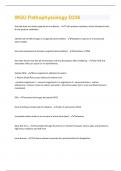
Describe how your body responds to an infection. - T cells produce cytokines, which stimulate B cells. B cells produce antibodies. Identify role of DNA changes in congenital abnormalities. - Mutations in genes or chromosomal abnormalities How does development disrupts congenital abnormalities? - Alterations of DNA Describes factors that disrupt homeostasis and how disruptions affect wellbeing. - (ex) Fluid and electrolyte shifts can cause n/v or dysrhythmias. Explain RAAS - Renin-angiotensin-aldosterone system 1. Reduce blood flow causes kidneys to release renin > produce angiotensin I > converts angiotensin I to angiotensin II > vasoconstriction > release aldosterone > kidneys conserve sodium and water > Result less water lost in urine and blood pressure maintained. DKA - increased anion gap, decreased HCO3 How do kidneys compensate for alkalosis - retain H and excrete HCO3 Untreated acidosis leads to an increase in which electrolyte? - Potassium West Nile Virus - Transmitted through the bite of an infected mosquito. Severe signs and symptoms; high fever, headache and stiff neck Lyme disease - Tick-borne disease caused by the spirochete Borrelia burgdorferi.
Written for
- Institution
- WGU Pathophysiology D236
- Course
- WGU Pathophysiology D236
Document information
- Uploaded on
- August 12, 2023
- Number of pages
- 16
- Written in
- 2023/2024
- Type
- Exam (elaborations)
- Contains
- Questions & answers
Subjects

Also available in package deal