1. A 28-year-old man who works on a local mushroom farm comes to the clinic
with increased shortness of breath. In addition to feeling increasingly short of
breath, he has suffered intermittent fevers and sweats over the past few
months.On examination his BP is 135/72 mmHg, pulse is 72 and regular.
There are fine inspiratory crackles at both bases on auscultation of his chest.
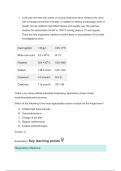
Investigations show:
Chest x ray shows diffuse interstitial shadowing. Spirometry shows mixed
restrictive/obstructive pictures.
Which of the following is the most appropriate course of action for the longer term?
A. Inhaled high dose steroids
B. Oral prednisolone
C. Change of job plan
D. Regular azithromycin
E. Inhaled anticholinergics
Answer: C
Explanation: Key learning points
Respiratory Medicine
, ● In hypersensitivity pneumonitis, a short course of oral steroids may improve
symptoms but optimal management is removal of exposure to the antigen.
Explanation
This man's occupation as a mushroom picker raises the possibility of mushroom
picker's lung, a form of hypersensitivity pneumonitis. Optimal management is
removal of exposure to the antigen, although in the short term a course of oral
corticosteroids is likely to be appropriate.
Inhaled anticholinergics are used in the management of chronic obstructive
pulmonary disease (COPD) and are therefore not appropriate here.
Inhaled corticosteroids are not as effective as oral corticosteroids in managing
subacute or chronic hypersensitivity pneumonitis, so oral prednisolone is the
treatment of choice after removal of exposure to the antigen has occurred.
There is no role for antibiotic therapy.
2. A 70-year-old lady consulted her GP for being generally unwell.
She also complained of constant severe headache and pain in the scalp while
combing her hair. She has also noticed difficulty in standing up from the squatting
position. She denied any visual disturbances.
Her general physical examination was unremarkable and the investigations showed
a raised ESR and alkaline phosphatase.
What is an important diagnosis to consider?
A. Temporal arteritis
B. Cervical spondylosis
C. Hypothyroidism
D. Cluster headaches
E. Migraine
,Answer: A
Explanation: Key learning points
Geriatrics
● Patients with temporal arteritis are at risk of irreversible visual loss unless
treated promptly.
Explanation
Patients with temporal arteritis are at risk of irreversible visual loss either due to
ischaemic damage to the ciliary arteries causing optic neuritis or central retinal artery
occlusion. It is a preventable cause of blindness and hence should be considered.
Cervical spondylosis can cause occipital headache and numbness due to the
entrapment of C2 sensory nerve root.
Hypothyroidism does not cause headaches.
Migraine and cluster headaches often accompany visual symptoms and headache is
intermittent and fluctuating in intensity.
3. A 25-year-old woman comes for a discussion about contraception some four
weeks after she has given birth to her first child.
She complains that her hair seems to be falling out excessively when she brushes it.
There is no medical history of note and she is coping well with caring for her baby.
On examination her BP is 105/70 mmHg, her BMI is 26.
Investigations show:
, Which of the following is the most appropriate initial management?
A. Thyroid hormone testing
B. LH/FSH ratio
C. Reassurance
D. Testosterone
E. Topical minoxidil
Answer: c
Explanation: Key learning points
Endocrinology
● Hair loss one to three months after pregnancy is normal and no treatment is
required.
Explanation
The most likely explanation here is that an abnormal number of hairs have entered
the telogen phase. This results in shedding of hair leading to loss of thickness. It
occurs as a normal phenomenon one to three months after pregnancy. No treatment
is required and hair thickness eventually recovers without further intervention.
Luteinising hormone/follicle-stimulating hormone (LH/FSH) ratio and testosterone are
both potential tests which could be considered if polycystic ovary syndrome (PCOS)
or another condition leading to androgenic alopecia were considered. We are given
no evidence of that in the scenario, accordingly they are not appropriate.
with increased shortness of breath. In addition to feeling increasingly short of
breath, he has suffered intermittent fevers and sweats over the past few
months.On examination his BP is 135/72 mmHg, pulse is 72 and regular.
There are fine inspiratory crackles at both bases on auscultation of his chest.
Investigations show:
Chest x ray shows diffuse interstitial shadowing. Spirometry shows mixed
restrictive/obstructive pictures.
Which of the following is the most appropriate course of action for the longer term?
A. Inhaled high dose steroids
B. Oral prednisolone
C. Change of job plan
D. Regular azithromycin
E. Inhaled anticholinergics
Answer: C
Explanation: Key learning points
Respiratory Medicine
, ● In hypersensitivity pneumonitis, a short course of oral steroids may improve
symptoms but optimal management is removal of exposure to the antigen.
Explanation
This man's occupation as a mushroom picker raises the possibility of mushroom
picker's lung, a form of hypersensitivity pneumonitis. Optimal management is
removal of exposure to the antigen, although in the short term a course of oral
corticosteroids is likely to be appropriate.
Inhaled anticholinergics are used in the management of chronic obstructive
pulmonary disease (COPD) and are therefore not appropriate here.
Inhaled corticosteroids are not as effective as oral corticosteroids in managing
subacute or chronic hypersensitivity pneumonitis, so oral prednisolone is the
treatment of choice after removal of exposure to the antigen has occurred.
There is no role for antibiotic therapy.
2. A 70-year-old lady consulted her GP for being generally unwell.
She also complained of constant severe headache and pain in the scalp while
combing her hair. She has also noticed difficulty in standing up from the squatting
position. She denied any visual disturbances.
Her general physical examination was unremarkable and the investigations showed
a raised ESR and alkaline phosphatase.
What is an important diagnosis to consider?
A. Temporal arteritis
B. Cervical spondylosis
C. Hypothyroidism
D. Cluster headaches
E. Migraine
,Answer: A
Explanation: Key learning points
Geriatrics
● Patients with temporal arteritis are at risk of irreversible visual loss unless
treated promptly.
Explanation
Patients with temporal arteritis are at risk of irreversible visual loss either due to
ischaemic damage to the ciliary arteries causing optic neuritis or central retinal artery
occlusion. It is a preventable cause of blindness and hence should be considered.
Cervical spondylosis can cause occipital headache and numbness due to the
entrapment of C2 sensory nerve root.
Hypothyroidism does not cause headaches.
Migraine and cluster headaches often accompany visual symptoms and headache is
intermittent and fluctuating in intensity.
3. A 25-year-old woman comes for a discussion about contraception some four
weeks after she has given birth to her first child.
She complains that her hair seems to be falling out excessively when she brushes it.
There is no medical history of note and she is coping well with caring for her baby.
On examination her BP is 105/70 mmHg, her BMI is 26.
Investigations show:
, Which of the following is the most appropriate initial management?
A. Thyroid hormone testing
B. LH/FSH ratio
C. Reassurance
D. Testosterone
E. Topical minoxidil
Answer: c
Explanation: Key learning points
Endocrinology
● Hair loss one to three months after pregnancy is normal and no treatment is
required.
Explanation
The most likely explanation here is that an abnormal number of hairs have entered
the telogen phase. This results in shedding of hair leading to loss of thickness. It
occurs as a normal phenomenon one to three months after pregnancy. No treatment
is required and hair thickness eventually recovers without further intervention.
Luteinising hormone/follicle-stimulating hormone (LH/FSH) ratio and testosterone are
both potential tests which could be considered if polycystic ovary syndrome (PCOS)
or another condition leading to androgenic alopecia were considered. We are given
no evidence of that in the scenario, accordingly they are not appropriate.