

How does Priestley present the views of the inspector in ‘An Inspector Calls’?
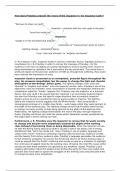
“We have to share our guilt”
Impartial – contrasts with the clear gaps in the play”
“burnt her inside out”
Inspector
“taught it in fire and blood and anguish”
Impression of “massiveness” when he enters
Lighting change – omnipotent being
From “pink and intimate” to “brighter and harder”
In 'An Inspector Calls', Inspector Goole is used as a dramatic device, arguably acting as a
mouthpiece for J. B. Priestley in order to convey the message of the play - for the
audience to be more accepting of socialist ideologies to ensure society never reverts to
being dominated by capitalism like it was before the two world wars. This would have a
profound impact on the post war audience of 1945 as through their suffering, they would
have realised the importance of unity.
Inspector Goole is presented as an omnipotent, powerful figure throughout the
play; his presence immediately has the power to change the light and cheerful
atmosphere of the Birlings' dinner party. The lighting changes from "pink and
intimate" to "brighter and harder" once the inspector arrives. Here, Priestley's use of the
adjectives "pink and intimate" have connotations of warmth and happiness whereas the
comparative adjective "harder" opposes this. Priestley uses the inspector as a dramatic
device. Not only could it be argued that the inspector is an immensely powerful figure
but also that Priestley uses the specific stage directions that accompany Inspector
Goole's arrival to act as a symbol for how he wants society to improve. The lighting
before the inspector arrives suggests that the Birling family – who encapsulate a
stereotypical portrayal of a middle class family – were happy whilst they were ignorant to
the plight of the working class. The lighting change mirrors how Priestley wants society
to change; he wants society to stop being ignorant to the plight of the working class.
Additionally, the lighting change foreshadows the rest of the play; through Inspector
Goole, Priestley will throw into relief the issues within Edwardian society symbolised by
the bright light in which nothing can hide.
Furthermore, J. B. Priestley uses the inspector to convey that he wants society
to change and become more empathetic towards the plight of the working
class instead of perceiving them as being disposable. When the inspector arrives,
he tells the Birling family about Eva Smith’s suicide in which she drank a lot of strong
disinfectant that “burnt her inside out”. Here, Priestley’s use of graphic language and
violent verb “burnt” evokes an emotional response with the post war audience of 1945
and the twenty first century audience alike. Priestley’s language persuades the audience
to feel immense sympathy not only for Eva Smith but also for all of the working class; it
could be argued that Eva Smith’s suffering and suicide is used as a metaphor to highlight
the continuous struggled faced by the working class, throwing into relief the issues within
society and how these problems are ignored by the wealthier classes. Priestley’s gory
imagery alternately makes the audience feel profoundly guilty for they may realise how
ignorant they have been to ignore the struggles of the working class and persuade them
to change by being more empathetic.
“We have to share our guilt”
Impartial – contrasts with the clear gaps in the play”
“burnt her inside out”
Inspector
“taught it in fire and blood and anguish”
Impression of “massiveness” when he enters
Lighting change – omnipotent being
From “pink and intimate” to “brighter and harder”
In 'An Inspector Calls', Inspector Goole is used as a dramatic device, arguably acting as a
mouthpiece for J. B. Priestley in order to convey the message of the play - for the
audience to be more accepting of socialist ideologies to ensure society never reverts to
being dominated by capitalism like it was before the two world wars. This would have a
profound impact on the post war audience of 1945 as through their suffering, they would
have realised the importance of unity.
Inspector Goole is presented as an omnipotent, powerful figure throughout the
play; his presence immediately has the power to change the light and cheerful
atmosphere of the Birlings' dinner party. The lighting changes from "pink and
intimate" to "brighter and harder" once the inspector arrives. Here, Priestley's use of the
adjectives "pink and intimate" have connotations of warmth and happiness whereas the
comparative adjective "harder" opposes this. Priestley uses the inspector as a dramatic
device. Not only could it be argued that the inspector is an immensely powerful figure
but also that Priestley uses the specific stage directions that accompany Inspector
Goole's arrival to act as a symbol for how he wants society to improve. The lighting
before the inspector arrives suggests that the Birling family – who encapsulate a
stereotypical portrayal of a middle class family – were happy whilst they were ignorant to
the plight of the working class. The lighting change mirrors how Priestley wants society
to change; he wants society to stop being ignorant to the plight of the working class.
Additionally, the lighting change foreshadows the rest of the play; through Inspector
Goole, Priestley will throw into relief the issues within Edwardian society symbolised by
the bright light in which nothing can hide.
Furthermore, J. B. Priestley uses the inspector to convey that he wants society
to change and become more empathetic towards the plight of the working
class instead of perceiving them as being disposable. When the inspector arrives,
he tells the Birling family about Eva Smith’s suicide in which she drank a lot of strong
disinfectant that “burnt her inside out”. Here, Priestley’s use of graphic language and
violent verb “burnt” evokes an emotional response with the post war audience of 1945
and the twenty first century audience alike. Priestley’s language persuades the audience
to feel immense sympathy not only for Eva Smith but also for all of the working class; it
could be argued that Eva Smith’s suffering and suicide is used as a metaphor to highlight
the continuous struggled faced by the working class, throwing into relief the issues within
society and how these problems are ignored by the wealthier classes. Priestley’s gory
imagery alternately makes the audience feel profoundly guilty for they may realise how
ignorant they have been to ignore the struggles of the working class and persuade them
to change by being more empathetic.


