A Tiger in the Zoo
Thinking About the Poem (Page 30)
Question 1.
Read the poem again and work in pairs or groups to do the following tasks.
1. Find the words that describe the movements and actions of the tiger in the cage and
in the wild. Arrange them in two columns.
2. Find the words that describe the two places and arrange them in two columns.
Now try to share ideas about how the poet uses words and images to contrast the two
situations.
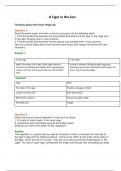
Answer1:
In the Cage In the Wild
Stalks, Few steps of his cage, Quiet rage Locked in Lurking in shadow, Sliding through long grass,
concrete cell, Stalking-the length of his cage Ignoring Snarling around houses, Baring his white fangs, his
visitors. He hears the last voice Stares at the brilliant claws, Terrorising the village.
stars.
Answer2:
Cage Wild
Few steps of his cage, Shadow, Long grass, Water
Locked, Concrete cell, hole, Plump deer,
Behind bars, Visitors, Houses at jungle’s edge,
Patrolling cars Village
Question 2.
Notice the use of a word repeated in lines such as these
1. On pads of velvet quiet, In his quiet rage.
2. And stares with his brilliant eyes At the brilliant stars.
What do you think is the effect of this repetition?
Answer:
This repetition is a poetic device used by the poet in order to increase the intensity of
the tiger’s rage and his helpless silence. ‘Velvet quiet’ refers to the quiet velvet pads of
the tiger, which cannot run or leap. They can only walk around the limited space in the
cage. The use of ‘quiet rage’ symbolises the anger and ferocity that is building up inside
Thinking About the Poem (Page 30)
Question 1.
Read the poem again and work in pairs or groups to do the following tasks.
1. Find the words that describe the movements and actions of the tiger in the cage and
in the wild. Arrange them in two columns.
2. Find the words that describe the two places and arrange them in two columns.
Now try to share ideas about how the poet uses words and images to contrast the two
situations.
Answer1:
In the Cage In the Wild
Stalks, Few steps of his cage, Quiet rage Locked in Lurking in shadow, Sliding through long grass,
concrete cell, Stalking-the length of his cage Ignoring Snarling around houses, Baring his white fangs, his
visitors. He hears the last voice Stares at the brilliant claws, Terrorising the village.
stars.
Answer2:
Cage Wild
Few steps of his cage, Shadow, Long grass, Water
Locked, Concrete cell, hole, Plump deer,
Behind bars, Visitors, Houses at jungle’s edge,
Patrolling cars Village
Question 2.
Notice the use of a word repeated in lines such as these
1. On pads of velvet quiet, In his quiet rage.
2. And stares with his brilliant eyes At the brilliant stars.
What do you think is the effect of this repetition?
Answer:
This repetition is a poetic device used by the poet in order to increase the intensity of
the tiger’s rage and his helpless silence. ‘Velvet quiet’ refers to the quiet velvet pads of
the tiger, which cannot run or leap. They can only walk around the limited space in the
cage. The use of ‘quiet rage’ symbolises the anger and ferocity that is building up inside