CETP Questions And Answers
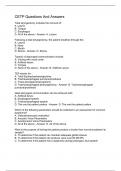
Total laryngectomy includes the removal of: A. Larynx B. Tongue C. Esophagus D. All of the above - Answer- A. Larynx Following a total laryngectomy, the patient breathes through the: A. Larynx B. Nose C. Mouth D. Stoma - Answer- D. Stoma Type(s) of alaryngeal communication include: A. Voicing with vocal cords B. Artificial larynx C. Tongue D. None of the above - Answer- B. Artificial Larynx TEP stands for: A. Total Esphophopharyngectomy B. Tracheoesophageal puncture/prosthesis C. Trans-laryngeal pharyngotomy D. Tracheoesophageal pharyngectomy - Answer- B. Tracheoesophageal puncture/prosthesis Ideal alaryngeal communication can be achieved with: A. Artificial larynx B. Esophageal speech C. Tracheoesophageal speech D. The one the patient prefers - Answer- D. The one the patient prefers Which of the following parameters should be collected in an assessment of common dysphonia? A. Videostroboscopic evaluation B. Acoustic Voice Parameters C. Aerodynamic Voice Parameters D. All of the above - Answer- D. All of the above What is the purpose of having the patient produce a louder than normal sustained /a/ sample? A. To determine if the patient can maintain adequate glottal closure B. To determine if the patient can produce voice over 60 dB SPL C.
Written for
- Institution
- CETP
- Course
- CETP
Document information
- Uploaded on
- July 31, 2023
- Number of pages
- 8
- Written in
- 2022/2023
- Type
- Exam (elaborations)
- Contains
- Questions & answers
Subjects
- the patient breath
-
cetp questions and answers
-
total laryngectomy includes the removal of
-
following a total laryngectomy
-
types of alaryngeal communication include

Also available in package deal