GLYCOLYSIS
Glucose
Excellent fuel
- Yields good amount of energy upon oxidation (2840 kJ/mol glucose)
- Can be efficiently stored in polymeric form
- Many organisms and tissues can meet heir energy need on glucose only
Glucose is a versatile biochemical precursor
- Many organisms can use glucose to generate:
- All amino acids
- Membrane lipids
- Nucleotides in DNA and RNA
- Cofactors needed for metabolism
Four major pathways of glucose utilization
Storage
- Can be stored in polymeric form (starch, glycogen)
- Used for later energy needs
Energy production
- Generates energy via oxidation of glucose
- Short-term energy needs
Production of NADPH and pentoses
- Generates NADPH for use in relieving oxidative stress and synthesizing fatty
acids
- Generates pentose phosphates for use in DNA/RNA biosynthesis
Structural carbohydrate production
- Used for generation of alternate carbohydrates used in cell walls of bacteria,
fungi and plants
Extracellular matrix and cell wall
Glycogen, starch, sucrose
polysaccharides
storage
Synthesis of structural polymers
Oxidation via glycolysis
Oxidation via pentose phosphate pathway Glucose
Ribose 5-phosphate Pyruvate
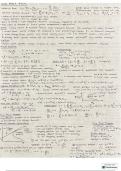
GLYCOLYSIS: process by which a molecule of glucose is degraded in a series of
enzyme-catalyzed reactions to yield 2 molecules of a 3C compound, pyruvate
- Some free energy is conserved as ATP and NADH
Has two phases
1. Preparatory phase
- ATP consumed
- ∆ G of intermediates increase
- Hexose carbon chains are converted to glyceraldehyde 3-phospahte
2. Payoff phase
- Energy conserved as 2 ATP and 2 NADH
- 2 pyruvate
, Note:
ADP is a
Glucose
Excellent fuel
- Yields good amount of energy upon oxidation (2840 kJ/mol glucose)
- Can be efficiently stored in polymeric form
- Many organisms and tissues can meet heir energy need on glucose only
Glucose is a versatile biochemical precursor
- Many organisms can use glucose to generate:
- All amino acids
- Membrane lipids
- Nucleotides in DNA and RNA
- Cofactors needed for metabolism
Four major pathways of glucose utilization
Storage
- Can be stored in polymeric form (starch, glycogen)
- Used for later energy needs
Energy production
- Generates energy via oxidation of glucose
- Short-term energy needs
Production of NADPH and pentoses
- Generates NADPH for use in relieving oxidative stress and synthesizing fatty
acids
- Generates pentose phosphates for use in DNA/RNA biosynthesis
Structural carbohydrate production
- Used for generation of alternate carbohydrates used in cell walls of bacteria,
fungi and plants
Extracellular matrix and cell wall
Glycogen, starch, sucrose
polysaccharides
storage
Synthesis of structural polymers
Oxidation via glycolysis
Oxidation via pentose phosphate pathway Glucose
Ribose 5-phosphate Pyruvate
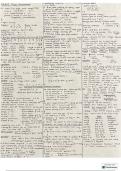
GLYCOLYSIS: process by which a molecule of glucose is degraded in a series of
enzyme-catalyzed reactions to yield 2 molecules of a 3C compound, pyruvate
- Some free energy is conserved as ATP and NADH
Has two phases
1. Preparatory phase
- ATP consumed
- ∆ G of intermediates increase
- Hexose carbon chains are converted to glyceraldehyde 3-phospahte
2. Payoff phase
- Energy conserved as 2 ATP and 2 NADH
- 2 pyruvate
, Note:
ADP is a