
Lesson 10
Global Migration
What is the USA’s (AC) influence on global migration?
Patterns of emigration and immigration:
The USA has a strong influence on global migration.
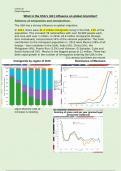
In 2013, there were 41.3 million immigrants living in the USA, 13% of the
population. This included 78 nationalities with over 50,000 people each,
and nine with over 1 million. In 2019, 44.9 million immigrants (foreign-
born individuals) compromised 14% of the national population. The main
contributors to the immigrant population in 2013 were Mexico (28% of all
foreign – born residents in the USA), India (5%), China (5%), the
Philippines (4%), Puerto Rico (3.5%) and Vietnam, El Salvador, Cuba and
South Korea (all 3%). Mexico is the biggest group at 12 million. There has
been rapid growth in the number of immigrants entering the USA in the
21t century but there are recent
signs that the rate of
increase is slowing.
, Lesson 10
Global Migration
Why do so many migrants want to go to the USA? Pull factors:
The positive immigration policy and possibility of obtaining a Green
Card (becoming a permanent resident)
Employment opportunities for both low-and high-skilled workers –
TNCs in the US for example GSK
High skilled includes workers in hi -tech industries (Silicon Valley)
and research/education.
Wage differentials and the opportunity to send remittances home
Educational opportunities and access to other services such as
health
The importance of family reunification (Mexicans/Iranians) within the
migration policy – diaspora communities
The policy on refugee admission
Ease of access – land border with no expensive air fares
Strong economic ties (Canada, Mexico part of NAFTA)
Political affiliation makes migration easier e.g., UK.
The USA is a country of net migration gain, but in 2013, there were 2.98
million US citizens living abroad and the number is growing. The main
destinations were Mexico, Canada, UK, Puerto Rico, Germany, Australia,
and Israel. This is explained to a large extent by the return of migrants
such as Mexican and other Latin American families and their American-
born children. In addition, a number highly skilled workers in education, IT,
communications have
migrated to countries
with political, economic
and historical ties such
as Canada, UK and
other EU countries. –
reasons for emigration
patterns
Global Migration
What is the USA’s (AC) influence on global migration?
Patterns of emigration and immigration:
The USA has a strong influence on global migration.
In 2013, there were 41.3 million immigrants living in the USA, 13% of the
population. This included 78 nationalities with over 50,000 people each,
and nine with over 1 million. In 2019, 44.9 million immigrants (foreign-
born individuals) compromised 14% of the national population. The main
contributors to the immigrant population in 2013 were Mexico (28% of all
foreign – born residents in the USA), India (5%), China (5%), the
Philippines (4%), Puerto Rico (3.5%) and Vietnam, El Salvador, Cuba and
South Korea (all 3%). Mexico is the biggest group at 12 million. There has
been rapid growth in the number of immigrants entering the USA in the
21t century but there are recent
signs that the rate of
increase is slowing.
, Lesson 10
Global Migration
Why do so many migrants want to go to the USA? Pull factors:
The positive immigration policy and possibility of obtaining a Green
Card (becoming a permanent resident)
Employment opportunities for both low-and high-skilled workers –
TNCs in the US for example GSK
High skilled includes workers in hi -tech industries (Silicon Valley)
and research/education.
Wage differentials and the opportunity to send remittances home
Educational opportunities and access to other services such as
health
The importance of family reunification (Mexicans/Iranians) within the
migration policy – diaspora communities
The policy on refugee admission
Ease of access – land border with no expensive air fares
Strong economic ties (Canada, Mexico part of NAFTA)
Political affiliation makes migration easier e.g., UK.
The USA is a country of net migration gain, but in 2013, there were 2.98
million US citizens living abroad and the number is growing. The main
destinations were Mexico, Canada, UK, Puerto Rico, Germany, Australia,
and Israel. This is explained to a large extent by the return of migrants
such as Mexican and other Latin American families and their American-
born children. In addition, a number highly skilled workers in education, IT,
communications have
migrated to countries
with political, economic
and historical ties such
as Canada, UK and
other EU countries. –
reasons for emigration
patterns


