edTPA | Questions and Answers with complete solution
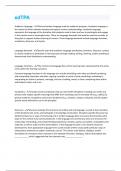
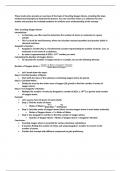
Academic Language - Oral and written language used for academic purposes. Academic language is the means by which students develop and express content understandings. Academic language represents the language of the discipline that students need to learn and use to participate and engage in the content area in meaningful ways. There are language demands that teachers need to consider as they plan to support student learning of content. These language demands include language functions, vocabulary, discourse, and syntax. Language demands - Specific ways that academic language (vocabulary, functions, discourse, syntax) is used by students to participate in learning tasks through reading, writing, listening, and/or speaking to demonstrate their disciplinary understanding. Language Functions - The content and language focus of the learning task, represented by the active verbs within the learning outcomes. Common language functions in the language arts include identifying main ideas and details;analyzing and interpreting characters and plots; arguing a position or point of view; predicting; evaluating or interpreting an author's purpose, message, and use of setting, mood, or tone; comparing ideas within and between texts; and so on. Vocabulary - Includes words and phrases that are used within disciplines including: (1) words and phrases with subject-specific meanings that differ from meanings used in everyday life (e.g., table); (2) general academic vocabulary used across disciplines (e.g., compare, analyze, evaluate); and (3) subjectspecific words defined for use in the discipline. Discourse - Discourse includes the structures of written and oral language, as well as how members of the discipline talk, write, and participate in knowledge construction. Discipline-specific discourse has distinctive features or ways of structuring oral or written language (text structures) that provide useful ways for the content to be communicated.21 In the language arts and literacy, there are structures for composing, interpreting, and comprehending expository, narrative, poetic, journalistic, and graphic print materials as well as video and live presentations. If the language function is to interpret character development, then appropriate language forms could include written essays (with particular ways of citing textual evidence) or pattern sentences such as "The author used (action, dialogue, and/or description) to introduce (main character). One example of (action, dialogue, and/or description) was ____________, which suggested that the character was _______________."Syntax - The set of conventions for organizing symbols, words, and phrases together into structures (e.g., sentences, graphs, tables)
Schule, Studium & Fach
- Hochschule
- EdTPA
- Kurs
- EdTPA
Dokument Information
- Hochgeladen auf
- 29. juli 2023
- Anzahl der Seiten
- 4
- geschrieben in
- 2022/2023
- Typ
- Prüfung
- Enthält
- Fragen & Antworten
Themen

Ebenfalls erhältlich im paket-deal