TCIS Training _ Questions & Answers
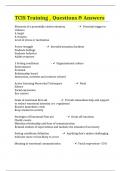
Elements of a potentially violent situation - ✔️ Potential trigger to
violence
A target
A weapon
Level of stress or motivation
Power struggle - ✔️ Stressful situation/Incident
Students feelings
Students behavior
Adults response
5 Setting conditions - ✔️ Organizational culture
Environment
Personal
Relationship based
Instruction, activities and routines related
Active Listening Nonverbal Techniques - ✔️ Nods
Silence
Facial expression
Eye contact
Goals of emotional first aid - ✔️ Provide immediate help and support
to reduce emotional intensity (co- regulation)
Resolve immediate crisis
Keep student in acitvity
Strategies of Emotional First aid - ✔️ Drain off emotions
Clarify events
Maintain relationship and lines of communication
Remind student of expectations and mediate the situation if necessary
Setting conditions definition - ✔️ Anything that's makes challenging
behavior more or less likely to occur
Meaning in emotional communication - ✔️ Facial expression= 55%
, Tone of voice=38%
Words=7%
Behavior Support Techniques - ✔️ Manage environment
Proximity
Caring gestures
Hurdle help
Redirection and distraction
Prompting
Directive statements
Time away
Types of Aggressive behaviors - ✔️ Reactive and Proactive
Affective/expressive aggression VS instrumental/operant aggression
Loss of control/ emotional flooding VS goal oriented
Emotions dominant VS cognitions dominant
Responding to Paint based behavior - ✔️ Listen to students talk
about feelings
Watch for triggers, signs of reenactment, or flashbacks
Give student choices and sense of control
Teach students to express emotions and resolve conflicts through discussion
and negotiation
Goals of crisis intervention - ✔️ Support emotionally and
environmental to reduce stress and risk
Teach better ways to cope with stress
Pain based behaviors include - ✔️ Impulsive outbursts
Aggression
Self injury
Running away
Defiance
Inability to regulate emotions
Trauma reenactment
Active listening is NOT - ✔️ Putting up roadblocks
Arguing/blaming
Giving permission
Elements of a potentially violent situation - ✔️ Potential trigger to
violence
A target
A weapon
Level of stress or motivation
Power struggle - ✔️ Stressful situation/Incident
Students feelings
Students behavior
Adults response
5 Setting conditions - ✔️ Organizational culture
Environment
Personal
Relationship based
Instruction, activities and routines related
Active Listening Nonverbal Techniques - ✔️ Nods
Silence
Facial expression
Eye contact
Goals of emotional first aid - ✔️ Provide immediate help and support
to reduce emotional intensity (co- regulation)
Resolve immediate crisis
Keep student in acitvity
Strategies of Emotional First aid - ✔️ Drain off emotions
Clarify events
Maintain relationship and lines of communication
Remind student of expectations and mediate the situation if necessary
Setting conditions definition - ✔️ Anything that's makes challenging
behavior more or less likely to occur
Meaning in emotional communication - ✔️ Facial expression= 55%
, Tone of voice=38%
Words=7%
Behavior Support Techniques - ✔️ Manage environment
Proximity
Caring gestures
Hurdle help
Redirection and distraction
Prompting
Directive statements
Time away
Types of Aggressive behaviors - ✔️ Reactive and Proactive
Affective/expressive aggression VS instrumental/operant aggression
Loss of control/ emotional flooding VS goal oriented
Emotions dominant VS cognitions dominant
Responding to Paint based behavior - ✔️ Listen to students talk
about feelings
Watch for triggers, signs of reenactment, or flashbacks
Give student choices and sense of control
Teach students to express emotions and resolve conflicts through discussion
and negotiation
Goals of crisis intervention - ✔️ Support emotionally and
environmental to reduce stress and risk
Teach better ways to cope with stress
Pain based behaviors include - ✔️ Impulsive outbursts
Aggression
Self injury
Running away
Defiance
Inability to regulate emotions
Trauma reenactment
Active listening is NOT - ✔️ Putting up roadblocks
Arguing/blaming
Giving permission