BUDGETING – week 3
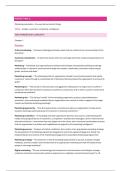
Function three: Planning, control, and performance evaluation
Planning, control & performance evaluation are key functions
of management accounting
Planning
Planning is crucial.
because entities need direction and entities often consist of
various divisions which need to work together.
By developing plans that are as accurate as possible, the different
divisions are able to ensure that their performance does not hinder
other divisions which may depend on them.
A strategic plan is an example of planning.
Control
Control refers to the implementation of the plan.
Management need to have their finger on the pulse and be able
to ensure that all employees are playing their part according to
the plan and that they are accountable for their decisions and
actions.
Performance evaluation
Performance evaluation can be performed on different levels.
One could evaluate the performance of a business, a division, or
even an employee.
If an employee has contributed positively to the execution of the
plan – if they have executed their role in a way that creates value –
, they will rank favourably in their performance evaluation and may
receive a bonus.
Bonuses are offered as incentives to encourage employees to act in
accordance with the plan and to align their interests with those of
the shareholders.
The information gleaned from performance evaluation is taken into
account when developing budgets for following periods
Budgets
One of the tools that management accountants use to fulfil this third
function is a budget.
There are different types of budgets which each serve different
purposes, but broadly speaking a budget is a forecast of
activity, incomes, expenses, or cashflows over a future
specified period.
Budgets are clearly a planning tool, but they are also helpful for
maintaining control and performance evaluation because they
set a standard to which employees should be held.
For example: if actual sales for the period are below the forecasted
sales for the period, the sales manager should be questioned as to
why this was the case and the reasons should be taken into account
when evaluating the sales manager’s performance.
Purposes of budgeting:
1. Plan revenues, expenses and cash flows
2. Evaluate performance against the budget, and adjust expectation of
future performance
3. Provision of incentives/bonuses – linked to evaluation of
performance
4. Force management to reflect on the future – can they develop
realistic projections?
5. Allow efficient and effective allocations of funds to different business
units/divisions
6. Vital for start-up businesses as a “road map”. Forces you to think
about your product, market, operating costs and availability of
finance
Function three: Planning, control, and performance evaluation
Planning, control & performance evaluation are key functions
of management accounting
Planning
Planning is crucial.
because entities need direction and entities often consist of
various divisions which need to work together.
By developing plans that are as accurate as possible, the different
divisions are able to ensure that their performance does not hinder
other divisions which may depend on them.
A strategic plan is an example of planning.
Control
Control refers to the implementation of the plan.
Management need to have their finger on the pulse and be able
to ensure that all employees are playing their part according to
the plan and that they are accountable for their decisions and
actions.
Performance evaluation
Performance evaluation can be performed on different levels.
One could evaluate the performance of a business, a division, or
even an employee.
If an employee has contributed positively to the execution of the
plan – if they have executed their role in a way that creates value –
, they will rank favourably in their performance evaluation and may
receive a bonus.
Bonuses are offered as incentives to encourage employees to act in
accordance with the plan and to align their interests with those of
the shareholders.
The information gleaned from performance evaluation is taken into
account when developing budgets for following periods
Budgets
One of the tools that management accountants use to fulfil this third
function is a budget.
There are different types of budgets which each serve different
purposes, but broadly speaking a budget is a forecast of
activity, incomes, expenses, or cashflows over a future
specified period.
Budgets are clearly a planning tool, but they are also helpful for
maintaining control and performance evaluation because they
set a standard to which employees should be held.
For example: if actual sales for the period are below the forecasted
sales for the period, the sales manager should be questioned as to
why this was the case and the reasons should be taken into account
when evaluating the sales manager’s performance.
Purposes of budgeting:
1. Plan revenues, expenses and cash flows
2. Evaluate performance against the budget, and adjust expectation of
future performance
3. Provision of incentives/bonuses – linked to evaluation of
performance
4. Force management to reflect on the future – can they develop
realistic projections?
5. Allow efficient and effective allocations of funds to different business
units/divisions
6. Vital for start-up businesses as a “road map”. Forces you to think
about your product, market, operating costs and availability of
finance