Ontological Argument
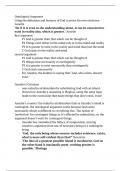
Using the definition and features of God to prove his own existence
Anselm
‘for if it is even in the understanding alone, it can be conceived to
exist in reality also, which is greater.’ Anselm
first argument
P1 God is greater than that which can be thought of
P2 Things exist either in the mind only or in the mind and reality
P3 It is greater to exist in the reality and mind than just the mind
C God exists in the reality and mind
second argument
P1 God is greater than that which can be thought of
P2 things exist necessarily or contingently
P3 it is greater to exist necessarily than contingently
C God exists necessarily
- For Anselm, the doubter is saying that ‘God, who exists, doesn’t
exist.’
Gaunilo’s Criticism
- uses reductio ad absurdum by substituting God with an island.
- shows how Anselm’s reasoning is illogical, using the same logic
leads to the conclusion that many things that don’t exist, exist!
Anselm’s counter: the reductio ad absurdum fails as Gaunilo’s island is
contingent, the ontological argument works because God exists
necessarily which is different to everything else. The notion of
‘perfection’ for contingent things as it’s affected by subjectivity, so the
argument doesn’t work for contingent things.
- Gaunilo has committed the fallacy of composition, moving
Anselm’s argument from one of necessary being to a contingent
being
- ‘God, the only being whose essence includes existence, exists,
what is more self-evident than that?’ Descartes
- ‘The idea of a greatest possible island is incoherent, God on
the other hand is maximally great- nothing greater is
possible.’ Platinga
Using the definition and features of God to prove his own existence
Anselm
‘for if it is even in the understanding alone, it can be conceived to
exist in reality also, which is greater.’ Anselm
first argument
P1 God is greater than that which can be thought of
P2 Things exist either in the mind only or in the mind and reality
P3 It is greater to exist in the reality and mind than just the mind
C God exists in the reality and mind
second argument
P1 God is greater than that which can be thought of
P2 things exist necessarily or contingently
P3 it is greater to exist necessarily than contingently
C God exists necessarily
- For Anselm, the doubter is saying that ‘God, who exists, doesn’t
exist.’
Gaunilo’s Criticism
- uses reductio ad absurdum by substituting God with an island.
- shows how Anselm’s reasoning is illogical, using the same logic
leads to the conclusion that many things that don’t exist, exist!
Anselm’s counter: the reductio ad absurdum fails as Gaunilo’s island is
contingent, the ontological argument works because God exists
necessarily which is different to everything else. The notion of
‘perfection’ for contingent things as it’s affected by subjectivity, so the
argument doesn’t work for contingent things.
- Gaunilo has committed the fallacy of composition, moving
Anselm’s argument from one of necessary being to a contingent
being
- ‘God, the only being whose essence includes existence, exists,
what is more self-evident than that?’ Descartes
- ‘The idea of a greatest possible island is incoherent, God on
the other hand is maximally great- nothing greater is
possible.’ Platinga