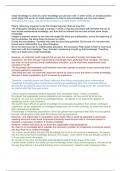
nnate knowledge is a kind of a priori knowledge you are born with. In other words, an innatist position
would argue that we do not need experience in order to have knowledge, we only need reason.
Throughout this essay, I will show how Innatism is a viable theory of knowledge.
Plato’s ‘slave-boy’ argument is the first innatist argument that we may find.
The philosopher showed through a scenario in which a slay-boy discussed with Socrates that we do
have innate mathematical knowledge, and from that he inferred that we have at least some innate
knowledge.
Imagine a scenario where no one has ever taught the slave any mathematics, and at the beginning of
the conversation, the slave thinks he knows no maths.
During the conversation, Socrates only asks the slave boy questions. By the end of it, the slave-boy
knows some mathematics (e.g. about triangles).
Since the slave boy had no mathematical education, the conclusion Plato draws is that he must have
been born with the knowledge. Thus, Socrates’ questioning brought up that knowledge. Therefore,
there is at least some innate knowledge.
However, an empiricist could respond that we gain the concepts of number and shape from
experience, and then we gain mathematical knowledge when analysing those concepts. The slave-
boy may not have had any formal mathematical education, but he must have experienced those
concepts in his life.
The knowledge demonstrated could therefore have been gained by analytic a priori reasoning about
concepts gained by experience.
That being the case, the slave-boy argument cannot be used to prove that there is innate knowledge.
We have a better explanation, that it is caused by experience.
Therefore, it actually seems that Plato’s inference from being uneducated about mathematical
knowledge to knowing some mathematics just through questioning fails. This is because Plato is
ignoring the fact that the slave-boy did interact with those concepts throughout his life, and therefore
we cannot infer that they were innate.
Leibniz however proposes another argument, from necessary truths, in favor of innatism.
He argued that supposedly innate propositions are necessary, as they cannot fail to be true.
However, we only ever experience contingent things - all objects in our experience depend on
something else for their existence.
We couldn’t have offered or gained knowledge of a necessary proposition from merely contingent
experience, as the experience of contingent beings does not involve necessity, so cannot be used to
infer necessary propositions.
If knowledge of necessary propositions cannot be gained from experience then they must be gained
through unlocking the innate potential to know them by experience.
However, Lock argues that if a proposition were innate, then it would be assented to universally,
meaning everyone would know it because everybody would be born with it. Universal assent is
therefore a necessary condition of innate knowledge.
However, children and idiots do not know the supposedly innate propositions.
So, there is no knowledge which satisfies the necessary condition for innateness of universal assent,
and thus there is no innate knowledge.
Yet, Leibniz would attack the idea that knowledge has to be in the conscious awareness. He argues
that the mind could have knowledge because of its shape - even before it has any thought content in
it, it can carry some information.
So, formed in the mind are thoughts automatically formed to fit the shape of the mind.
In other words, children and idiots can have knowledge, even if they cannot express it. We can tell by
the way they behave in the world that they must ‘unconsciously’ assert to such necessary truths.
would argue that we do not need experience in order to have knowledge, we only need reason.
Throughout this essay, I will show how Innatism is a viable theory of knowledge.
Plato’s ‘slave-boy’ argument is the first innatist argument that we may find.
The philosopher showed through a scenario in which a slay-boy discussed with Socrates that we do
have innate mathematical knowledge, and from that he inferred that we have at least some innate
knowledge.
Imagine a scenario where no one has ever taught the slave any mathematics, and at the beginning of
the conversation, the slave thinks he knows no maths.
During the conversation, Socrates only asks the slave boy questions. By the end of it, the slave-boy
knows some mathematics (e.g. about triangles).
Since the slave boy had no mathematical education, the conclusion Plato draws is that he must have
been born with the knowledge. Thus, Socrates’ questioning brought up that knowledge. Therefore,
there is at least some innate knowledge.
However, an empiricist could respond that we gain the concepts of number and shape from
experience, and then we gain mathematical knowledge when analysing those concepts. The slave-
boy may not have had any formal mathematical education, but he must have experienced those
concepts in his life.
The knowledge demonstrated could therefore have been gained by analytic a priori reasoning about
concepts gained by experience.
That being the case, the slave-boy argument cannot be used to prove that there is innate knowledge.
We have a better explanation, that it is caused by experience.
Therefore, it actually seems that Plato’s inference from being uneducated about mathematical
knowledge to knowing some mathematics just through questioning fails. This is because Plato is
ignoring the fact that the slave-boy did interact with those concepts throughout his life, and therefore
we cannot infer that they were innate.
Leibniz however proposes another argument, from necessary truths, in favor of innatism.
He argued that supposedly innate propositions are necessary, as they cannot fail to be true.
However, we only ever experience contingent things - all objects in our experience depend on
something else for their existence.
We couldn’t have offered or gained knowledge of a necessary proposition from merely contingent
experience, as the experience of contingent beings does not involve necessity, so cannot be used to
infer necessary propositions.
If knowledge of necessary propositions cannot be gained from experience then they must be gained
through unlocking the innate potential to know them by experience.
However, Lock argues that if a proposition were innate, then it would be assented to universally,
meaning everyone would know it because everybody would be born with it. Universal assent is
therefore a necessary condition of innate knowledge.
However, children and idiots do not know the supposedly innate propositions.
So, there is no knowledge which satisfies the necessary condition for innateness of universal assent,
and thus there is no innate knowledge.
Yet, Leibniz would attack the idea that knowledge has to be in the conscious awareness. He argues
that the mind could have knowledge because of its shape - even before it has any thought content in
it, it can carry some information.
So, formed in the mind are thoughts automatically formed to fit the shape of the mind.
In other words, children and idiots can have knowledge, even if they cannot express it. We can tell by
the way they behave in the world that they must ‘unconsciously’ assert to such necessary truths.