
Comprehensive NCLEX-RN Practice Questions & Answer Exam V1: 75 Questions
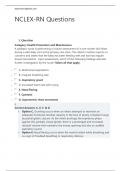
NCLEX-RN Questions 1. Question Category: Health Promotion and Maintenance A pediatric nurse is performing a routine assessment of a one-month-old infant during a well-baby visit at the primary care clinic. The infant’s mother reports no concerns and states that the baby has been feeding well and has had regular bowel movements. Upon assessment, which of the following findings warrants further investigation by the nurse? Select all that apply. o A. Abdominal respirations o B. Irregular breathing rate o C. Inspiratory grunt o D. Increased heart rate with crying o E. Nasal flaring o F. Cyanosis o G. Asymmetric chest movement I Correct Answers: C, E, F, & G Option C. Grunting occurs when an infant attempts to maintain an adequate functional residual capacity in the face of poorly compliant lungs by partial glottic closure. As the infant prolongs the expiratory phase against this partially closed glottis, there is a prolonged and increased residual volume that maintains the airway opening and also an audible expiratory sound. Option E: Nasal flaring occurs when the nostrils widen while breathing and is a sign of troubled breathing or respiratory distress. Option F: Cyanosis refers to the bluish discoloration of the skin and indicates a decrease in oxygen attached to the red blood cells in the bloodstream. Option G: Asymmetric chest movement occurs when the abnormal side of the lungs expands less and lags behind the normal side. This indicates respiratory distress. Option A: Abdominal respiration is normal among infants and young children. Since their intercostal muscles are not yet fully developed, they use their abdominal muscles much more to pull the diaphragm down for breathing. Option B: Newborns can have irregular breathing patterns ranging from 30 to 60 breaths per minute with short periods of apnea (15 seconds). Option D: An increase in heart rate is normal for an infant during activity (including crying). Fluctuations in heart rate follow the changes in the newborn’s behavioral state – crying, movement, or wakefulness corresponds to an increase in heart rate. 2. 2. Question Category: Pharmacological and Parenteral Therapies A nurse is to administer meperidine hydrochloride (Demerol) 100 mg, atropine sulfate (Atropisol) 0.4 mg, and promethazine hydrochloride (Phenergan) 50 mg IM to a preoperative client. List the order in which the nurse must carry out the following actions prior to the administration of preoperative medications. View Answers: Raise the side rails on the bed Have the client empty bladder Instruct the client to remain in bed
Document information
- Uploaded on
- July 17, 2023
- Number of pages
- 59
- Written in
- 2022/2023
- Type
- Exam (elaborations)
- Contains
- Questions & answers


