PSYCHOPATHOLOGY
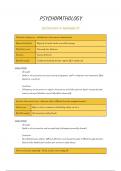
DEFINITIONS OF ABNORMALITY
Statistical infrequency - individual has a less common characteristic
Normal distribution Majority of results cluster around the average
Statistical norms Commonly seen behaviour
Deviation Unusual behaviour
Real-life example Intellectual disability disorder requires IQ in bottom 2%
EVALUATION
Strength:
- Useful in clinical practice to assess severity of symptoms, useful in diagnostic and assessment (Beck
depression inventory)
Limitation:
- Infrequency can be positive or negative, being at one end of the spectrum doesn’t necessarily make
someone abnormal therefore cannot fully define abnormality
Deviation from social norms - behaviour that is different from the accepted standard
Social norms Ways in which we behave as dictated by culture we live in
Real-life example Antisocial personality disorder
EVALUATION
Strength:
- Useful in clinical practises such as psychiatry (schizotypal personality disorder)
Limitation:
- Variability between cultures, different definitions and standards makes it difficult to judge deviation
- Risk of unfair labelling leaving them open to human rights abuses
Failure to function adequately - failing to cope with everyday life
, Rosenhan and Seligman - Cannot conform to standard interpersonal rules
- Behaviour is dangerous to self
- Severe personal distress
Real life example Intellectual disability disorder: low IQ and failure to function
EVALUATION
Strength:
- Represents sensible threshold for for people who need professional help, treatment and services can be
targeted at the people who need it
- May not be accurate as certain circumstances (bereavement) failure to function adequately is
justifiable
Limitation:
- Easy to label non-standard living as abnormal, risk of freedom of choice being restricted
Deviation from ideal mental health - failing to adhere to good mental health criteria
Good mental health (Jahoda) Criteria: lack of symptoms, independence, realistic view of the world, good
self-esteem, self actualise (strive to reach potential), successfully work
Mental health Characteristics of a psychologically healthy person
EVALUATION
Strength:
- Highly comprehensive, criteria allows for meaningful discussions with a range of professionals,
checklist
- Practical checklists can help improve mental health,
Limitations
- Culture bound, self actualisation would be seen as self indulgent
- Impossible set of standards set up by Jahoda
PHOBIAS
DSM-5
- Specific phobias: phobia of an object
- Social anxiety: fear of a social situation
- Agoraphobia: phobia of being outside
DEFINITIONS OF ABNORMALITY
Statistical infrequency - individual has a less common characteristic
Normal distribution Majority of results cluster around the average
Statistical norms Commonly seen behaviour
Deviation Unusual behaviour
Real-life example Intellectual disability disorder requires IQ in bottom 2%
EVALUATION
Strength:
- Useful in clinical practice to assess severity of symptoms, useful in diagnostic and assessment (Beck
depression inventory)
Limitation:
- Infrequency can be positive or negative, being at one end of the spectrum doesn’t necessarily make
someone abnormal therefore cannot fully define abnormality
Deviation from social norms - behaviour that is different from the accepted standard
Social norms Ways in which we behave as dictated by culture we live in
Real-life example Antisocial personality disorder
EVALUATION
Strength:
- Useful in clinical practises such as psychiatry (schizotypal personality disorder)
Limitation:
- Variability between cultures, different definitions and standards makes it difficult to judge deviation
- Risk of unfair labelling leaving them open to human rights abuses
Failure to function adequately - failing to cope with everyday life
, Rosenhan and Seligman - Cannot conform to standard interpersonal rules
- Behaviour is dangerous to self
- Severe personal distress
Real life example Intellectual disability disorder: low IQ and failure to function
EVALUATION
Strength:
- Represents sensible threshold for for people who need professional help, treatment and services can be
targeted at the people who need it
- May not be accurate as certain circumstances (bereavement) failure to function adequately is
justifiable
Limitation:
- Easy to label non-standard living as abnormal, risk of freedom of choice being restricted
Deviation from ideal mental health - failing to adhere to good mental health criteria
Good mental health (Jahoda) Criteria: lack of symptoms, independence, realistic view of the world, good
self-esteem, self actualise (strive to reach potential), successfully work
Mental health Characteristics of a psychologically healthy person
EVALUATION
Strength:
- Highly comprehensive, criteria allows for meaningful discussions with a range of professionals,
checklist
- Practical checklists can help improve mental health,
Limitations
- Culture bound, self actualisation would be seen as self indulgent
- Impossible set of standards set up by Jahoda
PHOBIAS
DSM-5
- Specific phobias: phobia of an object
- Social anxiety: fear of a social situation
- Agoraphobia: phobia of being outside