ATTACHMENT
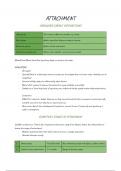
CAREGIVER-INFANT INTERACTIONS
Reciprocity Their actions affect one another, e.g. smiles
Alert phases Babies signal that they are ready to interact
Active not passive Babies initiate interaction
Interactional synchrony Actions occur together, mirroring one another
Meltzoff and Moore found that synchrony began as early as two weeks.
EVALUATION
Strengths:
- Typically filmed in a laboratory meaning results can be analysed later and inter-rater reliability can be
established
- Internal validity, baby not influenced by other factors
- Babies don’t respond to demand characteristics, good reliability and validity
- Isabella et al. found high levels of synchrony was linked with better quality mother-baby attachments
Limitations:
- Difficult to interpret a baby’s behaviour as they cannot coordinate their movements and are basically
immobile, cannot be sure they have a special meaning
- Observation doesn’t show developmental importance, cannot be sure if reciprocity and synchrony is
useful in development
SCHAFFER’S STAGES OF ATTACHMENT
Schaffer and Emerson (1964) did a longitudinal observation study of 60 Glasgow babies this allowed them to
develop the stages of attachment
- Mother’s questioned about the baby’ response to seven everyday separations
- Assessed stranger anxiety
1 Asocial stage First few weeks Acts similarly to people and objects, prefers humans
2 Indiscriminate attachment 2-7 months Recognise familiar people
, 3 Specific attachment 7+ months Separation and stranger anxiety, primary
attachment figure (65% likely to be mother)
4 Multiple attachments Shortly after Separation anxiety to other caregivers
EVALUATION
Strengths:
- Schaffer and Emerson’s study was on a large scale with good design features
- Practical application in day care, showing starting in the specific stage may be problematic
- Good external validity, parent reporting means babies more likely to act naturally
Limitations:
- Mothers unlikely to be objective observers and may not have accurately recorded
- Poor mobility so anxiety may be difficult to differentiate, challenges the validity for the asocial stage as
flawed methods may make them appear asocial
THE ROLE OF THE FATHER
Schaffer and Emerson found 3% of babies attach to their father first with most having secondary
attachments by 18 months
Mother’s role Crucial in the later teen years
Father’s role qOffers play, if primary attachment is seen to take on more a emotional role
Grossman et al. longitudinal study found quality of mother’s attachment and quality of father’s play affected
teen years
Primary attachment forms the basis of all later close relationships
EVALUATION
Strength:
- Can be used to advise parents. It can be economically beneficial and can be reassuring to parents
(including single mothers and same sex couples)
Limitations:
- Preconceptions can cause observer bias when conducting research
- McCallum and Golomblok show children develop the same regardless of their parenting type (single
mother, homosexual, hetrosexual) meaning whether the father’s role is distinctive remains unanswered
CAREGIVER-INFANT INTERACTIONS
Reciprocity Their actions affect one another, e.g. smiles
Alert phases Babies signal that they are ready to interact
Active not passive Babies initiate interaction
Interactional synchrony Actions occur together, mirroring one another
Meltzoff and Moore found that synchrony began as early as two weeks.
EVALUATION
Strengths:
- Typically filmed in a laboratory meaning results can be analysed later and inter-rater reliability can be
established
- Internal validity, baby not influenced by other factors
- Babies don’t respond to demand characteristics, good reliability and validity
- Isabella et al. found high levels of synchrony was linked with better quality mother-baby attachments
Limitations:
- Difficult to interpret a baby’s behaviour as they cannot coordinate their movements and are basically
immobile, cannot be sure they have a special meaning
- Observation doesn’t show developmental importance, cannot be sure if reciprocity and synchrony is
useful in development
SCHAFFER’S STAGES OF ATTACHMENT
Schaffer and Emerson (1964) did a longitudinal observation study of 60 Glasgow babies this allowed them to
develop the stages of attachment
- Mother’s questioned about the baby’ response to seven everyday separations
- Assessed stranger anxiety
1 Asocial stage First few weeks Acts similarly to people and objects, prefers humans
2 Indiscriminate attachment 2-7 months Recognise familiar people
, 3 Specific attachment 7+ months Separation and stranger anxiety, primary
attachment figure (65% likely to be mother)
4 Multiple attachments Shortly after Separation anxiety to other caregivers
EVALUATION
Strengths:
- Schaffer and Emerson’s study was on a large scale with good design features
- Practical application in day care, showing starting in the specific stage may be problematic
- Good external validity, parent reporting means babies more likely to act naturally
Limitations:
- Mothers unlikely to be objective observers and may not have accurately recorded
- Poor mobility so anxiety may be difficult to differentiate, challenges the validity for the asocial stage as
flawed methods may make them appear asocial
THE ROLE OF THE FATHER
Schaffer and Emerson found 3% of babies attach to their father first with most having secondary
attachments by 18 months
Mother’s role Crucial in the later teen years
Father’s role qOffers play, if primary attachment is seen to take on more a emotional role
Grossman et al. longitudinal study found quality of mother’s attachment and quality of father’s play affected
teen years
Primary attachment forms the basis of all later close relationships
EVALUATION
Strength:
- Can be used to advise parents. It can be economically beneficial and can be reassuring to parents
(including single mothers and same sex couples)
Limitations:
- Preconceptions can cause observer bias when conducting research
- McCallum and Golomblok show children develop the same regardless of their parenting type (single
mother, homosexual, hetrosexual) meaning whether the father’s role is distinctive remains unanswered