XV. Objects & identity (I): identity through time
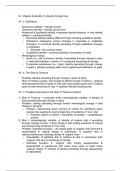
XV. a. Definitions
- Synchronic identity = identity at time
- Diachronic identity = identity across time
- Numerical & qualitative identity ≠ separate identity relations only identity
relation = numerical identity
o Numerical identity relating different things including qualitative identity
o Substance undergoing various changes in properties (= qualitative
changes) numerical identity persisting through qualitative changes
in properties
Example: chair painted white
o Qualitative identity = numerical identity of properties of entity
- Mereological change
o Sums (i.e., pile of stones): identity ≠ persisting through change in parts
(= deduction/addition in parts) ≠ sustaining mereological change
o Composite substances (i.e., chair): identity persisting through change
in parts = identity enduring within limit of gain/loss/modification of parts
XV. b. The Ship of Theseus
- Problem: identity persisting through change in parts of entity
- Ship of Theseus puzzle: ship brough to Athens & kept in harbour – gradual
removal/replacement of parts of ship with exact replica parts until ≠ original
parts of ship remaining on ship question identity resulting ship
XV. c. Possible responses to the Ship of Theseus problem
1) Ship of Theseus = composite entity mereologically variable identity of
ship persisting through change in parts
- Problem: identity persisting through limited mereological change ≠ total
change in all parts
o Problem: determining exact moment & criteria for identifying when
original ship ceasing to exist & beginning of existence of ‘new’ ship
Arbitrary nature of criteria + transitivity of identity – unsatisfactory
answer
2) Ship ≠ mereologically variable identity of original ship ≠ persisting
through change in parts first change in part ending existence of original
ship & beginning existence of ‘new’ ship
- Problem: extended scenario – all original parts of ‘original’ ship removed &
reassembled in original design in warehouse question ship in
harbour/warehouse retaining identity of ‘original’ ship––
o Impossibility of labelling ship in harbour & ship in warehouse both
‘original’ ship due to transitivity of identity
o Extended scenario 2: ‘original’ ship simply disassembled &
reassembled in warehouse with exact same parts in exact same
‘original’ design intuition of identity persisting through disassembly
& reassembly
XV. a. Definitions
- Synchronic identity = identity at time
- Diachronic identity = identity across time
- Numerical & qualitative identity ≠ separate identity relations only identity
relation = numerical identity
o Numerical identity relating different things including qualitative identity
o Substance undergoing various changes in properties (= qualitative
changes) numerical identity persisting through qualitative changes
in properties
Example: chair painted white
o Qualitative identity = numerical identity of properties of entity
- Mereological change
o Sums (i.e., pile of stones): identity ≠ persisting through change in parts
(= deduction/addition in parts) ≠ sustaining mereological change
o Composite substances (i.e., chair): identity persisting through change
in parts = identity enduring within limit of gain/loss/modification of parts
XV. b. The Ship of Theseus
- Problem: identity persisting through change in parts of entity
- Ship of Theseus puzzle: ship brough to Athens & kept in harbour – gradual
removal/replacement of parts of ship with exact replica parts until ≠ original
parts of ship remaining on ship question identity resulting ship
XV. c. Possible responses to the Ship of Theseus problem
1) Ship of Theseus = composite entity mereologically variable identity of
ship persisting through change in parts
- Problem: identity persisting through limited mereological change ≠ total
change in all parts
o Problem: determining exact moment & criteria for identifying when
original ship ceasing to exist & beginning of existence of ‘new’ ship
Arbitrary nature of criteria + transitivity of identity – unsatisfactory
answer
2) Ship ≠ mereologically variable identity of original ship ≠ persisting
through change in parts first change in part ending existence of original
ship & beginning existence of ‘new’ ship
- Problem: extended scenario – all original parts of ‘original’ ship removed &
reassembled in original design in warehouse question ship in
harbour/warehouse retaining identity of ‘original’ ship––
o Impossibility of labelling ship in harbour & ship in warehouse both
‘original’ ship due to transitivity of identity
o Extended scenario 2: ‘original’ ship simply disassembled &
reassembled in warehouse with exact same parts in exact same
‘original’ design intuition of identity persisting through disassembly
& reassembly