2300273
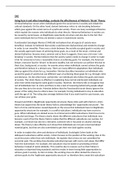
How does identity change in the digital world?
Identity is a fundamental part of the human experience and is what makes
a person unique. As technology advances, our lives are intertwined with
technology and our digital identity becomes progressively embedded in
everything we do in our daily lives. Whilst having an identity online can
have its benefits such as being able to use it as an escape, it can also
have its negatives, where people can develop new or multiple personas
and be a threat to our identities and destabilize us. This can cause us to
lose ourselves and question who we really are. In my essay, I will be
talking about how the digital world is a threat to our identities in today's
world.
Digital technology is advancing more rapidly than any innovation in our
history, reaching around 50 percent of the developing world’s population
in only two decades and transforming societies – United Nations.
Identity is described as something that encompasses memories,
experiences, relationships, and values that create one sense of self; in
other words, it is what makes a person, a person. It is also the external
factors about oneself that cannot be changed such as race, height, and
class. It also includes opinions about politics, moral attitudes and religious
beliefs that can influence choices that one makes on a daily basis.
Digital identity is meant to be a representation of a person’s real self,
online. Just like one’s offline self, there are unique identifiers that can
make up a person’s digital identity, such as personal information (name,
date of birth, etc.), email, online activities and purchasing history or
behavior.
Whilst there are many benefits of digital identity in the cyberworld, there
are also many negatives of how the digital world affects identity and how
we perceive ourselves and others in the real world. Sherry Turkle (1995)
brought about the phrase ‘a distributed self’ and this meant how people
can create multiple identities online different to their offline self. Sherry
Turkle (1997) talks about networked software which is known as Multi-
User Domains. A MUD is a multiplayer virtual world which is usually text-
based or storyboarded and where people all around the globe join online
virtual communities that only exist online. Here people create their own
characters and change their physical and psychological traits. In these
worlds, players could make their characters have romantic or casual sex,
get married, go to work, have rituals and celebrations, which simulates
our offline life. Many people who participate in MUDs report that they have
much more going for them in the MUDs than in their offline life, offering a
parallel life. However, the routine of playing these games every day can
have the negative effect of blurring the boundaries between the online
self and the offline self and be a further problem for people with
underlying identity and mental health issues.
How does identity change in the digital world?
Identity is a fundamental part of the human experience and is what makes
a person unique. As technology advances, our lives are intertwined with
technology and our digital identity becomes progressively embedded in
everything we do in our daily lives. Whilst having an identity online can
have its benefits such as being able to use it as an escape, it can also
have its negatives, where people can develop new or multiple personas
and be a threat to our identities and destabilize us. This can cause us to
lose ourselves and question who we really are. In my essay, I will be
talking about how the digital world is a threat to our identities in today's
world.
Digital technology is advancing more rapidly than any innovation in our
history, reaching around 50 percent of the developing world’s population
in only two decades and transforming societies – United Nations.
Identity is described as something that encompasses memories,
experiences, relationships, and values that create one sense of self; in
other words, it is what makes a person, a person. It is also the external
factors about oneself that cannot be changed such as race, height, and
class. It also includes opinions about politics, moral attitudes and religious
beliefs that can influence choices that one makes on a daily basis.
Digital identity is meant to be a representation of a person’s real self,
online. Just like one’s offline self, there are unique identifiers that can
make up a person’s digital identity, such as personal information (name,
date of birth, etc.), email, online activities and purchasing history or
behavior.
Whilst there are many benefits of digital identity in the cyberworld, there
are also many negatives of how the digital world affects identity and how
we perceive ourselves and others in the real world. Sherry Turkle (1995)
brought about the phrase ‘a distributed self’ and this meant how people
can create multiple identities online different to their offline self. Sherry
Turkle (1997) talks about networked software which is known as Multi-
User Domains. A MUD is a multiplayer virtual world which is usually text-
based or storyboarded and where people all around the globe join online
virtual communities that only exist online. Here people create their own
characters and change their physical and psychological traits. In these
worlds, players could make their characters have romantic or casual sex,
get married, go to work, have rituals and celebrations, which simulates
our offline life. Many people who participate in MUDs report that they have
much more going for them in the MUDs than in their offline life, offering a
parallel life. However, the routine of playing these games every day can
have the negative effect of blurring the boundaries between the online
self and the offline self and be a further problem for people with
underlying identity and mental health issues.