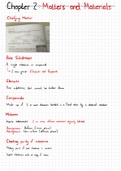
the behaviourist approach
An approach explaining
CLASSICAL CONDITIONING
to
behaviour in terms of what
is
observable and in terms of DCVIov's Dogs
learning. Classical Conditioning is learning via association.
Everyone is born'tabula rasa'. Before
conditioning
and we learn behaviours
through Stimulus Response. -
UCS(food) UCR(salivation)
=
Therefore, behaviour should 2. Before conditioning
and
be studied
objectively
scientifically. NS(bell) - No Response
3.
During Conditioning
Extinction is where the CR
UCS NS LCR (salivation)
=
occurs after pairings
+
no
longer
4. After
Conditioning
-
the LICS.
without
Spontaneous Recovery
is where
pairings ofthe UCS and CS CS (bell) = CR (Salivation)
revive the learned CR.
Generalisation is
OPERANT CONDITIONING
where the
carredresponseoccursweare
stimuliof
a similar nature. Skinner box
Discrimination is where OperantConditioning is learningviaconsequence.
different
paired with the UCS so the CD is Positive Reinforcement. Abehaviour is followed by
j
not
displayed. something pleasant.
Negative Reinforcement - A
behaviour is followed by
SCHEDULES OF the removal of
something unpleasant.
REINFORCEMENTS unpleasant.
Punishment -
benaviour is followed
A by something
<Positive Negative reinforcements increase the likelihood
+
Fixed Ratio Reinforcement -
W
a behaviour being repeated, punishment
of decreases it.
depends on response. Activity
esterreinforcementthenincreasein
reinforcementvaries: activity.
most
FixedInterval Reinforcement depends -
on a fixedtime (per hr):
Activity increases
as decicline nears. *
Nurture Ignores innate predispositions
->
Variable Interval ->Time between reinforcement
and important
mental processes.
varies:
Steady results.
x
Deterministic -> Ignores freewill which
* Behaviourism broughtthe
language, people generally don't like.
rigour and methods of science into psychology.
Animal Studies are
x unethical and animals
~ Practical Application - CC has been used explain human behaviour
accurately
cannot -
for systematic desensitisation. OC is the basis
Token
of
Economy.
An approach explaining
CLASSICAL CONDITIONING
to
behaviour in terms of what
is
observable and in terms of DCVIov's Dogs
learning. Classical Conditioning is learning via association.
Everyone is born'tabula rasa'. Before
conditioning
and we learn behaviours
through Stimulus Response. -
UCS(food) UCR(salivation)
=
Therefore, behaviour should 2. Before conditioning
and
be studied
objectively
scientifically. NS(bell) - No Response
3.
During Conditioning
Extinction is where the CR
UCS NS LCR (salivation)
=
occurs after pairings
+
no
longer
4. After
Conditioning
-
the LICS.
without
Spontaneous Recovery
is where
pairings ofthe UCS and CS CS (bell) = CR (Salivation)
revive the learned CR.
Generalisation is
OPERANT CONDITIONING
where the
carredresponseoccursweare
stimuliof
a similar nature. Skinner box
Discrimination is where OperantConditioning is learningviaconsequence.
different
paired with the UCS so the CD is Positive Reinforcement. Abehaviour is followed by
j
not
displayed. something pleasant.
Negative Reinforcement - A
behaviour is followed by
SCHEDULES OF the removal of
something unpleasant.
REINFORCEMENTS unpleasant.
Punishment -
benaviour is followed
A by something
<Positive Negative reinforcements increase the likelihood
+
Fixed Ratio Reinforcement -
W
a behaviour being repeated, punishment
of decreases it.
depends on response. Activity
esterreinforcementthenincreasein
reinforcementvaries: activity.
most
FixedInterval Reinforcement depends -
on a fixedtime (per hr):
Activity increases
as decicline nears. *
Nurture Ignores innate predispositions
->
Variable Interval ->Time between reinforcement
and important
mental processes.
varies:
Steady results.
x
Deterministic -> Ignores freewill which
* Behaviourism broughtthe
language, people generally don't like.
rigour and methods of science into psychology.
Animal Studies are
x unethical and animals
~ Practical Application - CC has been used explain human behaviour
accurately
cannot -
for systematic desensitisation. OC is the basis
Token
of
Economy.