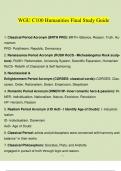
WGU C100 Humanities Final Study Guide
1. Classical Period Acronym (BRTH PRD): BRTH- Balance, Reason, Truth, Humanism PRD- Polytheism, Republic, Democracy 2. Renaissance Period Acronym (RUSH RoCS - Michealangelos Rock sculpture): RUSH- Reformation, University System, Scientific Expansion, Humanism RoCS- Rebirth of Classicism & Self fashioning 3. Neoclassical & Enlightenment Period Acronym (CORDES- classical cords): CORDES- Classicism, Order, Rationalism, Deism, Empiricism, Skepticism 4. Romantic Period Acronym (INNER HP- Inner romantic hero & passion): INNER- Individiualism, Nationalism, Nature, Exoticism, Revolution HP- Heroism, Passion 5. Realism Period Acronym (I ID AoD - I Identify Age of Doubt): I- Industrialization ID- Individualism, Darwinism AoD- Age of Doubt 6. Classical Period: artists and philosophers were concerned with harmony and balance* in their works 7. Classical Philosophers: Socrates, Plato, and Aristotle engaged in pursuit of truth through logic and reason.2 / 32 8. Classical Period: democracy and republic governments formed 9. Classical religion: mainly polytheistic 10. Classical theme: humanism—simply a focus on humans. 11. Socratic Method: where questions and ideas were shared to solve problems in an open discussion. Classical Period. 12. Greek Epic Poetry: Homer's The Iliad and The Odyssey. Which use exalted language and celebrate the cultural values of the heroic age. Classical Period. 13. Greek Lyrical Poetry: poetry that explored everyday objects using more intimate language. Followed Epic Poetry. Classical Period 14. Roman poetry: poetry that follows much of the form and content of Greek poetry while exalting the Roman Empire. The Greek poet Sappho explored human emotions, such as love and desire, in her poem "A Lament for Adonis." Classical Period.3 / 32 15. Classical Period Theater: theater structure that laid the foundations for theater as we know it today. It addressed period themes such as humanism, truth, balance, and the essence of life. It included such literary devices as foreshadowing, tragic irony, reversal of fortune, double entendre, discovery, and use of a chorus. 16. Sophocles and Aristophanes: 2 notable playwrights (theater writers) in Classical Period. 17. Classical Period Art & Architecture: Ancient Greek art and architecture served to promote religion, present beauty, and glorify Athenian society. Ancient Roman art and architecture focused on themes of power, military victory, and heroism. 18. contrapposto: a life-like stance in which the figure's weight rests on one leg. The resulting dip of a shoulder balances the rise of a hip to create a dynamic pose. Classic Period. 19. Classic Period Architecture: focused on balance and symmetry. Greek temples featured columns, topped with a capital*, which supported the entablature*, a decorative area that featured painted or carved friezes*. The triangular shaped roof ends contained more sculptures called pediments*. Perhaps the most notable Ancient Greek structure is the Parthenon, which features Doric order columns.The Parthenon once housed a large statue of Athena covered in gold. 20. Capital: Top part of the column between the Column and the Entablature. Classic Period. 21. Entablature: Horizontal layers of the building that are supported by columns or walls. Classic Period. 22. Friezes: Broad horizontal band that is sculpted or that is painted. Usually on4 / 32 the wall or near the ceiling. Classic period. 23. Pediment: The triangular upper part of the front of a building in classical style. Classic period
Written for
- Institution
- WGU C100 Humanities
- Course
- WGU C100 Humanities
Document information
- Uploaded on
- June 29, 2023
- Number of pages
- 63
- Written in
- 2022/2023
- Type
- Exam (elaborations)
- Contains
- Questions & answers
Subjects
-
wgu c100 humanities final study guide

Also available in package deal