Pe revision notes- bonnie
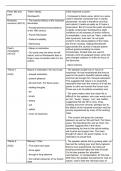
cardiovascular system
Health and fitness
Heart disease- conditions affecting blood vessels in arteries
caused by sedentary lifestyle and high cholesterol.
High blood pressure- large volume of blood in vessels, causes
heart attacks and strokes
Stroke- blood supply cut off at brain
Cholesterol- organic molecule biosynthesised by animal cells,
helps body make cell membranes and hormones.
Fitness
Cardiac output- amount of blood pumped from the heart every
minute
Higher for trained individuals as bradycardia allows stronger
contractions
Neural control of heart rate and cardiac conduction system
1. SA node- sends impulse to atria for atria systole
2. AV node- delays impulse and sends down to BOH
3. Bundle of His- sends impulse to bottom of ventricles
4. Purkinje fibres- creates ventricular systole
Cardiac cycle linked with cardiac control
1. Diastolic filling. SA pauses contraction
2. Av valves forced open. SA sends impulse across both atria
3. Atria contract, SL valves stay shut. AV send to boh and then
purkinje
4. Ventricle’s contract, AV valves closed, blood exits. Purkinje
creates ventricular systole
Chemoreceptors- detects increase in blood co2 and decrease in
blood PH
Proprioceptors- detects movement in joints and muscles
Baroreceptors- detects decrease in blood pressure
Anticipatory rise- HR increase prior to exercise due to adrenaline
Adrenaline- excites SA node, increasing heart rate and stroke
volume, excites ccc in medulla. Hormonal regulation
, 1. Chemo and baroreceptors send messages to medulla
2. Medulla increases stimulation of parasympathetic nerve
(accelerator)
3. Medulla reduces stimulation of parasympathetic nerve (vagus)
4. Results in higher heart rate and higher SR
Redistribution of blood
Vascular shunting- blood is diverted to active areas and taken
from inactive areas.
Vascular shunt mechanism- controlled by VCC in medulla that
stimulates sympathetic nervous system to either vasodilate or
vasoconstrict pre-capillary sphincters and arterioles that control
muscle and organ blood supply
Chemoreceptors inform VCC lactic acid levels increased, blood
02 and ph decreased
Baroreceptors inform VCC that systolic blood pressure has
increased/decreased
Venous return mechanisms
Pocket valves- one way valves in veins that prevent backflow and
direct blood flow to heart
Skeletal muscle pump- veins situated in-between skeletal
muscles that when contract squeeze blood upwards to the heart
Suction pressure at heart- vacuum of the heart that draws blood
upwards
Respiratory pump- breathing changes causes pressure changes in
thorax and abdomen, squeezing large vein forcing blood back to
heart
Smooth muscle in veins- contract and squeeze blood back to
heart
More movement- skeletal pump and respiratory pump increase
Starlings law of the heart
1. Venous return
2. More blood fills heart/increases diastole filling
3. Heart stretches
4. Next contraction is more powerful
5. Increased stroke volume meaning increased ejection fraction
Transportation of oxygen in the body
Haemoglobin
, An iron containing pigment in red blood cells, combines with 02=
oxyhaemoglobin
Myoglobin
An iron containing muscle pigment in slow twitch M.F
Higher affinity to o2
Stores o2 in muscles= can be used quickly when exercising
Oxyhaemoglobin disassociation curve
Helps us understand how haemoglobin in the blood transports and
releases o2
Curve represents relationship between o2 and haemoglobin
Bohr shift
When increase in blood co2 and decrease in PH results in reduction
of affinity of haemoglobin for 02
Shift to the right increases co2
1. Blood and temp increase= 02 dissociate quicker from
haemoglobin
2. Lower blood ph
3. Higher levels of co2
cardiovascular drift
HR increases during sub-maximal exercise due to decrease in SV
During prolonged exercise in a warm environment
Causes loss of blood plasma due to sweat increasing viscosity of
blood reducing VR and SV
Hr increases to compensate and maintain Q
Minimalised by consumption of water before exercise
A-VO2 difference
Difference in blood o2 between arterial and venous blood
Difference in 10ml at rest arteries 20ml-veins 10 ml
Adaptions to training
Increased oxygen content in arterial blood due to more red blood cells increasing oxygen
carrying capacity of the blood
Increased gas exchange at the muscle due to increased capillarisation
Increased gas exchange at the muscle due to more myoglobin which has a greater
affinity for oxygen than haemoglobin so pulls more oxygen into muscle
, Musculoskeletal system
Planes and axis
Sagittal plane, transverse axis
Positioning; left to right, through middle of body
joint actions; flexion, extension, plantar and dorsi-flexion
where; shoulder, hip, elbow, knee and ankle
sprinting, forward roll
Frontal plane, sagittal axis
Positioning; front to back, through middle of body
joint actions; adduction and abduction
where; shoulder and hip
, cartwheel
Transverse plane, longitudinal axis
Positioning; top to bottom, through middle of body
joint actions; horizontal adduction and abduction
where; shoulder and hip
360 spin
Levers- FLE
1st class- F
cardiovascular system
Health and fitness
Heart disease- conditions affecting blood vessels in arteries
caused by sedentary lifestyle and high cholesterol.
High blood pressure- large volume of blood in vessels, causes
heart attacks and strokes
Stroke- blood supply cut off at brain
Cholesterol- organic molecule biosynthesised by animal cells,
helps body make cell membranes and hormones.
Fitness
Cardiac output- amount of blood pumped from the heart every
minute
Higher for trained individuals as bradycardia allows stronger
contractions
Neural control of heart rate and cardiac conduction system
1. SA node- sends impulse to atria for atria systole
2. AV node- delays impulse and sends down to BOH
3. Bundle of His- sends impulse to bottom of ventricles
4. Purkinje fibres- creates ventricular systole
Cardiac cycle linked with cardiac control
1. Diastolic filling. SA pauses contraction
2. Av valves forced open. SA sends impulse across both atria
3. Atria contract, SL valves stay shut. AV send to boh and then
purkinje
4. Ventricle’s contract, AV valves closed, blood exits. Purkinje
creates ventricular systole
Chemoreceptors- detects increase in blood co2 and decrease in
blood PH
Proprioceptors- detects movement in joints and muscles
Baroreceptors- detects decrease in blood pressure
Anticipatory rise- HR increase prior to exercise due to adrenaline
Adrenaline- excites SA node, increasing heart rate and stroke
volume, excites ccc in medulla. Hormonal regulation
, 1. Chemo and baroreceptors send messages to medulla
2. Medulla increases stimulation of parasympathetic nerve
(accelerator)
3. Medulla reduces stimulation of parasympathetic nerve (vagus)
4. Results in higher heart rate and higher SR
Redistribution of blood
Vascular shunting- blood is diverted to active areas and taken
from inactive areas.
Vascular shunt mechanism- controlled by VCC in medulla that
stimulates sympathetic nervous system to either vasodilate or
vasoconstrict pre-capillary sphincters and arterioles that control
muscle and organ blood supply
Chemoreceptors inform VCC lactic acid levels increased, blood
02 and ph decreased
Baroreceptors inform VCC that systolic blood pressure has
increased/decreased
Venous return mechanisms
Pocket valves- one way valves in veins that prevent backflow and
direct blood flow to heart
Skeletal muscle pump- veins situated in-between skeletal
muscles that when contract squeeze blood upwards to the heart
Suction pressure at heart- vacuum of the heart that draws blood
upwards
Respiratory pump- breathing changes causes pressure changes in
thorax and abdomen, squeezing large vein forcing blood back to
heart
Smooth muscle in veins- contract and squeeze blood back to
heart
More movement- skeletal pump and respiratory pump increase
Starlings law of the heart
1. Venous return
2. More blood fills heart/increases diastole filling
3. Heart stretches
4. Next contraction is more powerful
5. Increased stroke volume meaning increased ejection fraction
Transportation of oxygen in the body
Haemoglobin
, An iron containing pigment in red blood cells, combines with 02=
oxyhaemoglobin
Myoglobin
An iron containing muscle pigment in slow twitch M.F
Higher affinity to o2
Stores o2 in muscles= can be used quickly when exercising
Oxyhaemoglobin disassociation curve
Helps us understand how haemoglobin in the blood transports and
releases o2
Curve represents relationship between o2 and haemoglobin
Bohr shift
When increase in blood co2 and decrease in PH results in reduction
of affinity of haemoglobin for 02
Shift to the right increases co2
1. Blood and temp increase= 02 dissociate quicker from
haemoglobin
2. Lower blood ph
3. Higher levels of co2
cardiovascular drift
HR increases during sub-maximal exercise due to decrease in SV
During prolonged exercise in a warm environment
Causes loss of blood plasma due to sweat increasing viscosity of
blood reducing VR and SV
Hr increases to compensate and maintain Q
Minimalised by consumption of water before exercise
A-VO2 difference
Difference in blood o2 between arterial and venous blood
Difference in 10ml at rest arteries 20ml-veins 10 ml
Adaptions to training
Increased oxygen content in arterial blood due to more red blood cells increasing oxygen
carrying capacity of the blood
Increased gas exchange at the muscle due to increased capillarisation
Increased gas exchange at the muscle due to more myoglobin which has a greater
affinity for oxygen than haemoglobin so pulls more oxygen into muscle
, Musculoskeletal system
Planes and axis
Sagittal plane, transverse axis
Positioning; left to right, through middle of body
joint actions; flexion, extension, plantar and dorsi-flexion
where; shoulder, hip, elbow, knee and ankle
sprinting, forward roll
Frontal plane, sagittal axis
Positioning; front to back, through middle of body
joint actions; adduction and abduction
where; shoulder and hip
, cartwheel
Transverse plane, longitudinal axis
Positioning; top to bottom, through middle of body
joint actions; horizontal adduction and abduction
where; shoulder and hip
360 spin
Levers- FLE
1st class- F