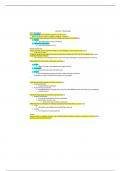
Hamlet glossary
SYNECDOCHE: From the Greek: “to receive from; sense; interpretation; A
figure of speech by which a part of something refers to the whole, as in “Give
us this day our daily bread” (for basic necessities of life) or “fifty wagging tails”
(for fifty dogs). In Synedoche can also be used when a part is referred to as
the whole, as in: “Use your head!” (for brain).
Example:
GHOST: Now, Hamlet, hear.
‘Tis given out that, sleeping in my orchard,
A serpent stung me. So the whole ear of Denmark
Is by a forgèd process of my death
Rankly abused. But know, thou noble youth,
The serpent that did sting thy father’s life
Now wears his crown. (Act I, Scene V, Lines 41-43)
The ghost of Hamlet’s father implies that he was killed by Claudius instead of
being stung by a snake. The synecdoche example in this excerpt is the usage of
the word “ear.” The ghost refers to “the whole ear of Denmark.” This means
that the whole population of Denmark has heard a particular story about his
death.
The ghost continues in Lines 87-90,"Let not the royal bed of Denmark be / A
couch for luxury and damned incest." Here the ghost is discussing the
marriage of Gertrude and Claudius and uses the term royal bed of Denmark"
to represent the marriage.
Exposition – insertion of important background information in a story e.g.
introducing characters, prior plot events etc…
Stichomythia: dialogue especially of altercation or dispute delivered by two
actors in alternating lines (as in classical Greek drama)
For example: Act 3, Scene 4 (the Closet scene), Hamlet is confronted by his
mother, the queen, about the play (III, ii) which Hamlet rigged to expose his
murderous step-uncle.
QUEEN: Hamlet, thou hast thy father much offended.
HAMLET: Mother, you have my father much offended.
QUEEN: Come, come, you answer with an idle tongue.
HAMLET: Go, go, you question with a wicked tongue.
,Metonymy: a figure of speech in which one thing is replaced with a word
closely associated with it.
Antithesis: the use of contrasting concepts, words, or sentences within
parallel grammatical structures. This combination of a balanced structure
with opposite ideas serves to highlight the contrast between them as in:
"to be or not to be . . ."
Example: In Act 1 scene 2 when Claudius first addresses Hamlet:
“CLAUDIUS: How is it that the clouds still hang on you?
HAMLET: Not so, my lord. I am too much i’ the sun.”
Antithesis is used in this extract in the parallel ideas when Claudius asks
Hamlet about the clouds, a metaphor for grief that still surrounds him.
He replies, in both a pun and in antithesis, in a parallel syntax. Hamlet
says he is “too much in the sun.” Hamlet contrasts the connotative
imagery of cloud: rain, storms, and grief to imagery of sun: joy and
happiness. He does this rather sarcastically, and puns the word “sun”
with “son” as he is bitter about the loss of his father and the new
position of Claudius as his new “father”.
The antithesis functions to heighten the drama and describe the
relationship between the two men, as we are first introduced to them.
By using antithesis, Hamlet is able to almost slyly, draw attention to the
fact that he does not directly answer his uncle’s question, but rather
describes his feelings. The antithesis here shows that Hamlet is both sick
of being the son of Claudius as well as being in despair. He is the direct
opposition situation than what his uncle believes.
Allusion: a brief and indirect reference to a person, place, thing or idea
of historical, cultural, literary or political significance. It does not describe
in detail the person or thing to which it refers. It is just a passing
comment and the writer expects the reader to possess enough
knowledge to spot the allusion and grasp its importance in a text. e.g
"she followed my poor father's body/ Like Niobe, all tears..."
While synecdoches narrow focus, allusions widen them. An allusion
invites the reader to connect something universal (macrocosm) to a
, particular situation (microcosm). Analysing that connection
will reveal wide avenues of interpretive possibility.
In his first soliloquy Hamlet uses an allusion to compare his father to his
uncle: Hyperion is the Titan god of light in Greek Mythology; satyrs are
half man/half beast, usually depicted as man above the waist and a
horse or goat below the waist. The implication that Claudius below the
waist is a beast is a comment on the new king's lechery.
Hamlet also alludes to Niobe in this soliloquy, a character in Greek
mythology, famous for her ceaseless tears following her children's death.
Hamlet compares the Queen to Niobe immediately following his father's
death, making her marriage to Claudius all the more despicable in
Hamlet's eyes.
Hendiadys: a figure of speech in which two words connected by a
conjunction are used to express a single notion that would normally be
expressed by an adjective and a substantive, such as grace and favour
instead of gracious favour.
● Rhetorical effect of hendiadys: has the effect of using language in
order to slow down the rhythm of thought and perception, to
break things down into more elementary units, and thereby to
distort normative habits of thought and put them out of joint.
Hendiadys is a kind of rhetorical double take, a disruptive slowing
of the action so that, for example, we realize that the hatching of
something is not identical with its disclosure (Hamlet 3.1.174), or
that 'the expectation and rose of the fair state' (Hamlet 3.1.152),
rather than the merely expectant rose, define two distinctive
aspects of Hamlet's role as heir apparent."
Hamlet is Shakespeare’s play most marked by the use of hendiadys (66
instances according to Wright).
George T. Wright hypothesises: "hendiadys is most congenial to
Shakespeare's purposes in those plays that explore the problematical
depths of thought and feeling, as opposed to those that survey, from a
perspective less intensely or less personally involved, the spectacle of
erring human behavior."
SYNECDOCHE: From the Greek: “to receive from; sense; interpretation; A
figure of speech by which a part of something refers to the whole, as in “Give
us this day our daily bread” (for basic necessities of life) or “fifty wagging tails”
(for fifty dogs). In Synedoche can also be used when a part is referred to as
the whole, as in: “Use your head!” (for brain).
Example:
GHOST: Now, Hamlet, hear.
‘Tis given out that, sleeping in my orchard,
A serpent stung me. So the whole ear of Denmark
Is by a forgèd process of my death
Rankly abused. But know, thou noble youth,
The serpent that did sting thy father’s life
Now wears his crown. (Act I, Scene V, Lines 41-43)
The ghost of Hamlet’s father implies that he was killed by Claudius instead of
being stung by a snake. The synecdoche example in this excerpt is the usage of
the word “ear.” The ghost refers to “the whole ear of Denmark.” This means
that the whole population of Denmark has heard a particular story about his
death.
The ghost continues in Lines 87-90,"Let not the royal bed of Denmark be / A
couch for luxury and damned incest." Here the ghost is discussing the
marriage of Gertrude and Claudius and uses the term royal bed of Denmark"
to represent the marriage.
Exposition – insertion of important background information in a story e.g.
introducing characters, prior plot events etc…
Stichomythia: dialogue especially of altercation or dispute delivered by two
actors in alternating lines (as in classical Greek drama)
For example: Act 3, Scene 4 (the Closet scene), Hamlet is confronted by his
mother, the queen, about the play (III, ii) which Hamlet rigged to expose his
murderous step-uncle.
QUEEN: Hamlet, thou hast thy father much offended.
HAMLET: Mother, you have my father much offended.
QUEEN: Come, come, you answer with an idle tongue.
HAMLET: Go, go, you question with a wicked tongue.
,Metonymy: a figure of speech in which one thing is replaced with a word
closely associated with it.
Antithesis: the use of contrasting concepts, words, or sentences within
parallel grammatical structures. This combination of a balanced structure
with opposite ideas serves to highlight the contrast between them as in:
"to be or not to be . . ."
Example: In Act 1 scene 2 when Claudius first addresses Hamlet:
“CLAUDIUS: How is it that the clouds still hang on you?
HAMLET: Not so, my lord. I am too much i’ the sun.”
Antithesis is used in this extract in the parallel ideas when Claudius asks
Hamlet about the clouds, a metaphor for grief that still surrounds him.
He replies, in both a pun and in antithesis, in a parallel syntax. Hamlet
says he is “too much in the sun.” Hamlet contrasts the connotative
imagery of cloud: rain, storms, and grief to imagery of sun: joy and
happiness. He does this rather sarcastically, and puns the word “sun”
with “son” as he is bitter about the loss of his father and the new
position of Claudius as his new “father”.
The antithesis functions to heighten the drama and describe the
relationship between the two men, as we are first introduced to them.
By using antithesis, Hamlet is able to almost slyly, draw attention to the
fact that he does not directly answer his uncle’s question, but rather
describes his feelings. The antithesis here shows that Hamlet is both sick
of being the son of Claudius as well as being in despair. He is the direct
opposition situation than what his uncle believes.
Allusion: a brief and indirect reference to a person, place, thing or idea
of historical, cultural, literary or political significance. It does not describe
in detail the person or thing to which it refers. It is just a passing
comment and the writer expects the reader to possess enough
knowledge to spot the allusion and grasp its importance in a text. e.g
"she followed my poor father's body/ Like Niobe, all tears..."
While synecdoches narrow focus, allusions widen them. An allusion
invites the reader to connect something universal (macrocosm) to a
, particular situation (microcosm). Analysing that connection
will reveal wide avenues of interpretive possibility.
In his first soliloquy Hamlet uses an allusion to compare his father to his
uncle: Hyperion is the Titan god of light in Greek Mythology; satyrs are
half man/half beast, usually depicted as man above the waist and a
horse or goat below the waist. The implication that Claudius below the
waist is a beast is a comment on the new king's lechery.
Hamlet also alludes to Niobe in this soliloquy, a character in Greek
mythology, famous for her ceaseless tears following her children's death.
Hamlet compares the Queen to Niobe immediately following his father's
death, making her marriage to Claudius all the more despicable in
Hamlet's eyes.
Hendiadys: a figure of speech in which two words connected by a
conjunction are used to express a single notion that would normally be
expressed by an adjective and a substantive, such as grace and favour
instead of gracious favour.
● Rhetorical effect of hendiadys: has the effect of using language in
order to slow down the rhythm of thought and perception, to
break things down into more elementary units, and thereby to
distort normative habits of thought and put them out of joint.
Hendiadys is a kind of rhetorical double take, a disruptive slowing
of the action so that, for example, we realize that the hatching of
something is not identical with its disclosure (Hamlet 3.1.174), or
that 'the expectation and rose of the fair state' (Hamlet 3.1.152),
rather than the merely expectant rose, define two distinctive
aspects of Hamlet's role as heir apparent."
Hamlet is Shakespeare’s play most marked by the use of hendiadys (66
instances according to Wright).
George T. Wright hypothesises: "hendiadys is most congenial to
Shakespeare's purposes in those plays that explore the problematical
depths of thought and feeling, as opposed to those that survey, from a
perspective less intensely or less personally involved, the spectacle of
erring human behavior."