100% satisfaction guarantee Immediately available after payment Both online and in PDF No strings attached 4.6 TrustPilot
logo-home
Exam (elaborations)

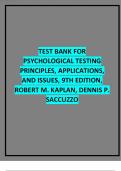
TEST BANK FOR PSYCHOLOGICAL TESTING PRINCIPLES, APPLICATIONS, AND ISSUES, 9TH EDITION, ROBERT M. KAPLAN, DENNIS P. SACCUZZO

Rating
-
Sold
-
Pages
301
Grade
A+
Uploaded on
27-06-2023
Written in
2024/2025

The Test Bank for Psychological Testing: Principles, Applications, and Issues, 9th Edition by Robert M. Kaplan and Dennis P. Saccuzzo is a comprehensive study resource designed to assist students in mastering the essential concepts related to psychological testing. This Test Bank covers the critical areas of psychometrics, test theory, application, and the various ethical and legal issues involved in the use of psychological assessments. It serves as an excellent tool for students in psychology courses, especially those studying for exams, assignments, or clinical practice applications. Key Features of the Test Bank: Complete Coverage of the Textbook: The Test Bank is designed to follow the structure of the Psychological Testing, 9th Edition textbook, ensuring thorough coverage of all the major topics in psychological testing, including: Introduction to Psychological Testing: Overview of psychological tests, their purposes, and basic principles such as reliability, validity, and standardization. Types of Psychological Tests: In-depth exploration of various test types, including intelligence tests, personality inventories, achievement and aptitude tests, neuropsychological assessments, and projective tests. Psychometric Theories and Methods: A focus on the theoretical aspects of testing, including item response theory, classical test theory, factor analysis, and test construction methodologies. Test Reliability and Validity: A thorough explanation of the concepts of reliability (e.g., test-retest, inter-rater) and validity (e.g., content, construct, criterion-related) and how they are assessed in practice. Ethical and Legal Issues in Psychological Testing: Discussion of the ethical responsibilities of psychologists, including issues of fairness, confidentiality, cultural sensitivity, and the legal implications of test use. Applications of Psychological Testing: Practical applications in clinical settings, educational environments, and organizational contexts, such as using tests for diagnosis, treatment planning, and employee selection. Interpretation and Reporting: How to interpret and report test results effectively, including writing test reports and communicating findings to clients or stakeholders. Cultural Considerations in Testing: Emphasizing cultural competence in test selection and interpretation to ensure fairness and validity across diverse populations. Diverse Question Formats: The Test Bank includes a variety of question types to assess students’ knowledge from different angles: Multiple-Choice Questions (MCQs): Covering all aspects of psychological testing, from basic definitions to complex applications of testing theory. True/False: Designed to test the student’s understanding of key facts, principles, and ethical guidelines. Matching: Reinforces key concepts such as matching test types with their appropriate use cases or matching psychometric terms with their definitions. Fill-in-the-Blank: Helps students recall essential terminology related to test development, reliability, validity, and ethical practices. Short Answer Questions: These questions encourage students to explain concepts in more depth and demonstrate their ability to apply theoretical knowledge to real-world situations. Case Studies: Real-life scenarios that challenge students to apply their knowledge of psychological testing to practical situations, such as clinical assessments, educational testing, or organizational selection. Detailed Explanations and Rationales: Each question is followed by a detailed rationale that explains why the correct answer is appropriate and why other options are incorrect. These rationales help students understand the reasoning behind the answers, providing a deeper understanding of the material and enhancing critical thinking skills. The rationales also highlight important concepts such as the implications of test results, ethical considerations, and the application of psychometric theories in practice. Focus on Practical Applications: The Test Bank emphasizes the real-world application of psychological testing, ensuring that students can not only understand the theoretical aspects of tests but also know how to apply them in clinical, educational, and organizational settings. The inclusion of case studies and practical questions encourages students to connect theory with practice, improving their ability to make sound decisions in their professional careers. Updated Content: The 9th Edition Test Bank includes the latest research and developments in the field of psychological testing, ensuring that students are learning the most current information. This includes updates on the use of technology in testing, advancements in test theory, and contemporary issues in ethical testing practices. Preparation for Exams: The Test Bank is an ideal tool for students preparing for exams in psychology, particularly those studying for courses on psychological assessment, psychometrics, or clinical psychology. The question formats and content are designed to mirror the types of questions students may encounter in exams, ensuring effective exam preparation. Self-Assessment and Review: By working through the questions in the Test Bank, students can assess their understanding of psychological testing concepts and identify areas where they need additional study. This self-assessment process helps guide students in their learning, providing valuable feedback for further review. Ethical Considerations in Testing: Given the importance of ethical issues in psychological testing, the Test Bank includes a significant focus on topics such as informed consent, test security, test bias, and cultural fairness. Students are encouraged to think critically about the ethical implications of using psychological tests in different settings. Why Purchase the Test Bank? Comprehensive Coverage: It covers all the chapters in the Psychological Testing textbook, ensuring students have a complete and thorough review of the material. Diverse Question Types: With multiple types of questions, including MCQs, case studies, and short-answer questions, the Test Bank provides a comprehensive approach to learning and testing knowledge. Real-World Relevance: Focuses on applying psychological testing principles in clinical, educational, and organizational contexts, helping students prepare for practical application in their careers. Exam Preparation: Perfect for preparing for exams, certifications, or licensing tests, especially in the areas of psychological assessment, psychometrics, and clinical psychology. Updated Content: The 9th Edition Test Bank includes the most current information, ensuring students learn about the latest trends and issues in psychological testing. Ethical Focus: Strong emphasis on ethical and legal issues in testing, preparing students to navigate the responsibilities and challenges they will face in the field of psychological assessment. Affordable and Convenient: Provides a cost-effective and accessible way for students to reinforce their learning and improve their exam performance. Conclusion: The Test Bank for Psychological Testing: Principles, Applications, and Issues, 9th Edition by Kaplan and Saccuzzo is an essential resource for students studying psychological testing. Its comprehensive coverage, diverse question formats, and emphasis on both theoretical concepts and real-world applications make it an invaluable tool for mastering psychological assessment. Whether you're preparing for exams, certifications, or practical applications in clinical or educational settings, this Test Bank provides the practice and insights you need to succeed in the field of psychological testing.

Show more Read less
Institution
Registered Nurse Educator
Course
Registered Nurse Educator

Content preview

https://www.stuvia.com/
Stuvia.com - The Marketplace to Buy and Sell your Study Material


TEST BANK FOR
PSYCHOLOGICAL TESTING
PRINCIPLES, APPLICATIONS,
AND ISSUES, 9TH EDITION,
ROBERT M. KAPLAN, DENNIS P.
SACCUZZO

,https://www.stuvia.com/


Chapter 1—Introduction

MULTIPLE CHOICE

1. According to a study (Espenshade & Chung, 2010; Jaschik,
2006), growing numbers of four-year colleges are not relying
on the SAT test partly because of
a. budget constraints.
b. diversity concerns.
c. reliability issues.
d. quality control.


ANS: B PTS: 1 REF: Introduction

2. Psychological tests
a. pertain only to overt behavior.
b. always have right or wrong answers.
c. do not attempt to measure traits.
d. measure characteristics of human behavior.


ANS: D PTS: 1 REF: Basic Concepts
MSC: www

3. The specific stimulus on a test to which a person responds
overtly is called a(n)
a. overt event.
b. answer.
c. item.
d. scale.

,https://www.stuvia.com/


ANS: C PTS: 1 REF: Basic Concepts

4. An individual test
a. involves a single examiner for two or more subjects.
b. involves only tests of human ability.
c. can only be given to one person at a time.
d. involves more than one examiner for a single subject.


ANS: C PTS: 1 REF: Basic Concepts

5. A group test
a. can be given to multiple people by one examiner.
b. can only be given to three people at a time.
c. involves a group of examiners for a single subject.
d. involves only tests of human ability.


ANS: A PTS: 1 REF: Basic Concepts

6. Previous learning can best be described as
a. achievement.
b. aptitude.
c. intelligence.
d. ability.


ANS: A PTS: 1 REF: Basic Concepts
MSC: www

7. The potential for learning a specific skill can best be described


Downloaded by: Sophiie |
Distribution of this document is illegal

,https://www.stuvia.com/
Stuvia.com - The Marketplace to Buy and Sell your Study Material


as
a. achievement.
b. aptitude.

c. intelligence.
d. ability.


ANS: B PTS: 1 REF: Basic Concepts

8. One's general potential, independent of prior learning, can best
be described as
a. achievement.
b. aptitude.
c. intelligence.
d. ability.


ANS: C PTS: 1 REF: Basic Concepts

9. Achievement, aptitude, and intelligence can be encompassed
by the term
a. human potential.
b. human traits.
c. human personality.
d. human ability.


ANS: D PTS: 1 REF: Basic Concepts

10. Structured personality tests
a. require you to produce something spontaneously.


Downloaded by: Sophiie |
Distribution of this document is illegal

Written for

Institution
Registered Nurse Educator
Course
Registered Nurse Educator

Document information

Uploaded on
June 27, 2023
Number of pages
301
Written in
2024/2025
Type
Exam (elaborations)
Contains
Questions & answers

Subjects

  • verified by tutors
$25.99
Get access to the full document:

100% satisfaction guarantee
Immediately available after payment
Both online and in PDF
No strings attached

Get to know the seller
Seller avatar
examsolutions7

Get to know the seller

Seller avatar
examsolutions7 Teachme2-tutor
View profile
Follow You need to be logged in order to follow users or courses
Sold
1
Member since
2 year
Number of followers
1
Documents
259
Last sold
1 year ago
EXAM SOLUTIONS

THIS STORE PROVIDES STUDENTS WITH BEST TEST BANKS TO HELP THEM PASS THERE INCOMING EXAMINATIONS,GIVING THEM BEST CHOICES SOLUTIONS IN TACKLING EXAMS

0.0

0 reviews

5
0
4
0
3
0
2
0
1
0

Recently viewed by you

Why students choose Stuvia

Created by fellow students, verified by reviews

Quality you can trust: written by students who passed their tests and reviewed by others who've used these notes.

Didn't get what you expected? Choose another document

No worries! You can instantly pick a different document that better fits what you're looking for.

Pay as you like, start learning right away

No subscription, no commitments. Pay the way you're used to via credit card and download your PDF document instantly.

Student with book image

“Bought, downloaded, and aced it. It really can be that simple.”

Alisha Student

Frequently asked questions