The Lymphatic System & Body Defenses - Part 1
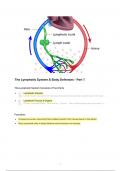
The Lymphatic System Consists of Two Parts
Lymphatic Vessels
Lymph: Excess tissue fluid and plasma proteins carried by lymphatic vessels back to the heart ·
Lymphoid Tissues & Organs
Primary Lymphoid Organs · Bone marrow · Thymus · This is where lymphocytes are formed · S
Functions
Transports excess interstitial fluid (called lymph) from tissues back to the blood
Plays essential roles in body defense and resistance to disease
1
,Body Defenses
Defense mechanisms include
Innate Immunity (Natural or Non specific, No Memory)
Image · Second Line of Defense (Innate Immunity) · Cells · Soluble Factors · The Inflammatory
Acquired immunity (Adaptive or Specific, Has Memory)
It can be · Cell-mediated immunity (involves cells) · Humoral immunity (relating to bodily fluids)
2
, Comparison between innate and adaptive immunity
Type of Antigen Specifity Immunologic Memory Systemic vs
Immunity Local
Innate No: as all antigens are seen No generation of memory = same Mostly local
the same way by the skin, response each time antigen is encountered
mucus membranes
Adaptive Yes: each antigen is seen by a Yes: first exposure generates a primary Mostly systemic
unique receptor and is seen as immune response , part of which is
a unique molecule memory T and/or B cells Second exposure
involves the activation of already present
memory cells faster, stronger and more
efficient response
↑ The Lymphatic System & Body Defenses - Part 1
Lymphatic Vessels
Lymph: Excess tissue fluid and plasma proteins carried by lymphatic vessels back to the
heart
If fluids are not picked up edema occurs as fluid accumulates in tissues causing swelling
3
The Lymphatic System Consists of Two Parts
Lymphatic Vessels
Lymph: Excess tissue fluid and plasma proteins carried by lymphatic vessels back to the heart ·
Lymphoid Tissues & Organs
Primary Lymphoid Organs · Bone marrow · Thymus · This is where lymphocytes are formed · S
Functions
Transports excess interstitial fluid (called lymph) from tissues back to the blood
Plays essential roles in body defense and resistance to disease
1
,Body Defenses
Defense mechanisms include
Innate Immunity (Natural or Non specific, No Memory)
Image · Second Line of Defense (Innate Immunity) · Cells · Soluble Factors · The Inflammatory
Acquired immunity (Adaptive or Specific, Has Memory)
It can be · Cell-mediated immunity (involves cells) · Humoral immunity (relating to bodily fluids)
2
, Comparison between innate and adaptive immunity
Type of Antigen Specifity Immunologic Memory Systemic vs
Immunity Local
Innate No: as all antigens are seen No generation of memory = same Mostly local
the same way by the skin, response each time antigen is encountered
mucus membranes
Adaptive Yes: each antigen is seen by a Yes: first exposure generates a primary Mostly systemic
unique receptor and is seen as immune response , part of which is
a unique molecule memory T and/or B cells Second exposure
involves the activation of already present
memory cells faster, stronger and more
efficient response
↑ The Lymphatic System & Body Defenses - Part 1
Lymphatic Vessels
Lymph: Excess tissue fluid and plasma proteins carried by lymphatic vessels back to the
heart
If fluids are not picked up edema occurs as fluid accumulates in tissues causing swelling
3