LAA323 – Criminal Evidence Law & Psychology
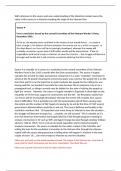
Large Group Session 1 - Identification from Images
• Single greatest cause of wrong convictions – ID’d as mistaken ID
evidence
• Not looking at eye witness evidence
• Still law today
• Judge sets out factors the jury should consider
• More than 20% of the world’s CCTV camera’s are in the UK
• UK has the most CCTV’s in the world
• Bug- a bundle of 9 cameras that recognize 50 sus traits
• Robber #2 =#5
• Robber #1=#8
• When we look at someone we know, our brain maps the face in a
sophisticated way
• When we look at someone we don’t know, our brain looks at simplistic
features of the face – i.e. hairline, ears
, • 2300 people in 2018 were wrongly identified as having committed
unlawful activity(ies)
• CCTV relatively new form of evidence
•
• AG’s Reference (No 2 of 2002)
o Court of Appeal gave clarity on rules on admissibility of evidence
o 4 principles set out:
§ Recognition evidence (identification of strangers)
• Seeing someone for a brief period is not enough to accurately recognize
someone (according to psychology)
• If image no longer exists – jury, judge etc, can’t look at it to assess it
• R v Brady (2004)
o B charged with robbery
o When arrested, officer said he knew her ‘really, really well’
o Officer told B he got her on CCTV so B confessed
o Officer didn’t know if B did it or not
o B was on drugs and robbed to fuel addiction
o B was convicted
o Owners of the place that was robbed said it wasn’t B and
reached out to solicitor. There was an appeal
o CCTV given to Court of Appeal, 1 hour before robbery
o Court of Appeal noticed – B was frame
• Criminal Law Revision Committee Evidence
2
Large Group Session 1 - Identification from Images
• Single greatest cause of wrong convictions – ID’d as mistaken ID
evidence
• Not looking at eye witness evidence
• Still law today
• Judge sets out factors the jury should consider
• More than 20% of the world’s CCTV camera’s are in the UK
• UK has the most CCTV’s in the world
• Bug- a bundle of 9 cameras that recognize 50 sus traits
• Robber #2 =#5
• Robber #1=#8
• When we look at someone we know, our brain maps the face in a
sophisticated way
• When we look at someone we don’t know, our brain looks at simplistic
features of the face – i.e. hairline, ears
, • 2300 people in 2018 were wrongly identified as having committed
unlawful activity(ies)
• CCTV relatively new form of evidence
•
• AG’s Reference (No 2 of 2002)
o Court of Appeal gave clarity on rules on admissibility of evidence
o 4 principles set out:
§ Recognition evidence (identification of strangers)
• Seeing someone for a brief period is not enough to accurately recognize
someone (according to psychology)
• If image no longer exists – jury, judge etc, can’t look at it to assess it
• R v Brady (2004)
o B charged with robbery
o When arrested, officer said he knew her ‘really, really well’
o Officer told B he got her on CCTV so B confessed
o Officer didn’t know if B did it or not
o B was on drugs and robbed to fuel addiction
o B was convicted
o Owners of the place that was robbed said it wasn’t B and
reached out to solicitor. There was an appeal
o CCTV given to Court of Appeal, 1 hour before robbery
o Court of Appeal noticed – B was frame
• Criminal Law Revision Committee Evidence
2