Unit 1:
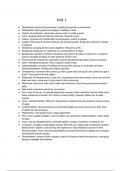
● Distribution involves the processes in getting the goods to consumers.
● Wholesalers store goods and supply to retailers in bulk.
● Factors of production: resources used in order to make a good.
● Land, physical land and natural resources. Reward is rent.
● Labour, physical and mental effort of employees, reward is wages.
● Capital, financial and all items that go into producing other things like machines, reward
is interest.
● Enterprise, bringing all the factors together. Reward is profit.
● Replacing employees for machinery is mechanisation of tasks.
● Businesses operate in dynamic situations and need to be able to respond in a dynamic
way for example bringing out new products of their own.
● Primary sector (extractive) secondary sector (manufacturing) tertiary sector (services)
● Semi manufactured goods: when a good is partly made.
● Industrialisation: process of shifting resources from primary to secondary activities.
Deindustrialisation: shifting into tertiary activities.
● Entrepreneur: someone who comes up with a great idea and puts it into practice to get a
profit. They need to be risk takers.
● Objectives of entrepreneurs: to get rich, unemployed and need money, some can only be
their own boss, some want to give back to the community.
● Must work long hours, take risks, make hard decisions, and have good communication
skills.
● Sole trader: business owned by one person
● Pros: easy to set up, no special paperwork required, faster decisions can be made since
fewer people are involved, don’t have to share profits, business affairs can be kept
private.
● Cons: unlimited liability, difficult to raise finance, higher prices for products, narrow range
of skills.
● Limited liability: personal assets are protected legally and only owe the sum they have
invested into the business.
● Partnership: 2-20 people have a legal agreement
● Pros: more capital available, more invested, can spread the responsibilities, wider range
of skills.
● Cons: may be disagreements, unlimited liability, number of partners is limited to 20.
● Company: a legally incorporated business that sets up a legal body, protected by limited
liability and is easier to sell as they are expected to keep detailed accounts of their
financial status. Cons: have to keep detailed accounts and need to register the company
and produce annual reports.
● Shareholders: owners of the company, board of directors make the decisions, managing
director manages the business.
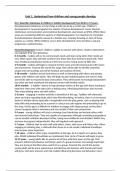
● Distribution involves the processes in getting the goods to consumers.
● Wholesalers store goods and supply to retailers in bulk.
● Factors of production: resources used in order to make a good.
● Land, physical land and natural resources. Reward is rent.
● Labour, physical and mental effort of employees, reward is wages.
● Capital, financial and all items that go into producing other things like machines, reward
is interest.
● Enterprise, bringing all the factors together. Reward is profit.
● Replacing employees for machinery is mechanisation of tasks.
● Businesses operate in dynamic situations and need to be able to respond in a dynamic
way for example bringing out new products of their own.
● Primary sector (extractive) secondary sector (manufacturing) tertiary sector (services)
● Semi manufactured goods: when a good is partly made.
● Industrialisation: process of shifting resources from primary to secondary activities.
Deindustrialisation: shifting into tertiary activities.
● Entrepreneur: someone who comes up with a great idea and puts it into practice to get a
profit. They need to be risk takers.
● Objectives of entrepreneurs: to get rich, unemployed and need money, some can only be
their own boss, some want to give back to the community.
● Must work long hours, take risks, make hard decisions, and have good communication
skills.
● Sole trader: business owned by one person
● Pros: easy to set up, no special paperwork required, faster decisions can be made since
fewer people are involved, don’t have to share profits, business affairs can be kept
private.
● Cons: unlimited liability, difficult to raise finance, higher prices for products, narrow range
of skills.
● Limited liability: personal assets are protected legally and only owe the sum they have
invested into the business.
● Partnership: 2-20 people have a legal agreement
● Pros: more capital available, more invested, can spread the responsibilities, wider range
of skills.
● Cons: may be disagreements, unlimited liability, number of partners is limited to 20.
● Company: a legally incorporated business that sets up a legal body, protected by limited
liability and is easier to sell as they are expected to keep detailed accounts of their
financial status. Cons: have to keep detailed accounts and need to register the company
and produce annual reports.
● Shareholders: owners of the company, board of directors make the decisions, managing
director manages the business.