

Actus Reus
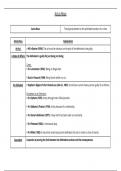
Actus Reus The physical element or the prohibited conduct of a crime.
Actus Reus Explanation
An Act > Hill v Baxter (1958): The act must be voluntary on the part of the defendant to be guilty.
A State of Affairs The defendant is guilty for just being not doing.
Cases:
> R v Larsonneur (1933): ‘Being’ an illegal alien.
> Duck v Peacock (1949): ‘Being’ drunk whilst in a car.
An Omission > Stephen’s Digest of the Criminal Law (3rd ed., 1887): An omission cannot make a person guilty of an offence.
Exceptions to an Omission:
> R v Dytham (1979): A duty through one’s official position.
> R v Gibbons & Proctor (1918): A duty because of a relationship.
> R v Stone & Dobinson (1977): A duty which has been taken on voluntarily.
> R v Pittwood (1902): A contractual duty.
> R v Miller (1983): A duty which arises because the defendant has set in motion a chain of events.
Causation Causation is proving the link between the defendants actions and the consequences.
Actus Reus The physical element or the prohibited conduct of a crime.
Actus Reus Explanation
An Act > Hill v Baxter (1958): The act must be voluntary on the part of the defendant to be guilty.
A State of Affairs The defendant is guilty for just being not doing.
Cases:
> R v Larsonneur (1933): ‘Being’ an illegal alien.
> Duck v Peacock (1949): ‘Being’ drunk whilst in a car.
An Omission > Stephen’s Digest of the Criminal Law (3rd ed., 1887): An omission cannot make a person guilty of an offence.
Exceptions to an Omission:
> R v Dytham (1979): A duty through one’s official position.
> R v Gibbons & Proctor (1918): A duty because of a relationship.
> R v Stone & Dobinson (1977): A duty which has been taken on voluntarily.
> R v Pittwood (1902): A contractual duty.
> R v Miller (1983): A duty which arises because the defendant has set in motion a chain of events.
Causation Causation is proving the link between the defendants actions and the consequences.


