DISCOVERY OF INDUCED PLURIPOTENT STEM CELLS
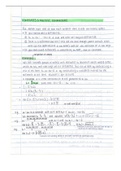
1- You take a terminally differentiated adult cell.
2- You introduce number of reprogramming factors, transcription
factors.
3- At a low frequency, induced pluripotent stem cells are
produced.
Factors Which Were Important in Discovering How to
Make iPS Clones:
a) The demonstration by nuclear reprogramming that
differentiated cells retain the same genetic information as early
embryonic cells.
b) The development of techniques to derive, culture, and study
pluripotent stem cells.
c) The fact that transcription factors are determinants of cell fate.
Their enforced expression can lead a mature cell to switch to
another cell type.
Terminally differentiated cells do not generally switch fates; hepatocytes do
not spontaneously become cardiomyocytes.
For a long time, it was thought, that when a cell differentiates it loses (parts of)
chromosomes or permanently inactivates genes it does not need.
A number of early studies indicated that this might be wrong, and that cells
keep chromosomes, and can reactivate genes.]
Cells from the imaginal discs of Drosophila melanogaster larva, where serially
transplanted to the abdomen of adult flies. Imaginal discs-will become a
portion of the outside of the adult insect during the pupal transformation. Cells
which were destined to become genital structures became leg, head or wing
structures.
Cells from quail brain were transplanted to chicken embryo’s, and shown to form for instance bone,
cartilage, connective tissue, muscle.
Nuclear Transfer
Nuclear transfer from blastula and gut cells into enucleated
oocytes resulted in adult frogs.
The results from the experiment demonstrate that at least
30% of blastula nuclei and at least 4% of hatched tadpole
gut-cell nuclei contain a complete range of the genetic
information necessary for the formation and functioning of
a normal adult individual.
It was argued that contaminating stem cells from the gut
may have led to successful nuclear transfer in adult frogs.
A novel strategy, where differentiated adult mammary cells
were used in G0 (serum starvation), where changes in
chromatin structure were thought to facilitate
reprogramming. Electrical pulses were used to facilitate
fusion.
1- You take a terminally differentiated adult cell.
2- You introduce number of reprogramming factors, transcription
factors.
3- At a low frequency, induced pluripotent stem cells are
produced.
Factors Which Were Important in Discovering How to
Make iPS Clones:
a) The demonstration by nuclear reprogramming that
differentiated cells retain the same genetic information as early
embryonic cells.
b) The development of techniques to derive, culture, and study
pluripotent stem cells.
c) The fact that transcription factors are determinants of cell fate.
Their enforced expression can lead a mature cell to switch to
another cell type.
Terminally differentiated cells do not generally switch fates; hepatocytes do
not spontaneously become cardiomyocytes.
For a long time, it was thought, that when a cell differentiates it loses (parts of)
chromosomes or permanently inactivates genes it does not need.
A number of early studies indicated that this might be wrong, and that cells
keep chromosomes, and can reactivate genes.]
Cells from the imaginal discs of Drosophila melanogaster larva, where serially
transplanted to the abdomen of adult flies. Imaginal discs-will become a
portion of the outside of the adult insect during the pupal transformation. Cells
which were destined to become genital structures became leg, head or wing
structures.
Cells from quail brain were transplanted to chicken embryo’s, and shown to form for instance bone,
cartilage, connective tissue, muscle.
Nuclear Transfer
Nuclear transfer from blastula and gut cells into enucleated
oocytes resulted in adult frogs.
The results from the experiment demonstrate that at least
30% of blastula nuclei and at least 4% of hatched tadpole
gut-cell nuclei contain a complete range of the genetic
information necessary for the formation and functioning of
a normal adult individual.
It was argued that contaminating stem cells from the gut
may have led to successful nuclear transfer in adult frogs.
A novel strategy, where differentiated adult mammary cells
were used in G0 (serum starvation), where changes in
chromatin structure were thought to facilitate
reprogramming. Electrical pulses were used to facilitate
fusion.