

Unit 10 – managing change 2/11/2022
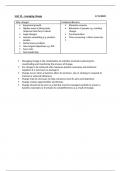
Why change? Problems/Barriers
Expansion/growth Monetary reasons
Digitise ways of doing tasks Behaviour of people e.g. resisting
(improve how they’re done) change.
Legal changes Communication
Improve something e.g. product, Time consuming + other resources
people.
Performance problem
New targets/objectives e.g. ROI
Save costs
New leadership
Managing change is the combination of activities involved in planning for,
coordinating and monitoring the process of change.
For change to be achieved with maximum positive outcomes and minimum
negatives it is necessary to manage it.
Change occurs when a business alters its structure, size or strategy to respond to
internal or external influences.
Change may be necessary to help a business meet its aims and objectives.
Change creates opportunities and threats.
Change should not be seen as a bad but must be managed carefully to ensure a
business maintains or increases its competitiveness as a result of change.
Why change? Problems/Barriers
Expansion/growth Monetary reasons
Digitise ways of doing tasks Behaviour of people e.g. resisting
(improve how they’re done) change.
Legal changes Communication
Improve something e.g. product, Time consuming + other resources
people.
Performance problem
New targets/objectives e.g. ROI
Save costs
New leadership
Managing change is the combination of activities involved in planning for,
coordinating and monitoring the process of change.
For change to be achieved with maximum positive outcomes and minimum
negatives it is necessary to manage it.
Change occurs when a business alters its structure, size or strategy to respond to
internal or external influences.
Change may be necessary to help a business meet its aims and objectives.
Change creates opportunities and threats.
Change should not be seen as a bad but must be managed carefully to ensure a
business maintains or increases its competitiveness as a result of change.


