Problems with strategy 4/1/2023
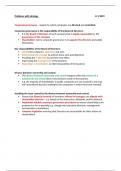
Corporate governance – System by which companies are directed and controlled
Corporate governance is the responsibility of the Board of directors:
It is the Board of Directors of each company that is legally responsible for the
governance of the company.
Shareholders role in corporate governance is to appoint the directors and satisfy
themselves.
Key responsibilities of the Board of Directors:
Setting the company’s objectives and aims
Determining the strategy to achieve those aims and objectives
Providing the leadership to put them into effect
Supervising the management of the business
Reporting to shareholders on their stewardship of the business
Divorce between ownership and control:
The divorce between ownership and control happens when the owners of a
business do not control day-to-day decisions made in the business.
e.g. the majority of shareholders in public companies are not involved in any way
with operational decision-making by the companies in which they have invested.
Handling the issue caused by the divorce between ownership and control:
Ensure that financial rewards of incentives offered to managers are aligned with
shareholder interests – e.g. based on the share price, dividends, profits achieved.
Implement suitable corporate governance procedures to ensure shareholders are
protected as far as possible (e.g. though non-executive directors, management
remuneration committees).
Company legislation ensuring that Directors are accountable for their actions to
shareholders.
Corporate governance – System by which companies are directed and controlled
Corporate governance is the responsibility of the Board of directors:
It is the Board of Directors of each company that is legally responsible for the
governance of the company.
Shareholders role in corporate governance is to appoint the directors and satisfy
themselves.
Key responsibilities of the Board of Directors:
Setting the company’s objectives and aims
Determining the strategy to achieve those aims and objectives
Providing the leadership to put them into effect
Supervising the management of the business
Reporting to shareholders on their stewardship of the business
Divorce between ownership and control:
The divorce between ownership and control happens when the owners of a
business do not control day-to-day decisions made in the business.
e.g. the majority of shareholders in public companies are not involved in any way
with operational decision-making by the companies in which they have invested.
Handling the issue caused by the divorce between ownership and control:
Ensure that financial rewards of incentives offered to managers are aligned with
shareholder interests – e.g. based on the share price, dividends, profits achieved.
Implement suitable corporate governance procedures to ensure shareholders are
protected as far as possible (e.g. though non-executive directors, management
remuneration committees).
Company legislation ensuring that Directors are accountable for their actions to
shareholders.