Xu22090
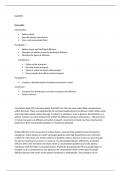
Essay plan
Introduction -
Define solute
Describe plasma membrane
Intra- and extracellular fluid
Paragraph 1 –
Define simple and facilitated diffusion
Examples of solutes moved by facilitated diffusion
Describe the types of diffusion
Paragraph 2 –
Define active transport
Describe active transport
Types of active transport with example
Drug example that affects active transport
Paragraph 3 –
Compare, describe protein channels and protein carriers
Conclusion –
Compare the driving forces of active transport and diffusion
Future research
Intracellular fluid (ICF) and extracellular fluid (ECF) are the two main water-filled compartments
within the body. These are separated by the semi-permeable plasma membrane, which allows water
and small, lipid-soluble solutes through. A solute is a substance, such as glucose, that dissolves in a
solvent. Solutes can move between ICF and ECF by different transport mechanisms. . The two forms
of solute transport are diffusion and active transport, movement of solutes by these mechanisms
depends on their concentration gradient or membrane potential.
Simple diffusion is the movement of solutes down a concentration gradient across the plasma
membrane. These solutes are small, uncharged particles with high lipophilicity and a reflection
coefficient of less than one. Solutes which are lipophilic (able to dissolve in fats) can pass through
the plasma membrane because it is made up of a phospholipid bilayer. Differently, facilitated
diffusion (FD) is the movement of solutes down a concentration gradient across the plasma
membrane with the help of a channel protein. Molecules transported by FD are usually larger or
charged, such as compounds or ions (glucose, Na + respectively) which cannot pass by simple
diffusion because the centre of the plasma membrane is hydrophobic. The assistance of ion
Essay plan
Introduction -
Define solute
Describe plasma membrane
Intra- and extracellular fluid
Paragraph 1 –
Define simple and facilitated diffusion
Examples of solutes moved by facilitated diffusion
Describe the types of diffusion
Paragraph 2 –
Define active transport
Describe active transport
Types of active transport with example
Drug example that affects active transport
Paragraph 3 –
Compare, describe protein channels and protein carriers
Conclusion –
Compare the driving forces of active transport and diffusion
Future research
Intracellular fluid (ICF) and extracellular fluid (ECF) are the two main water-filled compartments
within the body. These are separated by the semi-permeable plasma membrane, which allows water
and small, lipid-soluble solutes through. A solute is a substance, such as glucose, that dissolves in a
solvent. Solutes can move between ICF and ECF by different transport mechanisms. . The two forms
of solute transport are diffusion and active transport, movement of solutes by these mechanisms
depends on their concentration gradient or membrane potential.
Simple diffusion is the movement of solutes down a concentration gradient across the plasma
membrane. These solutes are small, uncharged particles with high lipophilicity and a reflection
coefficient of less than one. Solutes which are lipophilic (able to dissolve in fats) can pass through
the plasma membrane because it is made up of a phospholipid bilayer. Differently, facilitated
diffusion (FD) is the movement of solutes down a concentration gradient across the plasma
membrane with the help of a channel protein. Molecules transported by FD are usually larger or
charged, such as compounds or ions (glucose, Na + respectively) which cannot pass by simple
diffusion because the centre of the plasma membrane is hydrophobic. The assistance of ion