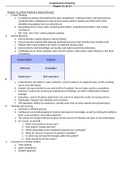
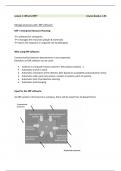
Immune system: a diffuse, complex network of interacting cells, cell
products and cell forming tissues that protects the body from
pathogens & other foregin substances, destroys infected Umalignant cells & removes cellular debris.
include
>thymus, spleen, lymph node stissue, stem cells, white blood cells, antibodies, lymphokines.
tasks: 1. defense response 2. removal of dead tissues/cells 3.repair Shealing 4. immunological memory
5. Communication between man lymph - 2 biological fluid for immune cells.
a
Immunity: the balanced state of multicellular organisms having adequate biological defenses to fight infection, disease/unwanted
biological invasion, while having adequate tolerance to avoid allergy & autoimmune diseases.
passive defense: ph, skin, small peptides, soluble molecules (enzymes)
Immune system >
innate
PRRS
active defense - recognition receptor, the phagocytes, cytokines,
pattern
highly targeted complement system, lymphoid cells (gamma/detagIdTcells
adaptive immunological memory
antigen (Ag) specific
pRRS: detect pathogens · Toll-like receptors (TLRC
pacity to co-evolve with pathogens
TLRS,
. oligomerisation receptor (NLR
Nucleotide
recognise s C-type lectin receptors (CLR)
> R16-1 like receptors (RLR
primary
I
a immune response: PAMP: molecules associate with go of pathogens
-As first contact with immuneresponse. refer a small molecular motifs conserved within a class of microbes.
Forfiretia ovodepositesor
-leave to
recognise the Ag blouse I
recognition for fungi o, bacteria 8, viruses
LDAMPself en
immune ate
②secondary immune response: Summery
- end, Erd ... the person is exposed to the same way
- immunological memory stablished.
Immunopharmacology: part of pharmacology that deals with drugs acting
on the immune system, pharmacological actions of
substances derived from the immune system.
Biologics: genetically engineered proteins derived
- from human genes, designed to
inhibit specific component of the immune system.
Immunotherapies: therapies that enlist & strengthen the power of
patient's immune system.
kines: movement, activity 2
be
, NADPH -> oxidase detect cause, the
phagocyte to be unable to make reactive O2 radical required for bacterial killing
so-abacteria may thrive from phagocyte.
NBT: a test to assesses phagocytic functions. (ablue score,better the cell
producing reactive O2 species)
Hematocrit (Hct): Ratio of the Votred blood cells to v of whole blood normal range: man -> 43-50% women wa 37-43%
Red cell count (RBC) erythrocyte count; not red blood cells in of blood normal range:4.2-59 million cells/mm.
White blood cell count (WBC) leukocyte count in of white blood cells in of blood. normal range: 4300010000 cells/crm
-sentinels: fixed/sentinal position in the tissue (eg: mast cells, g/x+ cells, macrophages)
Immune cells * wrong location is indiactive of a disease.
> Patrols: constantly in motion/patrolling the tissues throughout the body by circulating blood Ulymphatic vessels Ley T UB cells, neutrophil
Cluster of differentiation (CD): protocol used for the id 8investigation of cell surface targets for
molecules
providing
of cells. Act as receptor/ligands
immunophenotyping
test name normal range
NEUY. 40-78%.
lecture3
LYM% 20-45%.
MONY. 2-10%.
EOS 1 -
6%.
BAS 0-2%.
LYM # 1.5-4103/n(
cosinophilis3
GRAH 2-7.518°/UL
PLT 150-430 103/nL basophils
innate immunity -
↑
ESR upto 15 mmcur
agranulocytes dendritic cells.
white blood cells
3
lymphocytes
granulocytes adaptive immune
monocytes CD8TCTLS
& B cells CD4 "T- helper cells
↑cellS Nk T cells
yScellS intraepithelial lymphocytes (IELs)
B cells
lymphoid progenitor Nk/ T cell progenitor NK cells cinnate lymphoid cells
lymphoid dendritic cells
Bone marrow
myeloid dendritic cells monocytes Innate
basophils adaptine
myeloid progenitor granulocytes eosinophils
megakaryocytes neutrophils transitional
Erythrocytes
products and cell forming tissues that protects the body from
pathogens & other foregin substances, destroys infected Umalignant cells & removes cellular debris.
include
>thymus, spleen, lymph node stissue, stem cells, white blood cells, antibodies, lymphokines.
tasks: 1. defense response 2. removal of dead tissues/cells 3.repair Shealing 4. immunological memory
5. Communication between man lymph - 2 biological fluid for immune cells.
a
Immunity: the balanced state of multicellular organisms having adequate biological defenses to fight infection, disease/unwanted
biological invasion, while having adequate tolerance to avoid allergy & autoimmune diseases.
passive defense: ph, skin, small peptides, soluble molecules (enzymes)
Immune system >
innate
PRRS
active defense - recognition receptor, the phagocytes, cytokines,
pattern
highly targeted complement system, lymphoid cells (gamma/detagIdTcells
adaptive immunological memory
antigen (Ag) specific
pRRS: detect pathogens · Toll-like receptors (TLRC
pacity to co-evolve with pathogens
TLRS,
. oligomerisation receptor (NLR
Nucleotide
recognise s C-type lectin receptors (CLR)
> R16-1 like receptors (RLR
primary
I
a immune response: PAMP: molecules associate with go of pathogens
-As first contact with immuneresponse. refer a small molecular motifs conserved within a class of microbes.
Forfiretia ovodepositesor
-leave to
recognise the Ag blouse I
recognition for fungi o, bacteria 8, viruses
LDAMPself en
immune ate
②secondary immune response: Summery
- end, Erd ... the person is exposed to the same way
- immunological memory stablished.
Immunopharmacology: part of pharmacology that deals with drugs acting
on the immune system, pharmacological actions of
substances derived from the immune system.
Biologics: genetically engineered proteins derived
- from human genes, designed to
inhibit specific component of the immune system.
Immunotherapies: therapies that enlist & strengthen the power of
patient's immune system.
kines: movement, activity 2
be
, NADPH -> oxidase detect cause, the
phagocyte to be unable to make reactive O2 radical required for bacterial killing
so-abacteria may thrive from phagocyte.
NBT: a test to assesses phagocytic functions. (ablue score,better the cell
producing reactive O2 species)
Hematocrit (Hct): Ratio of the Votred blood cells to v of whole blood normal range: man -> 43-50% women wa 37-43%
Red cell count (RBC) erythrocyte count; not red blood cells in of blood normal range:4.2-59 million cells/mm.
White blood cell count (WBC) leukocyte count in of white blood cells in of blood. normal range: 4300010000 cells/crm
-sentinels: fixed/sentinal position in the tissue (eg: mast cells, g/x+ cells, macrophages)
Immune cells * wrong location is indiactive of a disease.
> Patrols: constantly in motion/patrolling the tissues throughout the body by circulating blood Ulymphatic vessels Ley T UB cells, neutrophil
Cluster of differentiation (CD): protocol used for the id 8investigation of cell surface targets for
molecules
providing
of cells. Act as receptor/ligands
immunophenotyping
test name normal range
NEUY. 40-78%.
lecture3
LYM% 20-45%.
MONY. 2-10%.
EOS 1 -
6%.
BAS 0-2%.
LYM # 1.5-4103/n(
cosinophilis3
GRAH 2-7.518°/UL
PLT 150-430 103/nL basophils
innate immunity -
↑
ESR upto 15 mmcur
agranulocytes dendritic cells.
white blood cells
3
lymphocytes
granulocytes adaptive immune
monocytes CD8TCTLS
& B cells CD4 "T- helper cells
↑cellS Nk T cells
yScellS intraepithelial lymphocytes (IELs)
B cells
lymphoid progenitor Nk/ T cell progenitor NK cells cinnate lymphoid cells
lymphoid dendritic cells
Bone marrow
myeloid dendritic cells monocytes Innate
basophils adaptine
myeloid progenitor granulocytes eosinophils
megakaryocytes neutrophils transitional
Erythrocytes