The legislative process
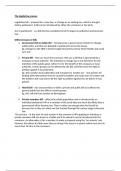
Legislative bill – proposal for a new law, or change to an existing law, which is brought
before parliament. A bill can be introduced by either the commons or the lords.
Act of parliament – is a bill that has completed all of its stages in parliament and becomes
law.
Different types of bills
1. Government bill or public bill – introduced by a government minister to change
public policy and they are debated in parliament across the house.
Eg. Changes to the NHS in 2012 brought forward by Jeremy Hunt (Health and social
care act)
2. Private Bill – they are much less common; they are a bill that is sponsored by a
company or local authority. The intention to change law is not therefore for the
intention of the public good, rather it is for the benefit of the company or local
authority. Certain groups can be affected by the bill, and they have the right to
petition against it to parliament.
Eg. 2013 London local authorities and transport for London act – new powers for
dealing with obstructions that are caused by builders and road users in London and
the builders and road users had the right to petition against the act before it was
passed.
3. Hybrid bill – has characteristics of both a private and public bill as it affects the
general public but also affects certain groups.
Eg. HS2 rail link from London to Birmingham
4. Private members bill – affects the whole population and is introduced by an
individual backbench MP or a member of the Lords they are much less likely than a
government bill to become law. There is often not enough time for the bill to
become law as they are often not fast tracked through the various stags to become
law.
The process – at the start of each session in the common’s MPs applying to introduce a
private members bill are drawn in a ballot and if its picked it can be introduced into the
commons. An alternative is for a member to make a proposal using the ‘ten minute’ rule
however this allows for little more than an airing if the issue in a speech which must last no
more than 10 mins in the commons
Legislative bill – proposal for a new law, or change to an existing law, which is brought
before parliament. A bill can be introduced by either the commons or the lords.
Act of parliament – is a bill that has completed all of its stages in parliament and becomes
law.
Different types of bills
1. Government bill or public bill – introduced by a government minister to change
public policy and they are debated in parliament across the house.
Eg. Changes to the NHS in 2012 brought forward by Jeremy Hunt (Health and social
care act)
2. Private Bill – they are much less common; they are a bill that is sponsored by a
company or local authority. The intention to change law is not therefore for the
intention of the public good, rather it is for the benefit of the company or local
authority. Certain groups can be affected by the bill, and they have the right to
petition against it to parliament.
Eg. 2013 London local authorities and transport for London act – new powers for
dealing with obstructions that are caused by builders and road users in London and
the builders and road users had the right to petition against the act before it was
passed.
3. Hybrid bill – has characteristics of both a private and public bill as it affects the
general public but also affects certain groups.
Eg. HS2 rail link from London to Birmingham
4. Private members bill – affects the whole population and is introduced by an
individual backbench MP or a member of the Lords they are much less likely than a
government bill to become law. There is often not enough time for the bill to
become law as they are often not fast tracked through the various stags to become
law.
The process – at the start of each session in the common’s MPs applying to introduce a
private members bill are drawn in a ballot and if its picked it can be introduced into the
commons. An alternative is for a member to make a proposal using the ‘ten minute’ rule
however this allows for little more than an airing if the issue in a speech which must last no
more than 10 mins in the commons