PRAGMÁTICA Y DISCURSO EN LENGUA INGLESA
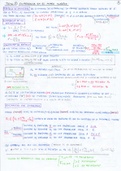
UNIT 6: POLITENESS THEORY
6.1. Introduction
Linguistic politeness does not refer to the social rules of behavior but to the choices made in
language use (i.e. the linguistic expressions used to give people space and show a friendly attitude
to them).
6.2. Linguistic theories of politeness
6.2.1. Lakoff’s politeness
Robin Lakoff was one of the first linguists who noticed the importance of politeness in human
interaction. Together with Gricean maxims (and the CP), she suggested there was a politeness
maxim too: Be polite. For instance, no to impose we will have ‘I don’t want to bother you…’, for
giving options we will have ‘only if you can…’ and lastly, to make others feel good, we will have
‘you look lovely today’.
6.2.2. Brown and Levinson’s theory of politeness
It is probably the most influential theory of politeness. In order to enter into social relationships,
we have to acknowledge and show an awareness of face (derived from Goffman (1967). Goffman
takes the concept from the English expression “to lose face” –i.e. be embarrassed.
Face: “our public self-image” is what we think of others and others think of us, our sense of self.
The content of face can differ in different cultures but the notion itself seems to be universal. Face
can be ignored in cases of social breakdown (e.g. quarrel) but also in cases of urgent cooperation
(e.g. an accident) or in the interests of efficiency (e.g. during a surgical operation)
Negative face: “the want of every ‘competent adult member’ that his actions be
unimpeded by others.” • non -imposition, personal space → more studied and more
obviously connected to our traditional sense of “politeness” (e. g. orders vs. requests)
Positive face: “the want of every member that his wants be desirable to at least some
others” • what is important for us is important for others, to be liked, need to feel accepted
→ less obvious, even more cultural - specific (e. g. compliments)
FTA are acts (either verbal or non-verbal) that intrinsically threaten face by their very nature. We
will look at verbal acts –i.e. speech acts that can be face threatening. Acts can threaten the
addressee’s negative face by putting pressure on the addressee to do (or prohibit doing)
something. E.g. orders, requests, suggestions, advice, reminding, threats, warnings, dares, etc.
Acts can threaten the addressee’s positive face by indicating that the speaker does not
care about the addressee’s feelings, wants, etc. E.g. criticism, contempt, disagreement,
challenge, insult, interruption, non-attention, use of wrong address terms, etc.
Acts can threaten the speaker’s negative face when the speakers feel impelled to do
something against their will: E.g. humbling oneself, excuses, unwilling promises and
offers, etc.
Acts can threaten the speaker’s positive face when the speakers have to admit something
they find embarrassing • E.g. apologies, acceptance of a compliment (in some cultures),
breakdown, confessions, etc.
22
, PRAGMÁTICA Y DISCURSO EN LENGUA INGLESA
Brown and Levinson’s system of politeness
Going off record implies that when an actor does A, there is more than one unambiguously
attributable intention • The actor cannot be held to have commited himself or herself to one
particular intent i.e.
Oh dear, it’s pouring and I haven’t brought my car today • Implicature: Give me a lift •
Flouting of the maxim of Relevance • Speech act: A request • Left to the hearer to interpret
the need
I’m soooo thirsty… • Implicature: Give me something to drink • Flouting of the maxim
of Relevance • Speech act: A request • Left to the hearer to interpret the need
John is a bit silly • Implicature: John is very silly • Off record strategy: Understate, which
flouts the Quantity Maxim • Speech act: An insult (an expressive in Searle’s typology) •
Left to the hearer to interpret the message
John is a real genius (the speaker is being ironic) • Implicature: John is stupid • Off record
strategy: Be ironic, which flouts the Quality Maxim • Speech act: An insult (an expressive
in Searle’s typology) • Left to the hearer to interpret the message
Doing an act baldly, without redress, involves doing it in the most direct, clear, unambiguous and
concise way possible • For example, for a request, saying ‘Do X!’
Normally, an FTA will be done in this way if:
• S and H agree tacitly that face demands can be suspended in the interests of urgency or efficiency
(someone drowning)
“Help’ me!”
Cf. “Excuse me, would you mind helping me? I’m afraid I am drowning.”
• The danger to H’s face is very small, especially if the act is in H’s interest (offers, invitations,
etc).
“Do sit down” “Have another beer”
• S is superior in power to H (not always) “Be quiet” (teacher to pupil) “Leave your brother alone”
(mother to child)
(EX) Compare the following examples and discuss why the FTA is normally done bald on record
Doctor: Scalpel
Doctor: Excuse me, would you mind helping me? I’m afraid I need the scalpel
• Normally, an FTA will be done in this way if S and H agree tacitly agree that face demands can
be suspended in the interests of urgency or efficiency
• A surgical operation: one of such situations in which face demands can be suspended
23
UNIT 6: POLITENESS THEORY
6.1. Introduction
Linguistic politeness does not refer to the social rules of behavior but to the choices made in
language use (i.e. the linguistic expressions used to give people space and show a friendly attitude
to them).
6.2. Linguistic theories of politeness
6.2.1. Lakoff’s politeness
Robin Lakoff was one of the first linguists who noticed the importance of politeness in human
interaction. Together with Gricean maxims (and the CP), she suggested there was a politeness
maxim too: Be polite. For instance, no to impose we will have ‘I don’t want to bother you…’, for
giving options we will have ‘only if you can…’ and lastly, to make others feel good, we will have
‘you look lovely today’.
6.2.2. Brown and Levinson’s theory of politeness
It is probably the most influential theory of politeness. In order to enter into social relationships,
we have to acknowledge and show an awareness of face (derived from Goffman (1967). Goffman
takes the concept from the English expression “to lose face” –i.e. be embarrassed.
Face: “our public self-image” is what we think of others and others think of us, our sense of self.
The content of face can differ in different cultures but the notion itself seems to be universal. Face
can be ignored in cases of social breakdown (e.g. quarrel) but also in cases of urgent cooperation
(e.g. an accident) or in the interests of efficiency (e.g. during a surgical operation)
Negative face: “the want of every ‘competent adult member’ that his actions be
unimpeded by others.” • non -imposition, personal space → more studied and more
obviously connected to our traditional sense of “politeness” (e. g. orders vs. requests)
Positive face: “the want of every member that his wants be desirable to at least some
others” • what is important for us is important for others, to be liked, need to feel accepted
→ less obvious, even more cultural - specific (e. g. compliments)
FTA are acts (either verbal or non-verbal) that intrinsically threaten face by their very nature. We
will look at verbal acts –i.e. speech acts that can be face threatening. Acts can threaten the
addressee’s negative face by putting pressure on the addressee to do (or prohibit doing)
something. E.g. orders, requests, suggestions, advice, reminding, threats, warnings, dares, etc.
Acts can threaten the addressee’s positive face by indicating that the speaker does not
care about the addressee’s feelings, wants, etc. E.g. criticism, contempt, disagreement,
challenge, insult, interruption, non-attention, use of wrong address terms, etc.
Acts can threaten the speaker’s negative face when the speakers feel impelled to do
something against their will: E.g. humbling oneself, excuses, unwilling promises and
offers, etc.
Acts can threaten the speaker’s positive face when the speakers have to admit something
they find embarrassing • E.g. apologies, acceptance of a compliment (in some cultures),
breakdown, confessions, etc.
22
, PRAGMÁTICA Y DISCURSO EN LENGUA INGLESA
Brown and Levinson’s system of politeness
Going off record implies that when an actor does A, there is more than one unambiguously
attributable intention • The actor cannot be held to have commited himself or herself to one
particular intent i.e.
Oh dear, it’s pouring and I haven’t brought my car today • Implicature: Give me a lift •
Flouting of the maxim of Relevance • Speech act: A request • Left to the hearer to interpret
the need
I’m soooo thirsty… • Implicature: Give me something to drink • Flouting of the maxim
of Relevance • Speech act: A request • Left to the hearer to interpret the need
John is a bit silly • Implicature: John is very silly • Off record strategy: Understate, which
flouts the Quantity Maxim • Speech act: An insult (an expressive in Searle’s typology) •
Left to the hearer to interpret the message
John is a real genius (the speaker is being ironic) • Implicature: John is stupid • Off record
strategy: Be ironic, which flouts the Quality Maxim • Speech act: An insult (an expressive
in Searle’s typology) • Left to the hearer to interpret the message
Doing an act baldly, without redress, involves doing it in the most direct, clear, unambiguous and
concise way possible • For example, for a request, saying ‘Do X!’
Normally, an FTA will be done in this way if:
• S and H agree tacitly that face demands can be suspended in the interests of urgency or efficiency
(someone drowning)
“Help’ me!”
Cf. “Excuse me, would you mind helping me? I’m afraid I am drowning.”
• The danger to H’s face is very small, especially if the act is in H’s interest (offers, invitations,
etc).
“Do sit down” “Have another beer”
• S is superior in power to H (not always) “Be quiet” (teacher to pupil) “Leave your brother alone”
(mother to child)
(EX) Compare the following examples and discuss why the FTA is normally done bald on record
Doctor: Scalpel
Doctor: Excuse me, would you mind helping me? I’m afraid I need the scalpel
• Normally, an FTA will be done in this way if S and H agree tacitly agree that face demands can
be suspended in the interests of urgency or efficiency
• A surgical operation: one of such situations in which face demands can be suspended
23