Natural Hazards
Defining natural hazards
What is a natural hazard?
A naturally occurring process or event which has the potential to cause death or injury,
property damage, socioeconomic disruption, or environmental degradation
Without people it is just an ‘event’, it is the interaction of people to make it a hazard
Types of hazards
1. Tectonic hazards, e.g. earthquakes, involve movement of tectonic plates
2. Atmospheric hazard, e.g. tropical storms
3. Geomorphological hazards, e.g. flooding, occur on the surface
4. Biological hazards, e.g. forest fires, involve living organisms
Categories are linked- Tsunami (tectonic) can be caused by landslide (geomorphological)
What factors affect hazard risk?
Frequency and magnitude increase due to human influences like climate change, increasing risk of
extreme weather and deforestation
Main factors affecting hazard risk:
1. Wealth- risk decreases with increased wealth, as people can afford to prepare for and
respond to hazards
2. Population growth- as population size increases, more people can interact with natural
events, creating a bigger risk
Tectonic hazards
Earthquakes and distribution of volcanoes
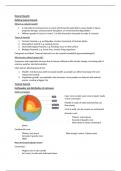
Earth’s structure
Inner core is solid, outer core is liquid- made
of iron and nickel
Mantle is made of solid material that can
flow slowly
Crust is solid, can be oceanic or continental
Oceanic crust:
- Thinner, more dense
- Formed of basaltic rock
- Sinks when it meets continental
plates
Continental crust:
- Thicker, less dense Plate margin: where 2 plates meet
- Formed of granite rock
- Older
How do tectonic plates move?
Convection:
- Magma rises in the mantle
- As it rises, it cools and sinks back down
, - Convection currents carry plates with them
Ridge push and slab pull:
- At constructive margins, ocean ridges form, and beneath these, mantle melts
- This molten magma rises, cools down to form new plate material, and the crust + upper
mantle cools, becoming denser and slides down, moving away from the ridge, making olates
move away from each other
- At destructive margins, denser plate sinks into the mantle due to gravity, pulling the rest of
the plate with it (slab pull)
Distribution of earthquakes and volcanoes
Earthquakes found at all 3 types of plate margins, but volcanoes only at constructive and
destructive
Earthquakes and volcanoes both at land and in sea
o Pacific ring of fire: band of earthquakes and volcanoes which circle the Pacific Ocean
Hot spots in the middle of plates too, where Earth’s crust is thin
o E.g. Hawaii
Constructive plate margins
Plates move away from each other:
1. Upper part of mantle melts, hot magma rises
2. As plates move away from each other, pressure is released so molten magma rises between.
It cools to become rock, which becomes denser and sinks, causing the plates to move further
3. Much of the magma never reaches the surface but pushes the crust up to form ridge and rift
features. In some places magma erupts, and the lava is runny and spreads out. Volcano
forms is low and has a wide base with gentle slopes
Mid-Atlantic Ridge: Eurasian and North American plates moving apart
Iceland is the largest volcanic island, it is on the Mid-Atlantic Ridge
Rift valley: steep-sided valleys formed when 2 plates move apart, and sections drop to form
rift valleys
Destructive plate margins
Plates move towards each other and collide:
1. If 2 continental plates collide, both are buoyant and don’t sink, so plates collide to form
mountains
2. If oceanic and continental plates collide, denser oceanic plate subducts and sinks under the
continental plate, causing earthquakes, fold mountains and volcanoes
Why are earthquakes and volcanoes found at destructive plate margins?
- Pressure and strain of oceanic and continental plates colliding causes crust to crumple and
form fold mountains
- As plates converge, pressure is built up, released in earthquakes
- Denser oceanic plate subducts into mantle due to gravity
- Plate is denser than mantle, so pulls the rest of the plate- this creates a deep ocean trench
- As oceanic plate sinks, some mantle melts, and magma rises through the mantle, erupting at
the surface
o Magma is viscous, producing composite volcanoes: steep sides, violent eruptions,
erupt many materials like sticky acidic lava and ash
Japan’s volcanoes
- Japan has 118 active volcanoes, forms part of Pacific Ring of Fire- also many earthquakes
, - It lies of 4 plate margins, Eurasian, North American, Pacific and Philippine
Conservative plate margins
Plates move parallel to each other, either in the same direction or opposite directions
Earthquakes and volcanoes at conservative margins
Pressure builds up: plates move past each other, friction stops movement
This happens until rock fractures under pressure, huge amounts of energy released
No volcanoes because there is no gap for magma to rise through
No new land formed, none lost
San Andreas Fault
- Conservative margin
- North American and Pacific plate move in same direction, Pacific is faster
- San Francisco experiences earthquakes every year
Case study: L’Aquila earthquake, Italy, 2009
6th April 2009, earthquake of 6.3 on Richter Scale hit L’Aquila- epicentre was 7km north of the city
Primary effects Secondary effects
308 people killed Access to some areas of the city was restricted
due to unsafe buildings
1500 injuries Transport was damaged due to landslides and
rock falls
67 500 homeless University applications have declined for the
University of L’Aquila
Struck at 3:32am, many people were sleeping in Lack of housing for residents means increase in
the 10-15 000 collapsed buildings house prices
San Salvatore Hospital was damaged so much Business in the CBD has declined, red zones still
that patients had to be evacuated exist
L’Aquila university and student accommodation Landslide and mudflow caused by burst water
damaged pipe near Paganio
US$1.1 billion in damages
Immediate responses Long-term responses
Homeless people were provided with tents and To encourage students back to the University
hotel rooms fees were dropped for 3 years
Bills and mortgages for those affected were No taxes were paid by the residents of L’Aquila
suspended during 2010
The EU provided US$552.9 million from its A memorial procession is held on the
major disaster fund anniversary of the earthquake
£170 million was raised by the British Red
Cross, who helped people recover
The DEC did not provide any aid as Italy is a HIC
Defining natural hazards
What is a natural hazard?
A naturally occurring process or event which has the potential to cause death or injury,
property damage, socioeconomic disruption, or environmental degradation
Without people it is just an ‘event’, it is the interaction of people to make it a hazard
Types of hazards
1. Tectonic hazards, e.g. earthquakes, involve movement of tectonic plates
2. Atmospheric hazard, e.g. tropical storms
3. Geomorphological hazards, e.g. flooding, occur on the surface
4. Biological hazards, e.g. forest fires, involve living organisms
Categories are linked- Tsunami (tectonic) can be caused by landslide (geomorphological)
What factors affect hazard risk?
Frequency and magnitude increase due to human influences like climate change, increasing risk of
extreme weather and deforestation
Main factors affecting hazard risk:
1. Wealth- risk decreases with increased wealth, as people can afford to prepare for and
respond to hazards
2. Population growth- as population size increases, more people can interact with natural
events, creating a bigger risk
Tectonic hazards
Earthquakes and distribution of volcanoes
Earth’s structure
Inner core is solid, outer core is liquid- made
of iron and nickel
Mantle is made of solid material that can
flow slowly
Crust is solid, can be oceanic or continental
Oceanic crust:
- Thinner, more dense
- Formed of basaltic rock
- Sinks when it meets continental
plates
Continental crust:
- Thicker, less dense Plate margin: where 2 plates meet
- Formed of granite rock
- Older
How do tectonic plates move?
Convection:
- Magma rises in the mantle
- As it rises, it cools and sinks back down
, - Convection currents carry plates with them
Ridge push and slab pull:
- At constructive margins, ocean ridges form, and beneath these, mantle melts
- This molten magma rises, cools down to form new plate material, and the crust + upper
mantle cools, becoming denser and slides down, moving away from the ridge, making olates
move away from each other
- At destructive margins, denser plate sinks into the mantle due to gravity, pulling the rest of
the plate with it (slab pull)
Distribution of earthquakes and volcanoes
Earthquakes found at all 3 types of plate margins, but volcanoes only at constructive and
destructive
Earthquakes and volcanoes both at land and in sea
o Pacific ring of fire: band of earthquakes and volcanoes which circle the Pacific Ocean
Hot spots in the middle of plates too, where Earth’s crust is thin
o E.g. Hawaii
Constructive plate margins
Plates move away from each other:
1. Upper part of mantle melts, hot magma rises
2. As plates move away from each other, pressure is released so molten magma rises between.
It cools to become rock, which becomes denser and sinks, causing the plates to move further
3. Much of the magma never reaches the surface but pushes the crust up to form ridge and rift
features. In some places magma erupts, and the lava is runny and spreads out. Volcano
forms is low and has a wide base with gentle slopes
Mid-Atlantic Ridge: Eurasian and North American plates moving apart
Iceland is the largest volcanic island, it is on the Mid-Atlantic Ridge
Rift valley: steep-sided valleys formed when 2 plates move apart, and sections drop to form
rift valleys
Destructive plate margins
Plates move towards each other and collide:
1. If 2 continental plates collide, both are buoyant and don’t sink, so plates collide to form
mountains
2. If oceanic and continental plates collide, denser oceanic plate subducts and sinks under the
continental plate, causing earthquakes, fold mountains and volcanoes
Why are earthquakes and volcanoes found at destructive plate margins?
- Pressure and strain of oceanic and continental plates colliding causes crust to crumple and
form fold mountains
- As plates converge, pressure is built up, released in earthquakes
- Denser oceanic plate subducts into mantle due to gravity
- Plate is denser than mantle, so pulls the rest of the plate- this creates a deep ocean trench
- As oceanic plate sinks, some mantle melts, and magma rises through the mantle, erupting at
the surface
o Magma is viscous, producing composite volcanoes: steep sides, violent eruptions,
erupt many materials like sticky acidic lava and ash
Japan’s volcanoes
- Japan has 118 active volcanoes, forms part of Pacific Ring of Fire- also many earthquakes
, - It lies of 4 plate margins, Eurasian, North American, Pacific and Philippine
Conservative plate margins
Plates move parallel to each other, either in the same direction or opposite directions
Earthquakes and volcanoes at conservative margins
Pressure builds up: plates move past each other, friction stops movement
This happens until rock fractures under pressure, huge amounts of energy released
No volcanoes because there is no gap for magma to rise through
No new land formed, none lost
San Andreas Fault
- Conservative margin
- North American and Pacific plate move in same direction, Pacific is faster
- San Francisco experiences earthquakes every year
Case study: L’Aquila earthquake, Italy, 2009
6th April 2009, earthquake of 6.3 on Richter Scale hit L’Aquila- epicentre was 7km north of the city
Primary effects Secondary effects
308 people killed Access to some areas of the city was restricted
due to unsafe buildings
1500 injuries Transport was damaged due to landslides and
rock falls
67 500 homeless University applications have declined for the
University of L’Aquila
Struck at 3:32am, many people were sleeping in Lack of housing for residents means increase in
the 10-15 000 collapsed buildings house prices
San Salvatore Hospital was damaged so much Business in the CBD has declined, red zones still
that patients had to be evacuated exist
L’Aquila university and student accommodation Landslide and mudflow caused by burst water
damaged pipe near Paganio
US$1.1 billion in damages
Immediate responses Long-term responses
Homeless people were provided with tents and To encourage students back to the University
hotel rooms fees were dropped for 3 years
Bills and mortgages for those affected were No taxes were paid by the residents of L’Aquila
suspended during 2010
The EU provided US$552.9 million from its A memorial procession is held on the
major disaster fund anniversary of the earthquake
£170 million was raised by the British Red
Cross, who helped people recover
The DEC did not provide any aid as Italy is a HIC