Literature Summary Psychotherapy 2023
Books:
Leiden University 2nd custom edition of Danny Wedding and Raymond J. Corsini
(Eds.) (2021), Current Psychotherapies (11th edition). Boston: Cengage Learning - All
chapters
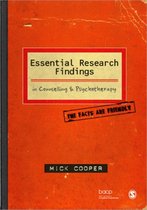
Cooper, M. (2008). Essential research findings in counseling and psychotherapy. Los
Angeles: Sage - All chapters
Week 1:
- Wedding & Corsini - Chapter 1: Introduction to 21st- Century Psychotherapies
- Cooper - Chapter 1: Introduction: The Challenge of Research
- Cooper - Chapter 3: Does orientation matter? The great psychotherapy debate
Week 2:
- Cooper - Chapter 2: The outcomes of counselling and psychotherapy
- Cooper - Chapter 7: Technique and practice factors: Is it what you do or the way that
you do it?
- Wedding & Corsini - Chapter 13: Positive Psychology
Week 3:
- Cooper - Chapter 4: Client Factors: The heart and soul of therapeutic change
- Cooper - Chapter 5: Therapist factors: Who works for what?
- Cooper - Chapter 6: Relational factors: It’s the relationship that heals… or is it?
- Wedding & Corsini - Chapter 15: Multicultural theories of Psychotherapy
Week 4:
- Wedding & Corsini - Chapter 4: Client-centered Therapy
Week 5:
- Wedding & Corsini - Chapter 2: Psychodynamic Psychotherapies
Week 6:
- Wedding & Corsini - Chapter 11: Family Therapy
Week 7:
- Wedding & Corsini - Chapter 6: Behavior Therapy
- Wedding & Corsini - Chapter 7: Cognitive Therapy
Remaining:
- Cooper - Chapter 8: Conclusion
- Appendix: The efficacy and effectiveness of different therapeutic orientations
, Week 1:
Wedding & Corsini - Chapter 1: Introduction to 21st Century Psychotherapies
Humans have always sought means to remedy the mental disorders that afflicted them.
There were temple-like retreat centers, which tried by philosophical lectures, meditation and
simple bed rest. After empirical investigations, physicians understood that the brain is not
only capable of learning, but also the source of depression, delirium and madness. Gottfried
Wilhelm Leibniz started studying the unconscious, by studying the role of subliminal
perceptions in daily life. Herbart tried to mathematicise the passage of memories to and from
the conscious and subconscious in the 18th century. Mesmer was the pioneer of hypnotherapy,
and he reported the importance of the relationship between therapist and patient. Later in the
19th century there were three distinct streams, contributors to these streams were; systematic,
lab-bench empiricists; philosophers of nature; clinician researchers.
Psychotherapy-Related Science in the 19th Century.
- Herman von Helmholtz: researched the phenomenon of unconscious inference
- Emil Kraepelin: turned his attention to classifying diseases, schematizing their course
and establishing prognoses.
Psychologist Philosophers. Book were published such as: The world as Will and
representation and Philosophy of Nature. Carus speculated there are several levels to the
unconscious. Both are communicating with each other simultaneously. Both the therapist and
the patient engage in transference and countertransference. Nietzsche developed notions of
self-deception, sublimation, repression, conscience and ‘neurotic’ guilt.
It was learned that plasticity is achieved through epigenetics changes. This plasticity is
neoteny, unique to humans. Errors in the early diagnostics were ignoring the patients’
medication histories. The difference between ethnocultural background from therapist and
patient matter the difficulty to treat. Counselors are never fully aware of how different they
are from the client.
This chapter raises three critical issues: treating efficacy, therapist aptitudes, diagnosis
and diagnostic coding.
Cooper - Chapter 1: Introduction : The Challenge of Research.
Research findings can be like good friends; it can encourage and advise us, but also
something that we are not afraid to argue against. Research is a systematic process of inquiry
that leads to the development of new knowledge. Empirical evidence is based on concrete
experiences or observations. Research findings can help a practitioner in general ways, and
additionally help them understand therapy from the client’s perspective. Also with empirical
research therapists can be challenged to reconsider their implicit assumptions and
expectations. Counselling and psychotherapy research findings can only ever tell us about
what is most likely to happen, there are no certainties.
A research-informed approach to therapy. Research is seen as a very valuable source
of information. The aims of this book are: accessibility, helping those in related fields, being a
starting point for students, show passion and love for empirical inquiry.
- Quantitative Research: Number-based research, generally incorporating statistical
analysis
- Qualitative Research: Language-based research, in which experiences, perceptions,
observations etc. are not reduced to numerical form.
When using both quantitative and qualitative research, we speak of methodological
pluralism.
, Cooper – Chapter 3: Does Orientation Matter? The Great Psychotherapy Debate.
Empirically supported treatments (ESTs) are practices that have been shown to be efficacious
with a particular group of clients. It can be deemed efficacious when the treatment has been
shown to be more beneficial than no treatment in at least two independent studies.
Examples of ESTs
Mood disorders:
- Depression: psychodynamic therapy, interpersonal therapy. CBT has the highest
results, just like Mindfulness-based cognitive therapy.
- Bipolar disorder: CBT
Anxiety disorders:
- Specific phobias: CBT, in vivo exposure, introceptive exposure
- Social phobia: CBT, in vivo exposure, Social skills training.
- Panic disorder : CBT, Exposure-based interventions, bibliotherapy.
- Generalised anxiety disorder: CBT, relaxation training programmes.
- Obsessive-compulsive disorder: CBT combined with anti-depressants, exposure and
response prevention.
- Post-traumatic stress disorder: Exposure and relaxation techniques, EMDR
Eating disorders:
- Anorexia nervosa: Cognitive-analytic therapy, psychodynamic psychotherapy, family
therapy.
- Bulimia nervosa: CBT, interpersonal therapy
- Obesity: CBT techniques such as problem-solving therapy
Substance dependence and abuse
- Alcohol: motivational interviewing, relapse prevention, social skills training
- Cocaine: CBT, counselling,
- Opiates: management approaches, reinforcement approaches.
- Cannabis: CBT, motivational enhancement therapy
Sexual dysfunctions
- Male: erectile problems – systematic desensitization, sensate focus exercises
- Female: inhibited orgasm – sexual technique training, communication training.
Personality disorders: CBT and psychodynamic therapy.
- Borderline personality disorder: psychodynamically oriented partial hospitalization
Schizophrenia: Family based interventions, CBT.
Miscellaneous problems:
- Health-related difficulties: headaches, chronic back pain, smoking cessation – CBT
- Relational distress: Behavioral marital therapy
- Deliberate self-harm: problem-solving therapy and dialectal behavior therapy
- Anger: CBT
- Pathological gambling: CBT
- Complicated grief: Exposure therapy.
Challenges to the differential effectiveness position.
- Comorbidity makes it difficult to determine which treatment fits best
- ESTs are based on a particular samples of participants, which makes it difficult to
generalize to a whole population
- CBT is easier to test, which leads to more evidence
- Research allegiance effect: same as expectancy effect.
Comparative efficacy of different therapies says a lot about the counselling and
psychotherapy research field. This is especially when looking at Bona Fide Therapy, which is
Books:
Leiden University 2nd custom edition of Danny Wedding and Raymond J. Corsini
(Eds.) (2021), Current Psychotherapies (11th edition). Boston: Cengage Learning - All
chapters
Cooper, M. (2008). Essential research findings in counseling and psychotherapy. Los
Angeles: Sage - All chapters
Week 1:
- Wedding & Corsini - Chapter 1: Introduction to 21st- Century Psychotherapies
- Cooper - Chapter 1: Introduction: The Challenge of Research
- Cooper - Chapter 3: Does orientation matter? The great psychotherapy debate
Week 2:
- Cooper - Chapter 2: The outcomes of counselling and psychotherapy
- Cooper - Chapter 7: Technique and practice factors: Is it what you do or the way that
you do it?
- Wedding & Corsini - Chapter 13: Positive Psychology
Week 3:
- Cooper - Chapter 4: Client Factors: The heart and soul of therapeutic change
- Cooper - Chapter 5: Therapist factors: Who works for what?
- Cooper - Chapter 6: Relational factors: It’s the relationship that heals… or is it?
- Wedding & Corsini - Chapter 15: Multicultural theories of Psychotherapy
Week 4:
- Wedding & Corsini - Chapter 4: Client-centered Therapy
Week 5:
- Wedding & Corsini - Chapter 2: Psychodynamic Psychotherapies
Week 6:
- Wedding & Corsini - Chapter 11: Family Therapy
Week 7:
- Wedding & Corsini - Chapter 6: Behavior Therapy
- Wedding & Corsini - Chapter 7: Cognitive Therapy
Remaining:
- Cooper - Chapter 8: Conclusion
- Appendix: The efficacy and effectiveness of different therapeutic orientations
, Week 1:
Wedding & Corsini - Chapter 1: Introduction to 21st Century Psychotherapies
Humans have always sought means to remedy the mental disorders that afflicted them.
There were temple-like retreat centers, which tried by philosophical lectures, meditation and
simple bed rest. After empirical investigations, physicians understood that the brain is not
only capable of learning, but also the source of depression, delirium and madness. Gottfried
Wilhelm Leibniz started studying the unconscious, by studying the role of subliminal
perceptions in daily life. Herbart tried to mathematicise the passage of memories to and from
the conscious and subconscious in the 18th century. Mesmer was the pioneer of hypnotherapy,
and he reported the importance of the relationship between therapist and patient. Later in the
19th century there were three distinct streams, contributors to these streams were; systematic,
lab-bench empiricists; philosophers of nature; clinician researchers.
Psychotherapy-Related Science in the 19th Century.
- Herman von Helmholtz: researched the phenomenon of unconscious inference
- Emil Kraepelin: turned his attention to classifying diseases, schematizing their course
and establishing prognoses.
Psychologist Philosophers. Book were published such as: The world as Will and
representation and Philosophy of Nature. Carus speculated there are several levels to the
unconscious. Both are communicating with each other simultaneously. Both the therapist and
the patient engage in transference and countertransference. Nietzsche developed notions of
self-deception, sublimation, repression, conscience and ‘neurotic’ guilt.
It was learned that plasticity is achieved through epigenetics changes. This plasticity is
neoteny, unique to humans. Errors in the early diagnostics were ignoring the patients’
medication histories. The difference between ethnocultural background from therapist and
patient matter the difficulty to treat. Counselors are never fully aware of how different they
are from the client.
This chapter raises three critical issues: treating efficacy, therapist aptitudes, diagnosis
and diagnostic coding.
Cooper - Chapter 1: Introduction : The Challenge of Research.
Research findings can be like good friends; it can encourage and advise us, but also
something that we are not afraid to argue against. Research is a systematic process of inquiry
that leads to the development of new knowledge. Empirical evidence is based on concrete
experiences or observations. Research findings can help a practitioner in general ways, and
additionally help them understand therapy from the client’s perspective. Also with empirical
research therapists can be challenged to reconsider their implicit assumptions and
expectations. Counselling and psychotherapy research findings can only ever tell us about
what is most likely to happen, there are no certainties.
A research-informed approach to therapy. Research is seen as a very valuable source
of information. The aims of this book are: accessibility, helping those in related fields, being a
starting point for students, show passion and love for empirical inquiry.
- Quantitative Research: Number-based research, generally incorporating statistical
analysis
- Qualitative Research: Language-based research, in which experiences, perceptions,
observations etc. are not reduced to numerical form.
When using both quantitative and qualitative research, we speak of methodological
pluralism.
, Cooper – Chapter 3: Does Orientation Matter? The Great Psychotherapy Debate.
Empirically supported treatments (ESTs) are practices that have been shown to be efficacious
with a particular group of clients. It can be deemed efficacious when the treatment has been
shown to be more beneficial than no treatment in at least two independent studies.
Examples of ESTs
Mood disorders:
- Depression: psychodynamic therapy, interpersonal therapy. CBT has the highest
results, just like Mindfulness-based cognitive therapy.
- Bipolar disorder: CBT
Anxiety disorders:
- Specific phobias: CBT, in vivo exposure, introceptive exposure
- Social phobia: CBT, in vivo exposure, Social skills training.
- Panic disorder : CBT, Exposure-based interventions, bibliotherapy.
- Generalised anxiety disorder: CBT, relaxation training programmes.
- Obsessive-compulsive disorder: CBT combined with anti-depressants, exposure and
response prevention.
- Post-traumatic stress disorder: Exposure and relaxation techniques, EMDR
Eating disorders:
- Anorexia nervosa: Cognitive-analytic therapy, psychodynamic psychotherapy, family
therapy.
- Bulimia nervosa: CBT, interpersonal therapy
- Obesity: CBT techniques such as problem-solving therapy
Substance dependence and abuse
- Alcohol: motivational interviewing, relapse prevention, social skills training
- Cocaine: CBT, counselling,
- Opiates: management approaches, reinforcement approaches.
- Cannabis: CBT, motivational enhancement therapy
Sexual dysfunctions
- Male: erectile problems – systematic desensitization, sensate focus exercises
- Female: inhibited orgasm – sexual technique training, communication training.
Personality disorders: CBT and psychodynamic therapy.
- Borderline personality disorder: psychodynamically oriented partial hospitalization
Schizophrenia: Family based interventions, CBT.
Miscellaneous problems:
- Health-related difficulties: headaches, chronic back pain, smoking cessation – CBT
- Relational distress: Behavioral marital therapy
- Deliberate self-harm: problem-solving therapy and dialectal behavior therapy
- Anger: CBT
- Pathological gambling: CBT
- Complicated grief: Exposure therapy.
Challenges to the differential effectiveness position.
- Comorbidity makes it difficult to determine which treatment fits best
- ESTs are based on a particular samples of participants, which makes it difficult to
generalize to a whole population
- CBT is easier to test, which leads to more evidence
- Research allegiance effect: same as expectancy effect.
Comparative efficacy of different therapies says a lot about the counselling and
psychotherapy research field. This is especially when looking at Bona Fide Therapy, which is