
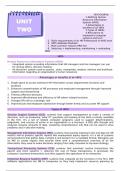
Unit Outline:
1.Defining Human
Resource Information
System (HRIS)
2.Advantages or
benefits of an HRIS
3.Types of HRISs
4.Reluctance to
implement computer
systems and tech
5. Skills requirements of an HR Professional in HRIS work
6. HRIS database Modules
7. Most common reasons HRIS fail
8. Selecting + implementing, maintaining + evaluating
HRIS
HRIS
Human Resource Information System (HRIS)
- Integrated system providing information that HR managers and line managers can use
for among others, decision making
- An electronic system used to acquire , store, manipulate, analyse, retrieve and distribute
information regarding an organisation’s human resources
Advantages or benefits of an HRIS
1. Single space to access extensive HR information across departments functions and
locations
2. Enhances competiveness of HR processes and employee management through improved
support and streamlining
3. Timeous effective decisions
4. Improved effectiveness and efficiency of HR admin related functions
5. Changes HR role to a strategic role
6. Improved job and employee satisfaction through better timely and accurate HR support
Types of HRIS:
Decision Support Systems (DSS): systems that support management to make a variety of
decisions, such as answering ‘what if?’ questions and looking at the skills currently available
in the firm. It’s a set of related computer programs used to support determinations,
judgments, and courses of action in an organization or a business. A DSS sifts through and
analyses massive amounts of data, compiling comprehensive info that can be used to solve
problems and in decision-making.
Management Information Systems (MIS): systems that provide important info and data for HR
metrics and to produce specific reports like employment equity reports. It’s a set of systems
and procedures that gather data, compile it and present it in a readable format. Managers use
an MIS to create reports that provide them with a comprehensive overview of all the
information they need to make decisions ranging from daily minutiae to top-level strategy.
Transactional Processing Systems (TPS): systems that automate routine transactions like
payroll and clock systems = reducing the cost of these transactions. It processes the
company’s business transactions and thus supports the operations of an enterprise.
Enterprise Resource Systems (ERP): systems that integrate all the functions in the firm. ERP
software applications are NB to companies as they help implement resource planning by
, integrating all of the processes needed to run operate with a single system. An ERP software
system can also integrate planning, purchasing inventory, sales, marketing, finance, human
resources, and more.
Reasons for reluctance to implement:
Lack of support by top management: Investment in an HRIS in most organisations tends
to be a low priority because top management cannot see the relationships between HR
functions and profit, as they can with capital and fiscal resources.
Satisfaction with the status quo: Due to the vast amount of tedious work involved in the
development of an HRIS, as well as the lack of additional staff to assist them in doing so,
many HR managers see no need for an HRIS because they believe that they are doing well
with their current manual systems.
Defensiveness about revealing HR operations: A computer-based system can make the
operations of the HR function more public and HR managers are fearful of losing ownership of
the function and are thus not eager to computerise.
HR managers’ lack of HRIS knowledge and skills: Due to the fact that professional HR
education and training does not include an HRIS component, many HR managers and
professionals are poorly prepared to develop and implement such a system.
Poor or incomplete needs analysis: If organisations do not analyse their need for an HRIS
properly, the decision-makers may not be able to see the need for one and may not regard
the implementation of such a system as a priority.
Lack of proper communication: An HRIS could be seen as a threat or unnecessary if no
proper information about the system and its purpose is communicated.
Skill requirements of an HR professional in HRIS work:
1. A systems view of HR and its relation to its environment
2. Systems concepts as they apply within the HR context
3. Management skills in designing and justifying an HRIS
4. Knowledge of the technical language that programmers use
5. Analytical skills that will enable them to identify the specific HRIS needs for the system
and end-users
6. Good communication skills
7. Computer skills for understanding the interface between computer technology and HR
functions
8. An understanding of the future of the HRIS field
1.Defining Human
Resource Information
System (HRIS)
2.Advantages or
benefits of an HRIS
3.Types of HRISs
4.Reluctance to
implement computer
systems and tech
5. Skills requirements of an HR Professional in HRIS work
6. HRIS database Modules
7. Most common reasons HRIS fail
8. Selecting + implementing, maintaining + evaluating
HRIS
HRIS
Human Resource Information System (HRIS)
- Integrated system providing information that HR managers and line managers can use
for among others, decision making
- An electronic system used to acquire , store, manipulate, analyse, retrieve and distribute
information regarding an organisation’s human resources
Advantages or benefits of an HRIS
1. Single space to access extensive HR information across departments functions and
locations
2. Enhances competiveness of HR processes and employee management through improved
support and streamlining
3. Timeous effective decisions
4. Improved effectiveness and efficiency of HR admin related functions
5. Changes HR role to a strategic role
6. Improved job and employee satisfaction through better timely and accurate HR support
Types of HRIS:
Decision Support Systems (DSS): systems that support management to make a variety of
decisions, such as answering ‘what if?’ questions and looking at the skills currently available
in the firm. It’s a set of related computer programs used to support determinations,
judgments, and courses of action in an organization or a business. A DSS sifts through and
analyses massive amounts of data, compiling comprehensive info that can be used to solve
problems and in decision-making.
Management Information Systems (MIS): systems that provide important info and data for HR
metrics and to produce specific reports like employment equity reports. It’s a set of systems
and procedures that gather data, compile it and present it in a readable format. Managers use
an MIS to create reports that provide them with a comprehensive overview of all the
information they need to make decisions ranging from daily minutiae to top-level strategy.
Transactional Processing Systems (TPS): systems that automate routine transactions like
payroll and clock systems = reducing the cost of these transactions. It processes the
company’s business transactions and thus supports the operations of an enterprise.
Enterprise Resource Systems (ERP): systems that integrate all the functions in the firm. ERP
software applications are NB to companies as they help implement resource planning by
, integrating all of the processes needed to run operate with a single system. An ERP software
system can also integrate planning, purchasing inventory, sales, marketing, finance, human
resources, and more.
Reasons for reluctance to implement:
Lack of support by top management: Investment in an HRIS in most organisations tends
to be a low priority because top management cannot see the relationships between HR
functions and profit, as they can with capital and fiscal resources.
Satisfaction with the status quo: Due to the vast amount of tedious work involved in the
development of an HRIS, as well as the lack of additional staff to assist them in doing so,
many HR managers see no need for an HRIS because they believe that they are doing well
with their current manual systems.
Defensiveness about revealing HR operations: A computer-based system can make the
operations of the HR function more public and HR managers are fearful of losing ownership of
the function and are thus not eager to computerise.
HR managers’ lack of HRIS knowledge and skills: Due to the fact that professional HR
education and training does not include an HRIS component, many HR managers and
professionals are poorly prepared to develop and implement such a system.
Poor or incomplete needs analysis: If organisations do not analyse their need for an HRIS
properly, the decision-makers may not be able to see the need for one and may not regard
the implementation of such a system as a priority.
Lack of proper communication: An HRIS could be seen as a threat or unnecessary if no
proper information about the system and its purpose is communicated.
Skill requirements of an HR professional in HRIS work:
1. A systems view of HR and its relation to its environment
2. Systems concepts as they apply within the HR context
3. Management skills in designing and justifying an HRIS
4. Knowledge of the technical language that programmers use
5. Analytical skills that will enable them to identify the specific HRIS needs for the system
and end-users
6. Good communication skills
7. Computer skills for understanding the interface between computer technology and HR
functions
8. An understanding of the future of the HRIS field


