Key:
Vocabulary
Tricky
Concept
Diagram
Specific
Example
O n c e
a
c o n c e p t
i s
m a s t e r e d
i t
w i l l
b e
d e l e t e d
f r o m
t h e
s h e e t
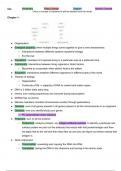
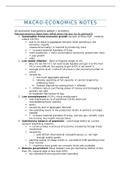
Chapter
1:
●
Organization: ●
Emergent
property:
when
multiple
things
come
together
to
give
a
new
characteristic
○
Interactions
between
different
systems
(systems
biology)
○
Ex)
the
eye
●
Population
:
members
of
a
species
living
in
a
particular
area
at
a
particular
time
●
Community
:
interactions
between
living
organisms;
biotic
factors
○
Becomes
an
ecosystem
when
abiotic
factors
are
added
●
Biosphere
:
interactions
between
different
organisms
in
different
parts
of
the
world
●
Themes
of
biology:
○
Organization
○
Continuity
of
life
->
capacity
of
DNA
to
unwind
and
make
copies
●
DNA
is
3
billion
base
pairs
long
●
Introns
(non
coding
sequences)
are
removed
during
transcription
●
M-RNA
has
no
introns
●
Meiosis
maintains
constant
chromosome
number
through
generations
●
Genome
:
sum
of
all
genes
present
in
all
genes
present
in
all
the
chromosomes
in
an
organism
●
Genomic
:
how
you
identify/study
your
genes
○
PC
(polymerase
chain
reaction)
●
Proteome
:
sum
of
all
the
proteins
○
Proteomics
:
analyze
proteins:
ex)
antigen-antibody
reaction
:
to
identify
a
particular
cell
surface
protein
we
pick
out
the
antibody
that
reacts
with
that
protein/antigen
and
then
we
apply
that
to
the
cell
and
then
they
flare
up
and
you
can
figure
out
where
exactly
that
antigen
is
●
Gene
expression
○
Transcription
:
unwinding
and
copying
the
DNA
into
RNA
○
Translation
:
taking
the
DNA
to
the
ribosome
and
turning
it
into
amino
acids Key:
Vocabulary
Tricky
Concept
Diagram
Specific
Example
O n c e
a
c o n c e p t
i s
m a s t e r e d
i t
w i l l
b e
d e l e t e d
f r o m
t h e
s h e e t
●
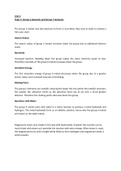
Taxonomy
:
grouping
organisms
based
on
common
ancestry
●
Archaea
have
complex
genome
similar
to
us
(has
introns)
->
why
archaea
and
bacteria
are
in
different
domains
○
Believed
to
be
first
form
of
bacteria
to
form
->
retained
capacity
to
survive
in
extreme
environments
●
Domain
Eukarya:
●
Homology
:
same
ancestor/origin
●
When
one
or
multiple
species
of
organisms
become
extinct,
you’re
going
to
alter
the
predator-prey
relationship
●
Science
is
defined
as
observation;
science
involves
observation,
formulating
a
hypothesis
●
Deductive
reasoning
:
applies
already
known
information
and
one’s
to
a
specific
conclusion
●
Inductive
reasoning
:
going
to
bring
new
information
to
the
pre-existing
ideals
●
Basic
research
done
at
university
level;
applied
research
takes
the
research,
modifies
it,
and
markets
it
to
the
public
●
Theory
:
broad
explanation
of
a
natural
phenomenon
○
Numerous
hypothesis
have
to
be
proved
to
put
forth
a
theory Key:
Vocabulary
Tricky
Concept
Diagram
Specific
Example
O n c e
a
c o n c e p t
i s
m a s t e r e d
i t
w i l l
b e
d e l e t e d
f r o m
t h e
s h e e t
●
Law
:
ultimate
truth
Chapter
2:
●
Four
essential
elements
you
can’t
survive
without
○
Carbon,
oxygen,
hydrogen,
nitrogen
●
Protons
&
neutrons
contribute
to
mass
of
atom;
electrons
contribute
to
volume
of
atom
●
Orbital
:
space
around
nucleus
of
an
atom
where
there
is
the
highest
probability
of
finding
an
electron
○
Always
two
electrons;
one
rotates
clockwise,
one
rotates
counter-clockwise
●
Orbit
:
path
taken
by
electron
●
Energy
Shell:
an
area
around
nucleus
where
electrons
with
specific
amounts
of
energy
can
be
seen
●
Weight
:
measure
of
the
force
of
gravity
on
a
substance
●
Free
radicals
:
are
a
class
of
harmful
molecules
that
have
one
atom
with
one
unpaired
electron
○
ex)
Hydrogen
peroxide
poured
on
a
cut
●
Emergent
properties
of
water
that
make
life
possible
○
Cohesion
:
like
molecules
reacting
with
each
other;
the
ability
for
water
to
stick
to
water
(water
having
an
affinity
to
react
with
water)
○
Adhesion
:
water
having
the
capacity
to
react
with
other
molecules
other
than
water
○
Maintain
homeostasis:
high
specific
heat
&
high
heat
of
vaporization
○
Maintains
life:
water
can
release
energy
○
Universal
solvent
○
Surface
tension:
brought
about
by
cohesion
○
Colligative
properties
■
Waters
ability
to
ionize
●
Calorie
:
the
amount
of
energy
required
to
increase
the
temperature
of
one
gram
of
water
to
one
degree
centigrade
●
Polar
covalent
=
hydrophilic
●
Amphipathic
substance
=
soap
○
Phospholipids
->
polar
hydrophilic
head,
non
polar
tales
●
Ph
:
negative
logarithm
of
hydrogen
ion
concentration
to
the
base
10
(-log
[H+])
●
Buffers
:
reservoir
of
weak
acids
and
bases;
maintain
pH
Vocabulary
Tricky
Concept
Diagram
Specific
Example
O n c e
a
c o n c e p t
i s
m a s t e r e d
i t
w i l l
b e
d e l e t e d
f r o m
t h e
s h e e t
Chapter
1:
●
Organization: ●
Emergent
property:
when
multiple
things
come
together
to
give
a
new
characteristic
○
Interactions
between
different
systems
(systems
biology)
○
Ex)
the
eye
●
Population
:
members
of
a
species
living
in
a
particular
area
at
a
particular
time
●
Community
:
interactions
between
living
organisms;
biotic
factors
○
Becomes
an
ecosystem
when
abiotic
factors
are
added
●
Biosphere
:
interactions
between
different
organisms
in
different
parts
of
the
world
●
Themes
of
biology:
○
Organization
○
Continuity
of
life
->
capacity
of
DNA
to
unwind
and
make
copies
●
DNA
is
3
billion
base
pairs
long
●
Introns
(non
coding
sequences)
are
removed
during
transcription
●
M-RNA
has
no
introns
●
Meiosis
maintains
constant
chromosome
number
through
generations
●
Genome
:
sum
of
all
genes
present
in
all
genes
present
in
all
the
chromosomes
in
an
organism
●
Genomic
:
how
you
identify/study
your
genes
○
PC
(polymerase
chain
reaction)
●
Proteome
:
sum
of
all
the
proteins
○
Proteomics
:
analyze
proteins:
ex)
antigen-antibody
reaction
:
to
identify
a
particular
cell
surface
protein
we
pick
out
the
antibody
that
reacts
with
that
protein/antigen
and
then
we
apply
that
to
the
cell
and
then
they
flare
up
and
you
can
figure
out
where
exactly
that
antigen
is
●
Gene
expression
○
Transcription
:
unwinding
and
copying
the
DNA
into
RNA
○
Translation
:
taking
the
DNA
to
the
ribosome
and
turning
it
into
amino
acids Key:
Vocabulary
Tricky
Concept
Diagram
Specific
Example
O n c e
a
c o n c e p t
i s
m a s t e r e d
i t
w i l l
b e
d e l e t e d
f r o m
t h e
s h e e t
●
Taxonomy
:
grouping
organisms
based
on
common
ancestry
●
Archaea
have
complex
genome
similar
to
us
(has
introns)
->
why
archaea
and
bacteria
are
in
different
domains
○
Believed
to
be
first
form
of
bacteria
to
form
->
retained
capacity
to
survive
in
extreme
environments
●
Domain
Eukarya:
●
Homology
:
same
ancestor/origin
●
When
one
or
multiple
species
of
organisms
become
extinct,
you’re
going
to
alter
the
predator-prey
relationship
●
Science
is
defined
as
observation;
science
involves
observation,
formulating
a
hypothesis
●
Deductive
reasoning
:
applies
already
known
information
and
one’s
to
a
specific
conclusion
●
Inductive
reasoning
:
going
to
bring
new
information
to
the
pre-existing
ideals
●
Basic
research
done
at
university
level;
applied
research
takes
the
research,
modifies
it,
and
markets
it
to
the
public
●
Theory
:
broad
explanation
of
a
natural
phenomenon
○
Numerous
hypothesis
have
to
be
proved
to
put
forth
a
theory Key:
Vocabulary
Tricky
Concept
Diagram
Specific
Example
O n c e
a
c o n c e p t
i s
m a s t e r e d
i t
w i l l
b e
d e l e t e d
f r o m
t h e
s h e e t
●
Law
:
ultimate
truth
Chapter
2:
●
Four
essential
elements
you
can’t
survive
without
○
Carbon,
oxygen,
hydrogen,
nitrogen
●
Protons
&
neutrons
contribute
to
mass
of
atom;
electrons
contribute
to
volume
of
atom
●
Orbital
:
space
around
nucleus
of
an
atom
where
there
is
the
highest
probability
of
finding
an
electron
○
Always
two
electrons;
one
rotates
clockwise,
one
rotates
counter-clockwise
●
Orbit
:
path
taken
by
electron
●
Energy
Shell:
an
area
around
nucleus
where
electrons
with
specific
amounts
of
energy
can
be
seen
●
Weight
:
measure
of
the
force
of
gravity
on
a
substance
●
Free
radicals
:
are
a
class
of
harmful
molecules
that
have
one
atom
with
one
unpaired
electron
○
ex)
Hydrogen
peroxide
poured
on
a
cut
●
Emergent
properties
of
water
that
make
life
possible
○
Cohesion
:
like
molecules
reacting
with
each
other;
the
ability
for
water
to
stick
to
water
(water
having
an
affinity
to
react
with
water)
○
Adhesion
:
water
having
the
capacity
to
react
with
other
molecules
other
than
water
○
Maintain
homeostasis:
high
specific
heat
&
high
heat
of
vaporization
○
Maintains
life:
water
can
release
energy
○
Universal
solvent
○
Surface
tension:
brought
about
by
cohesion
○
Colligative
properties
■
Waters
ability
to
ionize
●
Calorie
:
the
amount
of
energy
required
to
increase
the
temperature
of
one
gram
of
water
to
one
degree
centigrade
●
Polar
covalent
=
hydrophilic
●
Amphipathic
substance
=
soap
○
Phospholipids
->
polar
hydrophilic
head,
non
polar
tales
●
Ph
:
negative
logarithm
of
hydrogen
ion
concentration
to
the
base
10
(-log
[H+])
●
Buffers
:
reservoir
of
weak
acids
and
bases;
maintain
pH