I
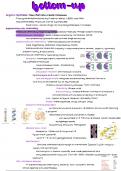
organic synthesis:how chemists create molecules
first synthesized molecule by Friedrich Wohler (1828) was Urea
now almost every molecule can be synthesized
taxol (anti-cancer drug) can now be synthesized in 51 steps
supramolecular chemistry:
molecular chemistry/organic synthesis creates molecules through covalent bonding
supramolecular chemistry (1960s) creates by noncovalent bonds
complex
new properties & powerful tool to make large structures
supramolecular chemistry:'chemistry beyond the molecule
held together by reversible intermolecular forces
supramolecular chemistry usuallyin thermodynamic control, organic synthesis
predominantly Kinetic control
supramolecular chemistry inspired by nature
enzymes:catalyze organic reactions by bind
-
ing 2 different
molecules
lowers transition state, accelerating
the organic reaction
breakdown reaction:One molecule is bound
by the enzyme into a new components
and is split
lock and key principle:enzymes are extremely selective (act as a
lock only to be 'openedby its key moleculel
there's a complimentarity between 'lock' and 'Key'
sterically:shape-wise
electronically:sites of electron richness in a molecule is
in the
complemented with low electron density enzyme
Host:ligand, enzyme, receptor, antibody (lock)
Guest:metal substrate, drug, antigen (key)
proteins (folding peptides (
primary structure of a protein:different amino acids forming
a polymer
secondary structure:polymer is folded
can be folded in a helix
or sheats (both stabilized
by hydrogen bonds
Quatemary structure:hemaglobin
double helix
DNA
basepairs:(adenine & thyminel &
(guanine & cytosinel
With it-T and hydrogenbond interactions
valinomycin:
ions are transported through a membrane (apolar) with macro-
cycles like valinomycin
valinomycin is a polar outside, and inside able to bindions
very selective for calcium (binds 1000x
better to potassium than
Sodium)
non-covalent bonds
in supramolecular chemistry, several non-covalent bonds
often operate simultaneously
organic synthesis:how chemists create molecules
first synthesized molecule by Friedrich Wohler (1828) was Urea
now almost every molecule can be synthesized
taxol (anti-cancer drug) can now be synthesized in 51 steps
supramolecular chemistry:
molecular chemistry/organic synthesis creates molecules through covalent bonding
supramolecular chemistry (1960s) creates by noncovalent bonds
complex
new properties & powerful tool to make large structures
supramolecular chemistry:'chemistry beyond the molecule
held together by reversible intermolecular forces
supramolecular chemistry usuallyin thermodynamic control, organic synthesis
predominantly Kinetic control
supramolecular chemistry inspired by nature
enzymes:catalyze organic reactions by bind
-
ing 2 different
molecules
lowers transition state, accelerating
the organic reaction
breakdown reaction:One molecule is bound
by the enzyme into a new components
and is split
lock and key principle:enzymes are extremely selective (act as a
lock only to be 'openedby its key moleculel
there's a complimentarity between 'lock' and 'Key'
sterically:shape-wise
electronically:sites of electron richness in a molecule is
in the
complemented with low electron density enzyme
Host:ligand, enzyme, receptor, antibody (lock)
Guest:metal substrate, drug, antigen (key)
proteins (folding peptides (
primary structure of a protein:different amino acids forming
a polymer
secondary structure:polymer is folded
can be folded in a helix
or sheats (both stabilized
by hydrogen bonds
Quatemary structure:hemaglobin
double helix
DNA
basepairs:(adenine & thyminel &
(guanine & cytosinel
With it-T and hydrogenbond interactions
valinomycin:
ions are transported through a membrane (apolar) with macro-
cycles like valinomycin
valinomycin is a polar outside, and inside able to bindions
very selective for calcium (binds 1000x
better to potassium than
Sodium)
non-covalent bonds
in supramolecular chemistry, several non-covalent bonds
often operate simultaneously